


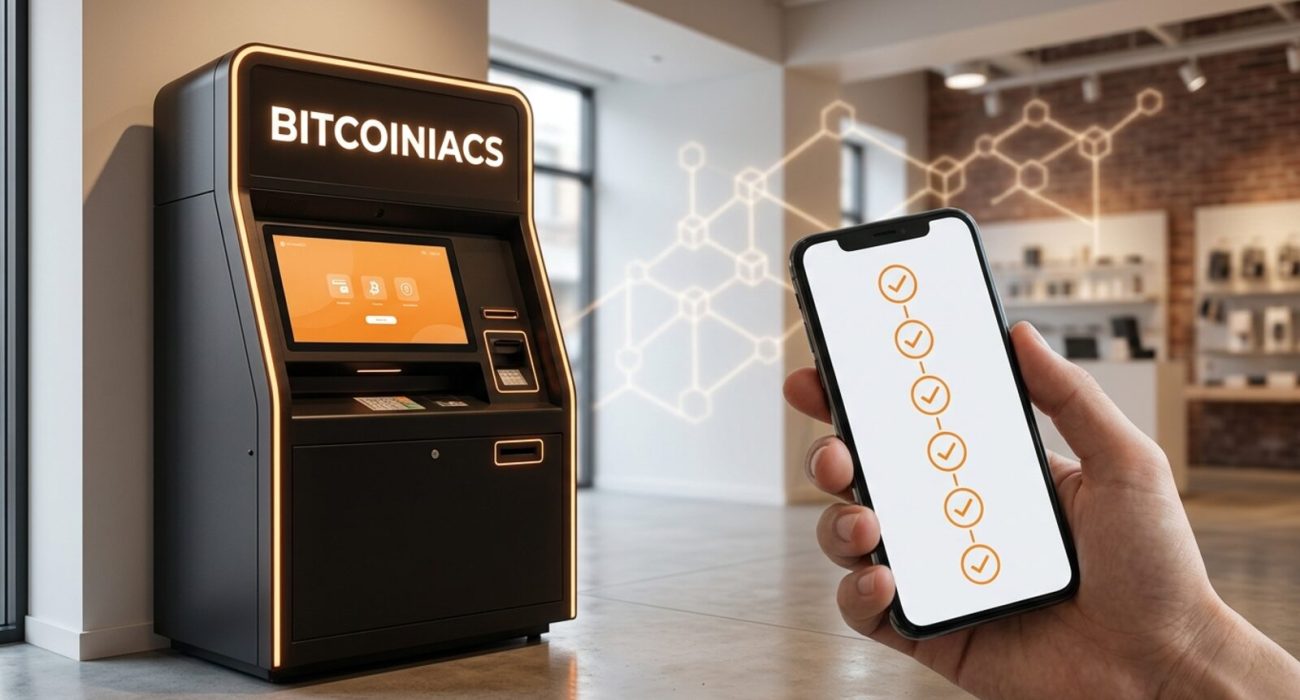
Bitcoin confirmations explained in plain language: a confirmation means a Bitcoin transaction has been included in a block that the network accepts. Each new block built after that transaction adds another confirmation and makes a reversal less likely. For Canadians buying, receiving, or moving Bitcoin, the confusing part is that “sent,” “pending,” and “confirmed” describe different stages. A wallet may show an incoming payment within seconds even though no miner has included it in a block yet. The first confirmation may arrive quickly, or it may take longer when network demand is high or the transaction fee is too low. This guide explains what the count means, why there is no guaranteed timer, how many confirmations are reasonable, and what to check when a transfer appears stuck.
Table of Contents
- What Bitcoin Confirmations Explained Really Means
- How Bitcoin Confirmation Time Works
- How Many Confirmations Do You Need?
- Why Bitcoin Transactions Stay Unconfirmed
- How to Check or Speed Up a Bitcoin Transaction
- Frequently Asked Questions
What Bitcoin Confirmations Explained Really Means
A Bitcoin payment starts when a wallet creates and signs a transaction, then broadcasts it to peers on the network. At that point, the transaction can be visible to the sender, the recipient, and public explorers, but it is still unconfirmed. Many nodes hold valid unconfirmed transactions in a temporary waiting area called a mempool. Miners choose transactions from their mempools when building candidate blocks.
When a miner includes the transaction in a valid block and that block becomes part of the network’s accepted chain, the transaction receives its first confirmation. The next block adds a second confirmation, the block after that adds a third, and so on. The Bitcoin.org overview of transactions and mining describes this as a distributed consensus process: pending transactions are packed into blocks, checked against strict rules, and added in chronological order.
Broadcast is not the same as settlement
A wallet notification proves that software has detected a transaction. It does not necessarily prove that the transaction is final. A zero-confirmation payment can still be replaced or dropped under certain conditions. That distinction matters when accepting payment for something valuable. Confirmation depth is a confidence ladder, not a countdown timer: each additional block increases confidence without creating a universal rule for every transaction.
What happens after an ATM purchase
After a purchase at one of the Bitcoiniacs Bitcoin ATM locations, the customer receives transaction details once the Bitcoin transfer is broadcast. The receiving wallet may display the transaction promptly, while its status remains pending until a miner includes it in a block. The ATM purchase and the Bitcoin network confirmation are separate stages. Completing the purchase does not let any operator guarantee the exact arrival time of the next block.
How Bitcoin Confirmation Time Works
Bitcoin targets an average interval of roughly ten minutes between blocks over time, but individual blocks do not follow a schedule. One may arrive within a minute of the previous block, while another gap may be much longer. That randomness is normal. A transaction sent just before a block is found could confirm almost immediately if its fee rate is competitive. The same transaction sent just after a block is found may need to wait for the next opportunity.
The first confirmation is usually the unpredictable part. Once the transaction is inside a block, later confirmations tend to accumulate as new blocks are added. The Bitcoin developer documentation on payment verification and confirmation risk distinguishes zero-confirmation transactions from payments buried under multiple blocks. It also notes that the appropriate threshold depends on value and fraud risk rather than a single magic number.
Fee rate matters more than the dollar amount
Bitcoin transactions compete for limited block space. Miners typically prioritize transactions offering higher fees relative to their virtual size, measured in satoshis per virtual byte. Sending more Bitcoin does not automatically buy faster confirmation. A small transfer with an appropriate fee rate can confirm before a much larger transfer with a low fee rate.
This is why two customers who buy similar amounts can see different confirmation times. Their transactions may have different sizes, fee rates, broadcast times, or positions in the mempool. Network demand can also change quickly. Checking conditions before sending is more useful than relying on yesterday’s fee experience. Canadians planning a purchase can review live cryptocurrency prices separately, but price movement does not determine the order in which miners confirm transactions.
How Many Confirmations Do You Need?
There is no network rule that says every recipient must wait for the same count. Wallets, merchants, and financial services choose policies based on risk. A low-value transfer to your own wallet may feel acceptable after one confirmation. A business delivering an expensive, irreversible product may wait for several. A service may also require a fixed number before making deposited funds available, even though the transaction is already visible on-chain.
- Zero confirmations: Broadcast and visible, but not yet included in a block. Treat as pending.
- One confirmation: Included in an accepted block. Suitable for many routine personal transfers, depending on risk.
- Three confirmations: Buried under additional work and commonly used as a more conservative threshold.
- Six confirmations: A traditional high-confidence benchmark for higher-value payments, though not mandatory for every use.
The recipient sets the practical threshold
If you are sending Bitcoin to a wallet or service, read that recipient’s deposit policy. The network may show one confirmation while the service still labels the deposit pending because it requires three. That does not mean the blockchain has failed. It means the recipient has chosen a stricter crediting rule. When transferring to a personal wallet after you buy Bitcoin in Vancouver, you control how much confirmation depth you want before treating the balance as settled.
Confirmations reduce risk, not clerical mistakes
Confirmations cannot fix a transfer sent to the wrong address. Bitcoin transactions generally cannot be reversed by a bank, card company, ATM operator, or miner. Always compare the address before approving a send. For a large self-custody transfer, consider a small test transaction first, confirm that it reached the intended wallet, and then send the remainder.
Why Bitcoin Transactions Stay Unconfirmed
The most common reason is a fee rate that became uncompetitive. If many users submit transactions at once, miners can fill blocks with higher-fee transactions first. A transaction that looked reasonably priced when it was created may be pushed back as demand rises. The live queue and fee bands on mempool.space can help you compare a transaction’s fee rate with current network conditions.
Other causes of a pending status
- Wallet synchronization: The blockchain may show a confirmation before a wallet refreshes its local view.
- Recipient policy: A platform may wait for more blocks before crediting the deposit.
- Transaction dependencies: A payment may spend funds from an earlier unconfirmed transaction and must wait for the parent.
- Limited propagation: Different nodes maintain different mempools, so a transaction may not be visible everywhere.
- Replacement: A sender may use a wallet-supported fee-bump method that replaces the original transaction with a higher-fee version.
A long wait does not usually mean Bitcoin has vanished. The wallet still controls the relevant keys, and the transaction will either confirm, be replaced, or eventually disappear from enough mempools that the wallet can construct a new spend. The exact behaviour depends on the wallet. Avoid sending a second manual transaction until you understand whether it would conflict with the first.
How to Check or Speed Up a Bitcoin Transaction
Start with the transaction ID, often called a TXID. Copy it from the sending wallet or receipt and paste it into a reputable Bitcoin block explorer. Confirm the destination address, amount, fee rate, first-seen time, and confirmation count. Never share a seed phrase or private key with an explorer, support account, or anyone claiming they can release the payment. A TXID is enough to inspect public transaction status.
Use wallet-supported fee tools carefully
Some wallets support Replace-by-Fee, which lets the sender create a higher-fee replacement. Another method, Child Pays for Parent, creates a new high-fee transaction that spends an output from the pending transaction, encouraging miners to confirm the package. The detailed Bitcoin Optech series on mempool policy explains why fee rates influence miner selection and how RBF and CPFP can change transaction priority.
Do not improvise these methods with unfamiliar software. Use the feature built into your wallet, verify every address and amount, and keep a record of the original and replacement TXIDs. If the sender is an ATM operator or another service, contact that sender with the transaction details rather than trying to alter a transaction you did not create.
A practical checklist
- Verify the TXID on a public explorer.
- Check whether the transaction has zero, one, or multiple confirmations.
- Compare its fee rate with the current mempool range.
- Refresh or rescan the receiving wallet if the explorer shows a confirmation.
- Review the recipient’s required confirmation count.
- Ask the sender about RBF or other wallet-supported options if the transaction remains unconfirmed.
If you plan to use a Bitcoiniacs service, complete Bitcoiniacs registration before arriving when verification is required. That helps prevent account setup from being confused with blockchain confirmation time. Identity verification, purchase processing, and on-chain settlement are related parts of the customer journey, but they are not the same status.
Frequently Asked Questions
These questions are based on recurring posts from Reddit communities such as r/BitcoinBeginners, where users ask about pending transfers, confirmation counts, and wallet display delays.
How long do Bitcoin transactions usually take?
A first confirmation often arrives around the time of the next block, but ten minutes is an average, not a promise. It can happen sooner or take much longer. Fee rate, transaction size, network demand, and block timing all matter. Check the TXID and current mempool conditions instead of judging the transaction by elapsed time alone.
How many confirmations do I need before I can spend Bitcoin?
Many wallets let you spend an incoming output after one confirmation, and some allow spending unconfirmed funds. Whether you should do so is a risk decision. Waiting for at least one confirmation avoids building a new payment on an unconfirmed parent. Services may impose their own threshold before a deposit becomes available.
Why is my Bitcoin transaction still unconfirmed after 24 hours?
The fee rate was likely below the range miners have recently selected, especially if the network became busier after broadcast. Look up the TXID, compare its fee rate with current conditions, and check whether the wallet offers RBF. If someone else sent the payment, contact the sender rather than sharing private wallet information with strangers.
Can I cancel a Bitcoin transaction with zero confirmations?
There is no universal cancel button. A compatible wallet may create a replacement transaction that returns the funds to the sender or pays the intended recipient with a higher fee. That is a replacement, not a bank-style cancellation. If the original confirms first, it cannot simply be recalled.
Why does an explorer show confirmed but my wallet does not?
The wallet may be out of sync, connected to a lagging server, watching the wrong account, or waiting for additional confirmations. First verify that the explorer shows the exact receiving address and TXID. Then refresh, rescan, or reconnect the wallet using its documented controls. Never enter a seed phrase into a website to force a refresh.
Understanding Bitcoin confirmations makes transaction status far less stressful. Separate broadcast from confirmation, judge security by the transaction’s value and risk, and use a TXID to verify what the network shows. When a payment is slow, check the fee rate and recipient policy before assuming anything is lost. Bitcoiniacs customers can also contact the team with their transaction details for help interpreting an ATM purchase status, without ever sharing a private key or recovery phrase.