


Holding Bitcoin in a TFSA in Canada is one of the first questions new buyers ask, and the answer surprises almost everyone: you cannot hold actual Bitcoin inside a Tax-Free Savings Account. A TFSA accepts a strict list of eligible investments, and a private key is not on that list. That does not make the idea useless. Canadians do get tax-free exposure to Bitcoin through funds and trusts that qualify, and plenty of people still buy real Bitcoin with cash outside registered accounts. This guide explains what is allowed, what is not, and how to keep your records clean either way.
Table of Contents
- Can You Hold Bitcoin in a TFSA in Canada?
- Bitcoin ETFs and Crypto Funds Inside a TFSA
- Buying Real Bitcoin Outside a Registered Account
- Bitcoin TFSA Mistakes That Cost Canadians Money
- Where Bitcoin ATMs Fit for Canadian Savers
- Frequently Asked Questions
Can You Hold Bitcoin in a TFSA in Canada?
Short answer: no, not directly. A TFSA is a registered account that must be administered by a trustee or issuer, and it can only hold what the tax rules call qualified investments. Self-custodied Bitcoin sits in a wallet you control with a private key, which means there is no issuer, no trustee, and no way for a financial institution to report on it. That structure alone rules out holding real Bitcoin inside the account.
What a TFSA Is Allowed to Hold
Inside a TFSA you can generally hold cash, guaranteed investment certificates, government and corporate bonds, most mutual funds, exchange-traded funds and shares listed on a designated stock exchange, plus a handful of other securities that meet the qualified investment tests. The list is long but specific. It is built around securities issued by entities that can be identified, registered, and reported on.
Why Real Bitcoin Does Not Qualify
Bitcoin is property, not a security issued by a company. There is no issuer to hold it, no transfer agent to register it, and no custodian inside the registered account system that can report a balance to the Canada Revenue Agency. The CRA’s Tax-Free Savings Account guide for individuals sets out how contributions and qualified investments work, including the rule that contributions must be made in cash or as a transfer of qualifying property. Crypto does not clear that bar.
One practical consequence catches people off guard: you cannot move coins you already own into a TFSA the way you might move stocks. There is no in-kind crypto contribution. If you want money in the account, you sell first, contribute the cash, and accept whatever tax consequence that sale triggers.
Bitcoin ETFs and Crypto Funds Inside a TFSA
The workable route is indirect. Spot Bitcoin ETFs and crypto-focused trusts trade on the Toronto Stock Exchange, which makes them qualified investments. Buy units through your brokerage, hold them inside a TFSA, and any gain stays sheltered from tax. The CRA’s guidance on crypto-asset tax obligations explains why this matters: outside a registered account, disposing of crypto is a taxable event, while inside one, the same movement of value can be tax-free.
How the Shelter Actually Works
When you buy an ETF unit inside a TFSA, the fund’s price tracks Bitcoin but the unit itself is a security. That is the trick. The tax shelter applies to the security, not to the coins behind it. You keep the exposure, and the CRA keeps its hands off the gain while it stays in the account. Withdrawals are also tax-free and do not affect your contribution room permanently, since the amount you withdraw is added back the following calendar year.
The Trade-Offs: Fees, Custody, and Control
Nothing is free. ETF units carry management fees that quietly reduce returns over a long holding period, and a fund can trade at a small premium or discount to the Bitcoin price. You also do not control the underlying coins. The units can be bought and sold by anyone with a brokerage account, and the fund’s custodian holds the keys, not you. For a full comparison of the two paths, see our breakdown of Bitcoin ETFs versus buying actual Bitcoin in Canada.
Do You Actually Own the Bitcoin?
No. You own a claim on a fund that holds Bitcoin. That distinction matters if you care about self-custody, privacy, or the ability to spend and transfer coins yourself. It also matters in an insolvency scenario, where your position is treated like any other brokerage holding rather than like coins in your own wallet.
Buying Real Bitcoin Outside a Registered Account
Most Canadians who want actual Bitcoin keep it in a non-registered wallet. You can buy Bitcoin with cash through a machine or an in-person service, then move it to a wallet you control. The trade-off is straightforward: you get real coins and full control, and you give up the tax shelter. Any gain on those coins is reportable when you dispose of them.
Cash Purchases at a Bitcoin ATM
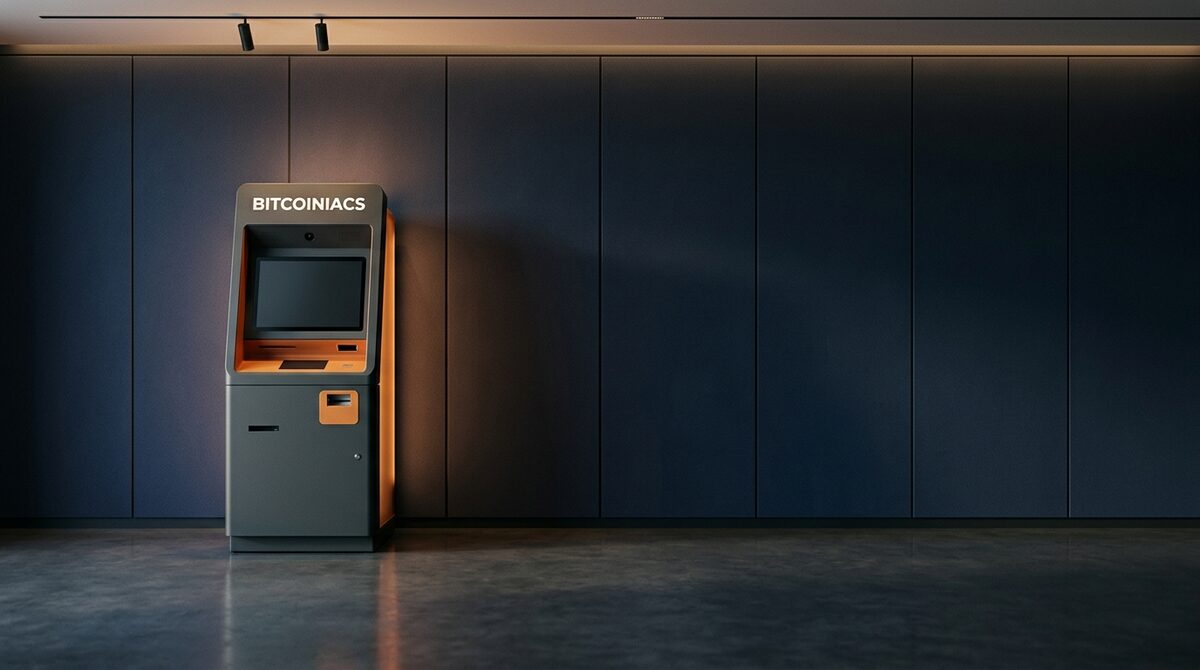
A Bitcoin ATM is the fastest route for a cash purchase. You insert banknotes, scan a receiving address from your wallet, and the machine sends coins on-chain. Bitcoiniacs machines are cash-based, so bring banknotes rather than a card. Rates and fees are displayed before you confirm, and identity verification requirements apply at higher amounts. Compare the quoted rate against a live market price before you commit, because the spread is the real cost of convenience.
Keeping a Cost Base Record
Keep a simple log for every purchase: the date, the Canadian dollar amount you paid, the amount of Bitcoin received, the fee, the wallet address, and the transaction ID. That record is what lets you calculate an adjusted cost base later. The CRA’s guidance on reporting capital gains as a crypto-asset user explains what a disposition looks like, and it is broader than most people expect: selling, swapping one coin for another, and spending Bitcoin on goods can all count.
Bitcoin TFSA Mistakes That Cost Canadians Money
Trying an In-Kind Crypto Transfer
Some people move coins to a brokerage and ask for a “transfer in kind” to a TFSA. It cannot be done with crypto. A contribution of non-qualifying property is not a valid TFSA contribution, and the paperwork can leave you sorting out an excess amount after the fact.
Over-Contributing While Chasing a Rally
Contribution room is easy to miscalculate when you are moving money quickly. An excess amount sitting in a TFSA is taxed at 1% per month for as long as it stays there, and the CRA may not notify you for months. Track your own room and withdraw any excess immediately rather than waiting for a notice.
Losing the Paper Trail on Cash Buys
Cash purchases feel informal, but they still create a taxable position. If you cannot show what you paid, you cannot prove your cost base, and you may end up paying tax on more gain than you actually earned. Our guide to Bitcoin taxes in Canada walks through what to keep and how to report it.
Where Bitcoin ATMs Fit for Canadian Savers
Think of the two paths as serving different goals. Registered accounts are built for long-horizon, tax-sheltered exposure, and they work best with regulated securities. A Bitcoin ATM is built for acquiring real coins quickly with cash, which is why people use it for smaller, deliberate purchases rather than portfolio-sized positions. The Ontario Securities Commission’s crypto assets learning path is a useful, plain-language overview of the risks on the investment side, including the difference between a regulated product and a speculative one.
A few ground rules keep this sane. Never buy Bitcoin with borrowed money or a credit card balance, because the interest will outrun any realistic return. Treat any message that creates urgency, promises guaranteed returns, or asks for your seed phrase or a one-time code as a scam, without exception. And never send Bitcoin to an address someone gave you over a chat message. When you are ready to buy in person, you can find a machine through our Bitcoiniacs ATM locations directory and confirm the address, hours, and buy and sell services before you go.
Frequently Asked Questions
Can you hold Bitcoin directly in a TFSA?
No. Bitcoin itself is not a qualified investment, so a TFSA cannot hold coins or a private key. Canadians who want tax-free exposure use a spot Bitcoin ETF or a similar trust that trades on a designated exchange, then hold those units inside the account.
Can you transfer Bitcoin you already own into a TFSA or RRSP?
No. There is no in-kind contribution route for crypto into a registered account. You would have to sell the Bitcoin first, which is itself a taxable disposition, then contribute the cash. Any gain realized on that sale is reportable in the year it happens, even though the money ends up inside a tax-sheltered account.
Is a Bitcoin ETF better than holding real coins?
It depends on what you want. An ETF gives you tax-free growth inside a registered account, brokerage convenience, and no key management. Real coins give you self-custody, privacy, and the ability to transfer or spend Bitcoin directly. Many Canadians use both: an ETF inside a TFSA for long-term exposure, and coins in their own wallet for everything else.
Do you pay tax when you buy Bitcoin in Canada?
Buying alone usually does not trigger tax, because there is no disposition yet. The taxable moment arrives when you sell, swap, or spend the Bitcoin. That is why the purchase record matters so much. Without it, you cannot establish your adjusted cost base, and your reported gain will be higher than it should be.
What happens if you over-contribute to a TFSA?
The excess amount is taxed at 1% per month for as long as it stays in the account. The CRA may not flag it for several months, so it is on you to track contribution room and withdraw any excess as soon as you notice it. Deliberate over-contribution can carry additional consequences.
The rules around Bitcoin and TFSAs are less complicated than they first appear. Registered accounts are for qualified securities, real Bitcoin lives outside them, and cash purchases create a record you need to keep. Decide which of those two jobs you are actually trying to do before you move money, and neither path will surprise you at tax time.