


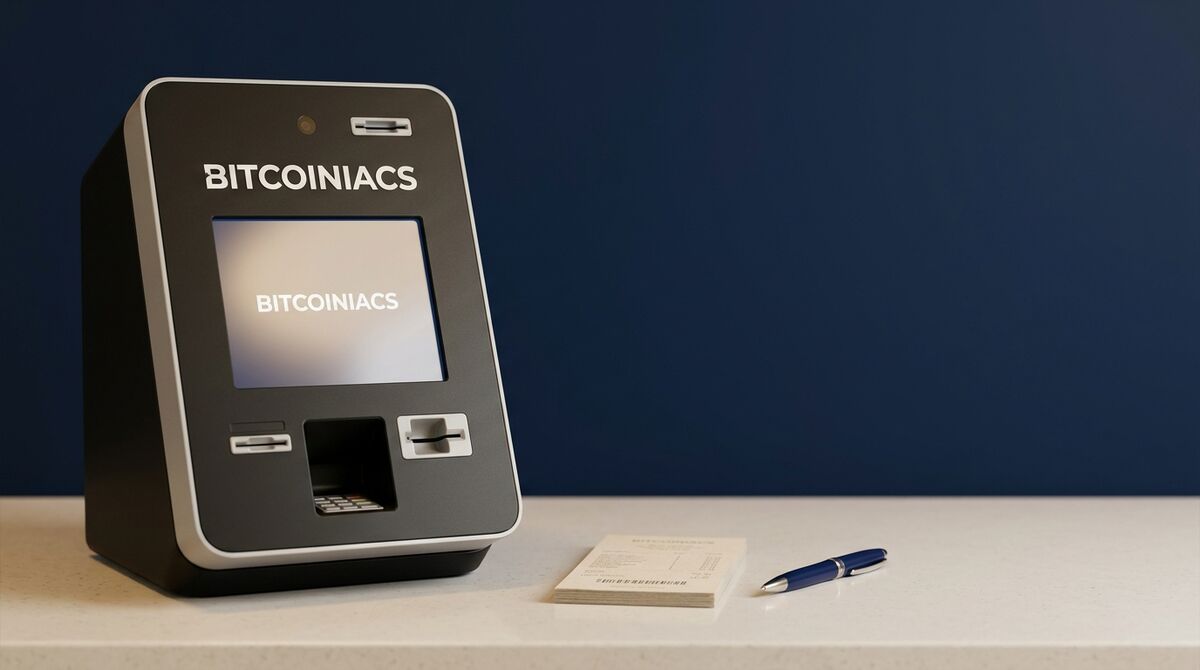
If you bought Bitcoin in Canada — through a Bitcoin ATM, an online exchange, or peer-to-peer — the CRA treats it as taxable property. Whether you held it for two days or two years, the same rule applies: once you dispose of it, you may owe tax on any gain. This guide explains how Bitcoin taxes in Canada work in 2026, when a taxable event is triggered, what records the CRA expects, and how to report gains or losses on your return.
The rules below apply to most Canadians who buy and sell Bitcoin as individual investors. Operators of crypto trading businesses or merchants accepting crypto for goods and services fall under different rules around business income.
Table of Contents
- Is Bitcoin Taxed in Canada?
- When Do You Actually Owe Tax on Bitcoin?
- Bitcoin Tax Rates in Canada
- Records You Need to Keep for Bitcoin Taxes
- How to Report Bitcoin on Your Tax Return
- Frequently Asked Questions
Are Bitcoin Taxes in Canada Required?
Yes. The Canada Revenue Agency treats cryptocurrency — including Bitcoin — as a commodity, not as legal tender. For income tax purposes, Bitcoin is property, and any time you dispose of it the difference between what you paid and what you received is either a capital gain or business income.
The CRA’s position is documented in its official cryptocurrency guide, which has been progressively updated as the agency has ramped up its crypto enforcement over the past several years. The Bank of Canada also publishes ongoing research on digital currencies and how they interact with the Canadian financial system — see their digital currencies and fintech research page for context.
For most individual buyers in Canada — someone who picks up a few hundred dollars of Bitcoin at a Bitcoin ATM, sends it to a self-custody wallet, and holds for months or years — the gains are taxed as capital gains, which means only half of the profit is added to your taxable income. Losses work the same way in reverse: half of any realized loss can be deducted, but only against capital gains.
When Do You Actually Owe Tax on Bitcoin?
You don’t owe tax when you buy Bitcoin, and you don’t owe tax while you hold it. The CRA only taxes disposals. A disposal is any transaction where ownership of the Bitcoin leaves your hands. Common examples include:
- Selling Bitcoin for Canadian dollars through an exchange, OTC desk, or Bitcoin ATM
- Trading Bitcoin for another cryptocurrency (e.g., swapping BTC for ETH or USDT)
- Using Bitcoin to pay for goods or services
- Gifting or donating Bitcoin to someone else
- Exchanging Bitcoin in a DeFi swap, or moving it through certain liquidity-pool transactions
The third point catches a lot of people off guard. If you bought a coffee with Bitcoin in 2025 and the Bitcoin was worth more at the moment you spent it than when you bought it, you technically realized a taxable gain — even though no cash changed hands. The CRA treats spending crypto as a barter transaction, and crypto-to-crypto trades are explicitly covered as taxable dispositions.
What does not trigger a taxable event:
- Moving Bitcoin between wallets you own (e.g., from an exchange to your hardware wallet)
- Holding Bitcoin without selling or spending it
- Buying Bitcoin with cash at a Bitcoin ATM (the purchase itself is not a disposition)
So if you bought Bitcoin at a Bitcoiniacs exchange or ATM and have been holding it in cold storage for three years, you have no tax to report until you actually sell, swap, or spend it.
Bitcoin Tax Rates in Canada (Capital Gains vs. Business Income)
The tax rate you pay on a Bitcoin gain depends on whether the CRA considers your activity a personal investment or a business. For the vast majority of Canadians — investors who buy, hold, and occasionally sell — gains are taxed as capital gains, and only 50% of the gain is included in your taxable income for the year. The 50% inclusion rate has been the federal rule since 2000 and applies regardless of how long you held the Bitcoin. There is no Canadian equivalent of the U.S. long-term capital-gains threshold.
Once the taxable capital gain is added to your income, it’s taxed at your marginal income-tax rate — which depends on your total income for the year and the province or territory you live in. So if you realized a $10,000 profit on Bitcoin in 2025 and you’re in Ontario earning $80,000 of employment income, half of that $10,000 ($5,000) is added to your taxable income and taxed at your Ontario marginal rate, which sits around 29.6% at that income level.
When It Becomes Business Income
If your activity looks more like a trading business — frequent buys and sells, short holding periods, leveraged positions, advertising that you buy crypto, or spending significant time studying markets — the CRA may classify your gains as business income instead of capital gains. The full gain (100%) is then added to your taxable income and taxed at your marginal rate, and you can deduct related expenses like trading fees, software subscriptions, and a portion of your home internet bill.
The CRA lays out the factors it considers in Interpretation Bulletin IT-479R — frequency of transactions, period of ownership, knowledge of markets, time spent, financing, and advertising are all weighed on a case-by-case basis.
Most casual Bitcoin investors in Canada — including people who buy at a Bitcoin ATM and hold for the long term — will fall clearly on the capital-gains side of the line.
Records You Need to Keep for Bitcoin Taxes
This is the part of crypto taxes that trips people up the most — and the part where the CRA is most likely to push back if you’re audited. The CRA’s books and records guide for crypto is explicit. For every transaction you must be able to produce:
- Date and time of the transaction (CRA wants precision, not just the day)
- Type and quantity of crypto involved
- Value in Canadian dollars at the moment of the transaction
- The other party — even if it’s just a wallet address
- The wallet addresses you sent from and to
- Beginning and ending wallet balances for each crypto, with their adjusted cost base
- Receipts for any expenses — trading fees, withdrawal fees, software subscriptions, accountant fees
You also have to keep these records for six years from the end of the tax year they relate to — so 2025 records must be kept until at least the end of 2031.
Practical Record-Keeping
The cleanest way to keep Bitcoin records is to export a complete transaction history from every exchange or platform you use, every time you make a withdrawal or deposit, and store it somewhere durable. Most major Canadian exchanges (NDAX, Bitbuy, Coinbase Canada, Kraken Canada) let you download a CSV of all trades. If you bought at a Bitcoiniacs ATM, keep the printed receipt — it has the date, time, amount in CAD, and the Bitcoin address the funds were sent to.
For self-custody wallets, the transaction history is on-chain and viewable via any blockchain explorer — bookmark the page or save a PDF once a year. The CRA recommends exporting records regularly because exchanges can disappear, get acquired, or stop serving Canadian customers, leaving you without the data you need.
For most people with under a few hundred transactions a year, a spreadsheet is enough. If you’re doing more volume or trading across multiple exchanges, dedicated crypto-tax software (Koinly, CoinTracker, Tokentax, Accointing) imports trade history, calculates cost basis using CRA-accepted methods, and produces the T1135 and Schedule 3 forms automatically.
How to Report Bitcoin on Your Canadian Tax Return
For capital gains, you report on Schedule 3 of your T1 return. List each sale separately, or summarize by category if you have many small transactions. The net result flows to line 12700 of your return, and only 50% of the net gain is added to your taxable income.
If the total cost of all your foreign-property crypto holdings exceeded $100,000 CAD at any point in the year, you also have to file Form T1135 — the Foreign Income Verification Statement. Bitcoin held on a foreign exchange like Coinbase US or Kraken counts as foreign property for T1135 purposes. Bitcoin held on a Canadian exchange or in your own self-custody wallet generally does not. The threshold is based on the combined cost of all foreign-property assets, not just crypto.
If you bought or sold through a Bitcoiniacs ATM in Vancouver or another Canadian city, the transaction is domestic and the ATM receipt is your primary record. Keep it for six years.
What If I Forgot to Report in a Past Year?
The CRA’s Voluntary Disclosures Program lets you file or amend past returns to fix mistakes, with reduced penalties in many cases — provided you come forward before the CRA has contacted you about the issue. This comes up regularly for Canadians who held Bitcoin through the 2017 or 2021 bull runs, sold during the following bear markets, and didn’t realize the gains were taxable.
If you have a more complicated situation — multiple years of unfiled crypto gains, business-income classification, foreign-exchange activity, or a notice from the CRA — talk to a Canadian accountant who has handled crypto clients before. The rules are not difficult in principle but the record-keeping requirements are unforgiving, and the cost of a one-time professional setup is usually much less than the cost of an audit.
Frequently Asked Questions
Do I have to pay tax on Bitcoin if I just hold it and never sell?
No. Simply buying and holding Bitcoin is not a taxable event in Canada. The CRA only taxes disposals — selling for CAD, trading for another crypto, or spending it on goods or services. As long as your Bitcoin stays in your wallet and you don’t dispose of it, no tax is owed.
Do I owe tax when I trade Bitcoin for another cryptocurrency?
Yes. Swapping Bitcoin for Ethereum, USDT, or any other crypto is treated as a disposition. You have to calculate the gain or loss in Canadian dollars at the moment of the swap and report it on Schedule 3. This is one of the most commonly missed rules — many Canadians assume the tax only applies when they cash out to fiat, but the CRA’s crypto-transaction reporting rules are explicit that crypto-to-crypto trades are taxable.
What records do I need to file Bitcoin taxes in Canada?
The CRA requires date and time of each transaction, the type and quantity of crypto, the Canadian-dollar value at the moment of the transaction, the wallet addresses involved, the other party’s address or identifier, your beginning and ending wallet balances with adjusted cost base, and receipts for any related expenses. You must keep these records for six years from the end of the tax year.
I bought Bitcoin outside Canada — do I still owe CRA tax?
Yes, if you are a Canadian tax resident. Canada taxes worldwide income. Whether you bought on a U.S. exchange, a European platform, or peer-to-peer in another country, the moment you dispose of that Bitcoin while resident in Canada, the gain or loss is taxable in Canada. If the foreign jurisdiction also taxes the gain, you may be eligible for a foreign tax credit on your Canadian return to avoid double taxation — but the gain itself is still reportable.
How does the CRA find out about my Bitcoin?
Three main ways. First, registered Canadian exchanges must report suspicious and large transactions to FINTRAC. Second, the CRA has information-sharing agreements with tax authorities in the U.S., U.K., Australia, and most other major economies, so foreign-exchange data is no longer invisible. Third, when you use a Bitcoin ATM in Canada, the operator is a regulated money-services business and must keep records that can be requested during an audit. Not reporting carries real risk. For more on Canadian Bitcoin basics, see our other guides.