


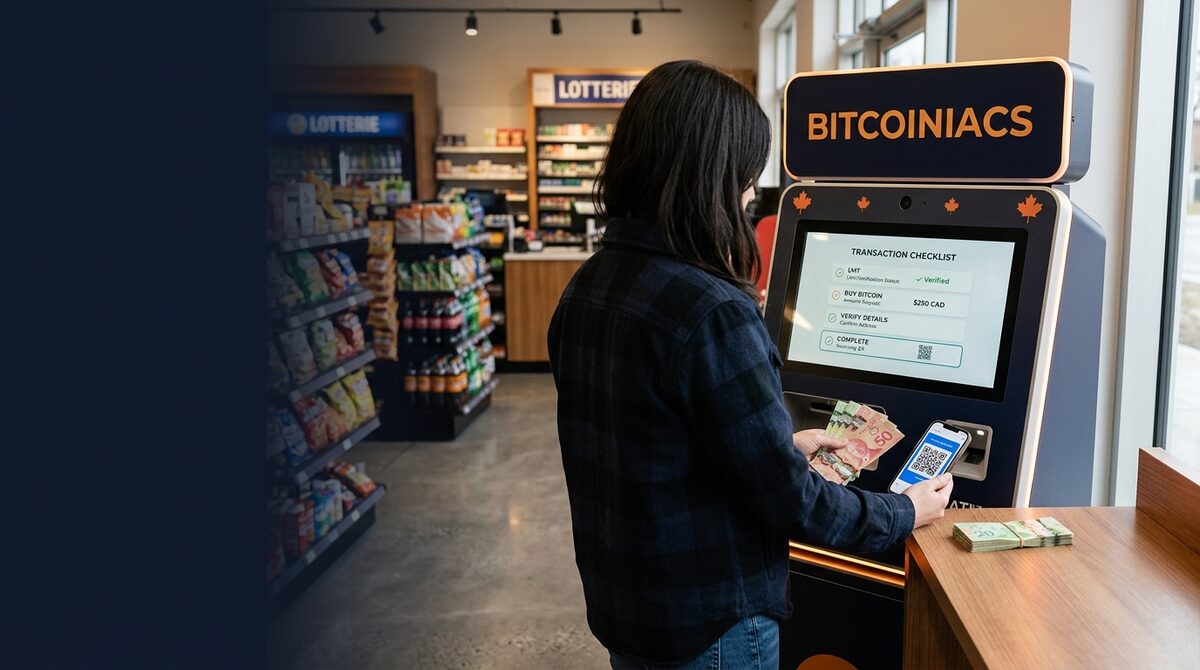
Bitcoin ATM Limits Canada
Bitcoin ATM limits Canada users see in 2026 are not random roadblocks; they are practical controls around cash handling, identity verification, fraud prevention, machine liquidity, and Canadian compliance rules. If you are planning to buy Bitcoin with cash, the number that matters is not just “How much can I insert?” It is also how prepared you are: whether your wallet is ready, whether the machine has enough cash or Bitcoin liquidity, whether the operator needs extra verification, and whether the transaction makes sense for your personal risk tolerance. This guide explains how Bitcoin ATM limits work in Canada, why limits can change by operator or location, what ID checks may mean, how fees fit into the total cost, and how to use a Bitcoiniacs machine with fewer surprises.
Table of Contents
- How Bitcoin ATM Limits Canada Work in 2026
- Cash, ID Verification, and Daily Transaction Planning
- Bitcoin ATM Fees and Exchange Rates
- Safe Ways to Use Bitcoin ATMs in Canada
- Before You Go to a Bitcoiniacs ATM
- Frequently Asked Questions
How Bitcoin ATM Limits Canada Work in 2026
A Bitcoin ATM limit is the maximum amount a user can buy or sell through a machine within a transaction, day, or verification tier. In Canada, those limits are shaped by several forces at once. The machine operator needs to manage cash inventory. The business needs to comply with anti-money-laundering obligations. The customer needs a transaction size that matches their wallet, their purpose, and their comfort level with Bitcoin’s price movement.
That is why two machines can feel different even if they both let you buy Bitcoin with cash. One location may have a lower transaction cap because of cash collection schedules. Another may allow larger transactions after account review or additional verification. Some users only need a small test purchase, while others are looking for a larger cash-to-Bitcoin conversion and should plan ahead before arriving at the machine.
Canadian reporting rules also matter. FINTRAC’s guidance on large virtual currency transactions explains reporting requirements for certain transactions of CAD $10,000 or more and aggregation under the 24-hour rule. That does not mean every ATM customer should think of $10,000 as a normal machine limit. It means legitimate operators have compliance procedures behind the scenes, and larger activity can require more review.
The limit you see is a business rule, not a Bitcoin rule
Bitcoin itself does not set a daily retail limit. The blockchain can process transactions of many sizes. The limits at a Bitcoin ATM are set by the operator, the machine software, compliance policy, local cash logistics, and sometimes the user’s verification status. Treat the on-screen limit as the source of truth for that transaction, and contact the operator if you expect to buy or sell more than a standard walk-up amount.
If you are comparing options, start with local access. Bitcoiniacs maintains convenient Bitcoin ATM locations so customers can find a nearby machine and plan before leaving home.
Cash, ID Verification, and Daily Transaction Planning
The most common limit question is whether a Bitcoin ATM requires ID. In Reddit threads about Canadian Bitcoin ATMs, users often ask whether “all Bitcoin ATMs require IDs” or whether smaller purchases can be made with less friction. The realistic answer is that requirements vary by operator, province, machine setup, and transaction amount. A small first purchase may have a different path than a large same-day purchase.
Good planning starts before you stand at the machine. Have your Bitcoin wallet installed, backed up, and ready to receive. Make sure you know whether you are scanning a receive address from your own wallet or sending to someone else. If anyone on the phone is coaching you to buy Bitcoin and send it immediately, stop. That is one of the biggest red flags in crypto ATM fraud.
If your purchase is local, choose the city page that matches your trip. Customers planning to buy Bitcoin in Vancouver can review the local buying page first instead of guessing at the machine. The same idea applies in other service areas: confirm the location, operating hours, and any preparation steps before you handle cash.
Why small test transactions are smart
For beginners, a smaller first transaction is usually the safer learning path. It lets you confirm that your wallet address is correct, see how the receipt works, understand the exchange rate, and watch the Bitcoin arrive without putting too much money at risk. Once you are confident, you can decide whether a larger transaction makes sense.
Keep records for your own accounting
Save receipts, wallet transaction IDs, and approximate CAD values. The Canada Revenue Agency publishes crypto-asset tax information for users and tax professionals, including pages on books and records. Buying and holding Bitcoin is different from selling, trading, or using it, but keeping clean records from day one prevents headaches later.
Bitcoin ATM Fees and Exchange Rates
Limits are only one part of the cost. The other part is the exchange rate and fee. Reddit users regularly complain about Bitcoin ATM fees because the cost can look higher than an online exchange. That comparison is partly fair and partly incomplete. A retail Bitcoin ATM provides a cash-based service: physical locations, machine maintenance, cash logistics, compliance work, fraud screening, customer support, and immediate access for people who do not want to wait on bank transfers.
Before confirming any transaction, review the on-screen rate and the amount of Bitcoin you will receive. Do not treat the cash amount as the final answer. The final answer is the Bitcoin amount sent to your wallet after the machine applies its rate and fee. If the amount does not make sense to you, cancel before inserting more cash or before confirming the final step.
Fees can also change depending on network conditions and operator pricing. During busy periods, Bitcoin network fees may be higher. During calmer periods, confirmation may be cheaper or faster. The ATM operator may bundle parts of the cost into the displayed rate rather than showing a separate line item, so always evaluate the total quote.
Selling Bitcoin has its own limits
Buying limits and selling limits are not always identical. Selling Bitcoin for cash depends on the machine’s cash availability and the confirmation process for the Bitcoin you send. If you plan to sell Bitcoin in Vancouver, review the local sell page and make sure you understand how payout timing, confirmations, and machine cash levels work before you rely on the funds.
Safe Ways to Use Bitcoin ATMs in Canada
Bitcoin ATM safety has two sides. The first is personal transaction safety: using a machine in a normal retail environment, checking your wallet address, keeping receipts, and avoiding rushed decisions. The second is fraud safety: refusing to send Bitcoin because a caller, fake employer, online romantic interest, “tech support” agent, or supposed government worker told you to.
The Canadian Anti-Fraud Centre collects information on fraud and identity theft and encourages Canadians to recognize, reject, and report scams. Its fraud prevention resources are worth reading before any large crypto transaction. A real government agency will not demand payment through a Bitcoin ATM. A real bank will not tell you to protect your money by converting it to crypto and sending it to a new wallet.
Canada’s Financial Consumer Agency also warns that crypto assets are risky, not legal tender, and that blockchain transactions are generally irreversible once confirmed. Its crypto assets overview is blunt for a reason: if you send Bitcoin to the wrong address or to a scammer, there is usually no chargeback button.
A simple safety checklist
- Only send Bitcoin to a wallet you control and understand.
- Never follow phone instructions from someone pressuring you to use a Bitcoin ATM.
- Confirm the wallet address on your phone before scanning.
- Start with a small transaction if you are learning.
- Keep the receipt until the transaction is confirmed in your wallet.
Before You Go to a Bitcoiniacs ATM
The best way to handle Bitcoin ATM limits is to prepare like the transaction matters. Decide your approximate budget before you arrive. Bring only the cash you intend to use. Set up your wallet in advance, including a backup phrase stored somewhere safe and offline. If you are unsure about a larger transaction, contact Bitcoiniacs first rather than trying to force the machine to do something it may not be configured to do.
For repeat customers, advance setup can reduce friction. The Bitcoiniacs registration page is the place to begin if you want a smoother customer experience and clearer next steps before using services. Registration does not remove the need to pay attention at the machine, but it helps turn a walk-up transaction into a planned transaction.
Finally, remember that limits are not a challenge to beat. They are there to keep transactions manageable and safer for customers, operators, and the broader financial system. If you need a higher amount, a different location, or support with a specific buy or sell plan, ask before you move cash. A few minutes of planning is cheaper than a rushed mistake.
Frequently Asked Questions
Do all Bitcoin ATMs require IDs?
Not always in the same way. Reddit users in Canadian Bitcoin discussions ask this often because some machines or operators have lower-friction flows for smaller transactions, while larger transactions may require extra verification. The practical answer is to check the specific machine and operator before you go. If a transaction amount is higher, expect more compliance checks.
How do I buy crypto with paper cash in Canada?
This question appears regularly in Canadian crypto communities. The usual Bitcoin ATM flow is: prepare your wallet, choose buy on the machine, scan your receiving address, insert cash, review the quote, confirm, and keep the receipt. Do not send Bitcoin to a stranger’s wallet. If someone else is directing the purchase, pause and verify that it is not a scam.
Does the amount of Bitcoin I purchase determine the fee?
It can affect the total cost, but the structure depends on the operator. Some costs are built into the exchange rate, some may be fixed, and Bitcoin network conditions can influence transaction cost. Always review the final Bitcoin amount before confirming. If a quote feels too expensive, cancel and reassess rather than rushing.
How safe are Bitcoin ATMs?
Bitcoin ATMs can be safe when used for your own wallet, in a normal retail location, with a clear purpose and no outside pressure. The biggest danger is not the machine itself; it is being tricked into sending irreversible Bitcoin to a scammer. Use your own wallet, check the address, keep records, and stop if anyone is rushing you.
Can you be tracked if you buy Bitcoin through an ATM?
Bitcoin is not anonymous in the way beginners often imagine. Transactions appear on a public blockchain, and ATM operators may collect information depending on the transaction and compliance requirements. If privacy is your concern, learn how Bitcoin wallets and addresses work before buying. Do not assume a cash purchase is invisible.
Bitcoin ATM limits Canada customers encounter are easier to handle when you treat them as part of a normal transaction plan. Know your wallet, know your budget, review the fee, avoid pressure, and use a trusted local operator. Bitcoiniacs gives Canadians a practical way to buy and sell Bitcoin in person, while still respecting the checks that keep cash-based crypto transactions safer.