


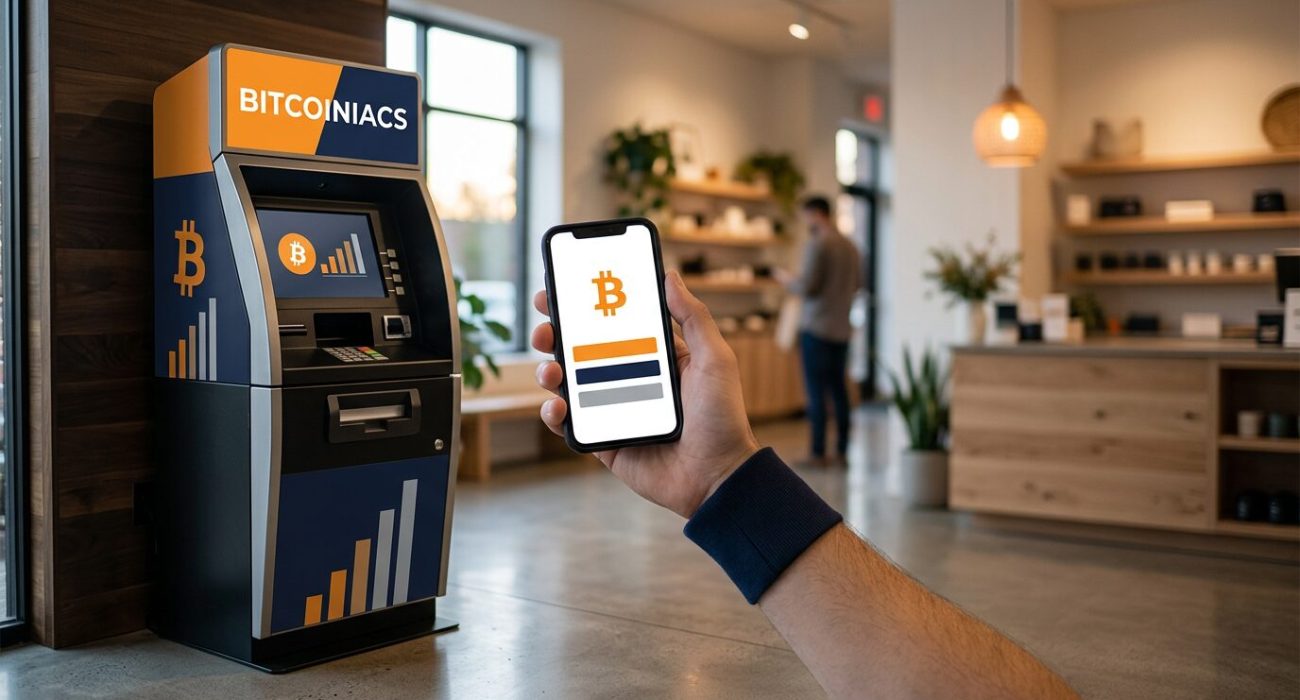
Bitcoin transaction fees in Canada can look confusing because one screen may show a network fee, another may show a service charge, and both can change while Bitcoin’s market price moves in Canadian dollars. The Bitcoin network does not set a special Canadian rate. It uses a global fee market in which senders compete for limited block space. A Bitcoin ATM or other service may also charge for providing the purchase, sale, cash handling, support, and compliance around that on-chain transfer. This guide separates those costs, explains satoshis per virtual byte, shows why some transactions cost more than others, and gives practical ways to avoid overpaying. If you are preparing to buy Bitcoin in Canada, understanding the quote before confirming is the simplest place to start.
Table of Contents
- Bitcoin Transaction Fees in Canada: The Three Costs to Know
- How Bitcoin Network Fees Are Calculated
- Why Bitcoin Fees Rise, Fall, and Delay Confirmations
- Bitcoin ATM Fees vs Network Fees in Canada
- How to Pay Less Without Creating Problems
- Frequently Asked Questions
Bitcoin Transaction Fees in Canada: The Three Costs to Know
The word “fee” is often used for three different costs. Separating them makes any Bitcoin quote easier to understand.
- Network fee: A fee attached to an on-chain transaction and collected by the miner who includes it in a block. The sender normally pays it.
- Service fee or spread: The amount a Bitcoin ATM, brokerage, or platform charges for providing its service. It may be shown as a separate fee, built into the quoted exchange rate, or represented through both, depending on the provider.
- Wallet or withdrawal charge: Some custodial platforms set their own withdrawal charge. It may not equal the actual miner fee paid by the batched transaction they broadcast.
Bitcoin itself only knows about the first item. As Bitcoin.org’s explanation of transactions and mining describes, wallets broadcast signed transfers and miners confirm pending transactions by including them in blocks. The protocol does not know whether a user is in Calgary, Victoria, or Toronto, and it does not price fees in Canadian dollars.
A wallet converts the fee from bitcoin into an estimated CAD value using a market price. That display can change even when the fee in satoshis stays the same. This is why it is useful to compare both numbers: the fee rate in sat/vB and the estimated total in BTC or satoshis. The Canadian-dollar estimate is convenient for budgeting, but the on-chain amount is what the network actually processes.
How Bitcoin Network Fees Are Calculated
A Bitcoin network fee is broadly calculated as transaction virtual size × fee rate. The virtual size is measured in virtual bytes, or vbytes. The fee rate is usually quoted in satoshis per virtual byte, written as sat/vB. One bitcoin contains 100 million satoshis.
Fee estimation is not a fixed-price table. Bitcoin Optech defines fee estimation as estimating the feerate needed to have a high probability of confirmation within a chosen number of blocks. A wallet examines recent blocks and its view of pending transactions, then suggests rates for faster or slower confirmation targets. The result is an informed estimate, not a promise.
Fee rate versus total fee
Suppose a transaction is 200 vbytes and the selected rate is 5 sat/vB. Its network fee would be 1,000 satoshis. A 400-vbyte transaction at the same rate would cost 2,000 satoshis. This illustrates why looking only at sat/vB does not tell you the final cost: transaction size matters too.
The amount of bitcoin being sent is not the main size factor. Sending $50 worth of BTC can cost more than sending $5,000 worth if the smaller payment needs many inputs. Bitcoin fees pay for block space, not a percentage of the payment’s dollar value.
Why inputs and outputs matter
Bitcoin wallets track unspent transaction outputs, commonly called UTXOs. Think of them as individual digital notes received in earlier transactions. If your wallet must combine ten small UTXOs to make one payment, it creates more input data than spending one sufficiently large UTXO. More data usually means a larger virtual size and a higher total fee.
Outputs matter as well. A typical payment may create one output for the recipient and another returning change to a new address controlled by the sender. Modern address formats can use block space more efficiently than older formats. A reputable wallet handles these details automatically, which is one reason beginners should usually accept a sensible wallet estimate instead of typing an aggressive custom rate.
Why Bitcoin Fees Rise, Fall, and Delay Confirmations
Bitcoin blocks have limited capacity, while demand for transactions changes throughout the day. When many users want quick confirmation, they may offer higher fee rates. Miners generally choose transactions that provide more fee revenue for the block space consumed, so higher-feerate transactions tend to move ahead of lower-feerate ones.
The mempool is the set of valid, unconfirmed transactions a Bitcoin node currently knows about. There is no single universal waiting room; each node maintains its own view. For a practical snapshot, the mempool.space Bitcoin explorer shows pending transaction bands and estimated priority rates. Check it close to the time you plan to send, because yesterday’s fee recommendation may be irrelevant today.
Confirmation time is probabilistic
New blocks are found about every ten minutes on average, but an individual interval can be shorter or much longer. A wallet’s “next block” or “within one hour” label is therefore an estimate. Sudden demand can arrive after you broadcast and push your transaction below the rates miners are currently selecting.
A low-fee transaction is not automatically lost. It may remain unconfirmed until demand falls, be replaced with a higher-fee version if the wallet supports replace-by-fee, be helped by a recipient using child-pays-for-parent, or eventually disappear from nodes’ mempools so the wallet can make the funds spendable again. Do not broadcast conflicting transactions or pay an unknown “accelerator” website without understanding exactly what it does.
Bitcoin ATM Fees vs Network Fees in Canada
A Bitcoin ATM quote is not the same thing as a wallet’s miner-fee estimate. The ATM provides a complete retail service: converting Canadian cash into bitcoin or bitcoin into cash, operating physical hardware, maintaining liquidity, providing customer support, and meeting Canadian compliance requirements. The machine’s displayed exchange rate or service charge covers that service. An on-chain network fee is also needed when bitcoin is sent to a wallet.
Canada treats businesses dealing in virtual currencies as money services businesses for federal anti-money-laundering purposes. FINTRAC’s consumer guidance for money services businesses explains that applicable businesses must register, keep records, know clients, report certain transactions, and maintain a compliance program. Registration is a legal requirement, not a government endorsement, so customers should still review the provider and transaction terms.
How to read an ATM quote
Before inserting or confirming the full amount, identify the CAD you are paying, the BTC you will receive, the quoted exchange rate, and any separately displayed charge. Compare the final outcome rather than one percentage in isolation. If you buy $500 of bitcoin, the useful question is: “How much BTC will arrive in my wallet after all disclosed costs?”
At a Bitcoiniacs machine, review the on-screen quote and cancel before confirmation if it does not suit you. You can check the current network and plan your visit through the directory of Bitcoiniacs ATM locations. Keep the receipt and transaction ID so you can match the purchase to the incoming wallet transaction and retain accurate records.
How to Pay Less Without Creating Problems
There is no trick that guarantees the lowest possible fee and immediate confirmation. The practical goal is to pay an appropriate rate for your actual deadline.
- Check conditions before sending. Look at a current mempool view and compare it with your wallet’s estimate.
- Choose a realistic confirmation target. If the payment is not urgent, a slower target can cost less. For a time-sensitive payment, leave a margin rather than selecting the minimum visible rate.
- Use a wallet with fee bumping. Replace-by-fee support gives the sender an option if the first rate proves inadequate. Confirm the feature before you need it.
- Avoid creating many tiny UTXOs. Repeated small withdrawals can make a future spend larger. Consolidation can help, but it should be planned during low-fee periods and considered alongside privacy.
- Use efficient address types when compatible. A well-maintained wallet can choose modern transaction formats and calculate change correctly.
- Verify every detail before broadcast. A low fee can be fixed in some cases; a payment sent to the wrong address generally cannot.
Keep fees in proportion to the task
Moving a tiny balance on-chain during heavy demand may not make economic sense. Waiting and combining future planning can be better than repeatedly paying for block space. For long-term holdings, decide how often you genuinely need to move funds and learn how to store Bitcoin safely in Canada. Good wallet hygiene reduces rushed transactions, address mistakes, and unnecessary withdrawals.
Never sacrifice security to save a few dollars. Do not reuse an unverified address from an old message, expose a seed phrase to a fee calculator, or send funds to someone claiming they must “unlock” a pending transaction. Legitimate fee selection happens inside your wallet. Anyone requesting your recovery words is trying to take control of your bitcoin.
Frequently Asked Questions
Why are Bitcoin transaction fees sometimes so high?
Fees rise when demand for limited block space increases. Senders offering higher rates per virtual byte are generally more attractive to miners, so users who want faster confirmation compete by raising their rates. Your total can also be high if the transaction is large because it spends many inputs. The BTC amount itself is not the main factor. Check current conditions rather than assuming a fee seen last week still applies.
Does the Bitcoin network fee depend on how much BTC I send?
Not directly. Network fees are based mainly on transaction virtual size and the selected sat/vB rate. A large-value payment using one input can be smaller and cheaper than a low-value payment that combines many small inputs. A service provider may charge a percentage-based purchase or withdrawal fee, but that is its pricing model, not the Bitcoin protocol calculating a percentage of your transfer.
What happens if I choose a Bitcoin fee that is too low?
The transaction may remain unconfirmed while miners select higher-feerate transactions. It is not automatically gone. Depending on the wallet and transaction, the sender may be able to raise the fee with replace-by-fee, the recipient may use child-pays-for-parent, or both parties may wait for demand to fall. If nodes eventually drop it from their mempools, the wallet can usually make the inputs available again.
Can I speed up or cancel a stuck Bitcoin transaction?
You may be able to speed it up if the sending wallet supports replace-by-fee, which creates a replacement paying more. A recipient with suitable wallet support may sometimes use child-pays-for-parent. “Cancel” is less certain: an unconfirmed replaceable transaction may be replaced by one returning funds to your wallet, but a confirmed Bitcoin transaction cannot be reversed. Check your wallet’s documented options before taking action.
What does sat/vB mean on a Bitcoin fee screen?
Sat/vB means satoshis per virtual byte. It is the fee rate offered for the amount of block space a transaction uses. Multiply the selected sat/vB rate by the transaction’s virtual size to estimate the total network fee in satoshis. Wallets normally calculate this automatically. A higher sat/vB rate can improve confirmation priority during congestion, but paying the highest available option is not always necessary.
Bitcoin fees become much easier to evaluate once network costs and provider pricing are treated separately. Check the live fee market, read the complete quote, match your fee rate to your deadline, and keep your receipt or transaction ID. The same habits apply when you buy, move, or sell Bitcoin in Canada: understand the final amount before confirming, protect your wallet credentials, and never let urgency override basic verification.