


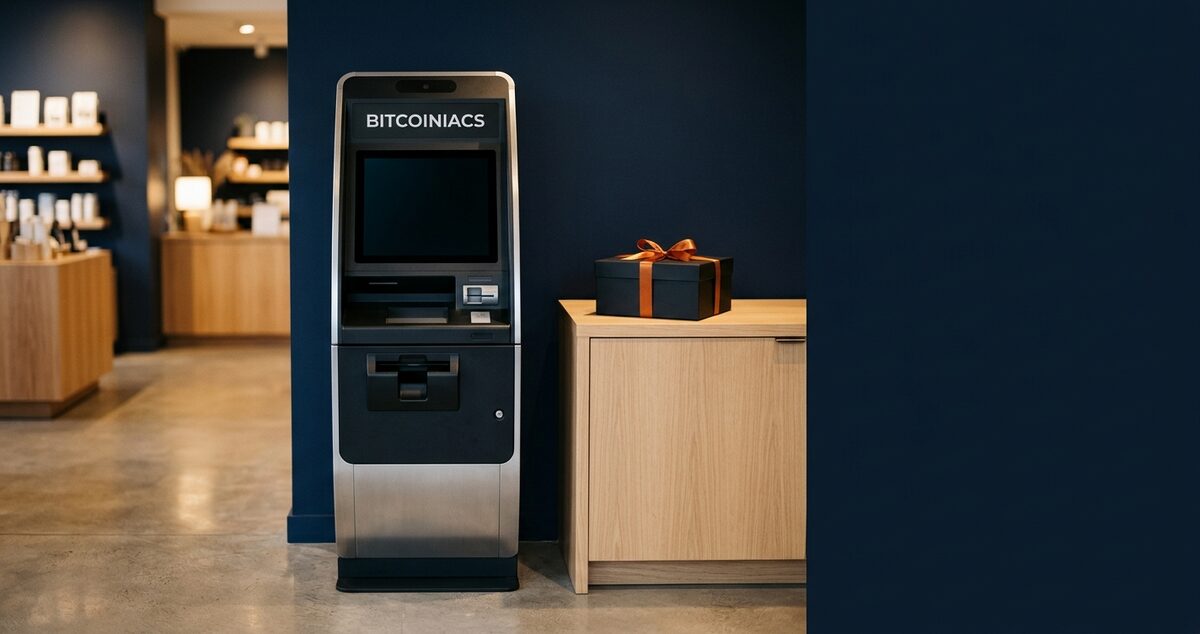
Gifting bitcoin in Canada is simpler than most people expect. The part that trips people up is the handover: someone has to buy it, someone has to hold the keys, and the Canada Revenue Agency treats the transfer of ownership as a disposition. This guide covers how to gift Bitcoin in Canada without losing money to avoidable mistakes, from buying it with cash at a Bitcoin ATM to handing over a wallet the recipient actually controls.
Table of Contents
- How to Gift Bitcoin in Canada: Four Ways to Hand It Over
- What to Sort Out Before You Buy Bitcoin as a Gift
- CRA Rules When You Gift Bitcoin in Canada
- How to Keep a Bitcoin Gift Safe
- Bitcoin Gift Ideas That Actually Land
- Frequently Asked Questions
How to Gift Bitcoin in Canada: Four Ways to Hand It Over
There is no gift-wrapped bitcoin. A gift only becomes real when the recipient ends up in control of the private keys. That leaves four practical routes, and the right one depends on how tech-comfortable the person is and how much you are giving.
Option 1: Buy at a Bitcoin ATM and Send It to Their Wallet
This is the fastest route when the recipient already has a wallet. Ask them for their receiving address or QR code first, then meet at a machine and buy with cash. Bitcoiniacs machines are cash-in machines: you feed in Canadian bills, complete identity verification, and enter the destination address on screen. You can find a machine near you on our Bitcoin ATM locations page, which lists every Bitcoiniacs location in Canada with the store name and street address.
Two habits make this route painless. First, send a small test amount before the main purchase and confirm it arrived. Bitcoin transactions cannot be reversed, and one wrong character in an address sends funds to a wallet nobody controls. Second, do the purchase together when possible, so the recipient sees the machine work and learns what a transaction fee looks like.
Option 2: Set Up a Wallet for Them and Hand Over the Recovery Phrase
For someone starting from zero, the gift is really two things: a wallet and the bitcoin inside it. Create a fresh wallet on a device they own, send the bitcoin to that wallet, then write the recovery phrase on paper and hand it over in person. The recovery phrase is the money. Anyone who reads those words can rebuild the wallet and spend the balance, so it should be written by hand, sealed in an envelope, and stored apart from the phone or laptop.
If you would rather teach the process than do it for them, walk through how to transfer Bitcoin to a wallet together and let them run the last send themselves. A gift they understand is one they are far less likely to lose.
Option 3: Give a Hardware Wallet With Bitcoin Already Loaded
A hardware wallet is the classic presentation for this kind of gift. It looks like a gift, it feels substantial, and it gives the recipient a safe place to keep whatever they buy next. Buy the device from the manufacturer or an authorised retailer only, never secondhand or from a marketplace listing, because tampered devices exist. Set it up, load the bitcoin, print the recovery phrase on paper, and hand both over in person.
Option 4: Larger Gifts and In-Person Appointments
Bitcoin ATMs have per-transaction and daily limits, so a substantial gift may need a different setup. For amounts above machine limits, you can book a crypto appointment and complete the purchase over the counter. You still need government-issued photo ID and the transaction is documented the same way, but having a person handle the details removes the chance of a mistyped address on a large send.
What to Sort Out Before You Buy Bitcoin as a Gift
Bitcoin purchases in Canada run through registered money services businesses, so identity verification is part of the process. The federal rules that govern this are published by FINTRAC, Canada’s financial intelligence unit, and they apply to every regulated dealer in the country. In practice you bring photo ID, scan it at the machine or show it at the counter, and the purchase is tied to a verified person. Any service offering to skip that step is one to walk away from.
What to bring and how the scan works depends on the machine, so it helps to know the rules ahead of time. Our guide to Bitcoin ATM ID requirements in Canada covers the accepted documents and what the process looks like from the customer side.
Three things are worth checking before you promise anyone a specific amount. Limits vary by machine and operator, so check the machine you plan to use rather than assuming a number. The counter price is only good for a short window. And keep the receipt, because it is your record of what you paid at tax time.
Also be clear with the recipient that the purchase is cash-based. Bring Canadian bills or plan your withdrawal rather than expecting to tap a card at the machine.
CRA Rules When You Gift Bitcoin in Canada
Gifting crypto is not a tax-free event in Canada. The CRA is direct about this: transferring ownership of a crypto-asset by way of gift or donation is a disposition, as set out in the agency’s guidance on reporting income from crypto-asset transactions. A disposition is what triggers a capital gain or a capital loss, and that lands on the person doing the giving.
The way it usually works is straightforward. If the fair market value on the day you gift the bitcoin is higher than what you paid, the difference is a capital gain you report; if it is lower, it is a capital loss you may be able to use against other gains. The recipient does not report the gift as income, but they do inherit a cost base, generally the fair market value on the day they received it, and they calculate their own gain or loss when they eventually sell.
Records make this manageable. Keep the date of the gift, the amount in Canadian dollars, the amount in bitcoin, the quote, any fees, the wallet addresses on both sides, the transaction ID, and the statement. Passing the same details to the recipient in writing saves an awkward conversation years later when neither of you remembers what the coin was worth in 2026.
Two situations deserve a professional opinion rather than a blog post. Gifts between non-arm’s-length parties, such as a spouse or a minor child, bring additional rules that can change how the gain is treated, and large gifts may interact with other parts of your tax picture. This article is general information, not tax advice, and a Canadian accountant who handles crypto is worth the fee when real money is involved.
How to Keep a Bitcoin Gift Safe
Bitcoin gifts attract the same criminals that target every other fast payment method, and the warning signs are consistent. Urgency is the biggest one: a relative in trouble who needs bitcoin within the hour, or a caller who insists you stay on the line. Guaranteed returns, a friendly helper who offers to set up your wallet, and any request for your recovery phrase all point the same direction. Nobody legitimate ever needs your seed phrase or a one-time code read out loud.
The Canadian Anti-Fraud Centre collects reports on these schemes and publishes the patterns to watch for, including crypto-specific ones. Reporting a scam attempt, even a failed one, helps build the picture that protects the next person.
On the practical side, slow down at the point of sending. Read the destination address twice, prefer scanning a QR code over typing, and send a small test before a large amount. Keep the recovery phrase on paper rather than in a photo, a note app, or an email to yourself, since those are the first places an attacker looks. If you are giving to a first-time holder, go through the wallet with them once so the mechanics are familiar before the money matters.
Bitcoin Gift Ideas That Actually Land
The gifts that work well match the moment. A small first bitcoin gift for a graduate, a newborn, or a milestone birthday gives the recipient a reason to open a wallet and learn the basics without risking much. A repeating gift, a set amount every month, quietly builds a position. For a wedding or a significant anniversary, a larger one-time gift with the wallet already set up and the recovery phrase stored properly beats another appliance.
Set expectations honestly at the same time you hand it over. Bitcoin moves. The Bank of Canada’s research on digital currencies and fintech is a useful neutral explainer on how volatile and unfamiliar these assets still are for most households. A gift that comes with a sentence about price swings, and about only giving what you can leave alone for a few years, is a better gift than one that arrives with a prediction attached.
Frequently Asked Questions
Do I have to pay tax on Bitcoin that was gifted to me?
No, receiving a gift is not taxable income in Canada. What matters is what happens afterwards. You take on a cost base equal to the fair market value on the day you received the bitcoin, and when you sell, trade, or spend it, the difference between that value and the proceeds becomes a capital gain or loss on your return. Holding it is not a taxable event, and neither is moving it between wallets you control.
Is giving Bitcoin away a taxable event for me?
Yes. The CRA treats a gift as a disposition, which means you are considered to have parted with the asset at its fair market value on the day you gave it. If that value is above what you originally paid, you report a capital gain. If it is below, you report a capital loss. This surprises people who assume gifts are tax-free, so it is worth calculating before the end of the tax year rather than in April.
What cost base do I use when I eventually sell gifted Bitcoin?
For a gift between people dealing at arm’s length, your adjusted cost base is generally the fair market value of the bitcoin on the date it was gifted to you. That protects you from being taxed on value that built up before the gift arrived. Ask the person who gave it to you for the date, the amount, and the recorded value, because you will need all three when you sell.
Can I gift Bitcoin to my children?
You can, and it is one of the more common reasons people ask about this. The complication is that gifts to a minor child or a spouse are not arm’s-length transactions, so attribution and other rules can apply to income or gains afterwards. The mechanics of the transfer are the same as any other gift, but speak to an accountant about the tax treatment before moving a significant amount.
I was given Bitcoin years ago and never touched it. What now?
Find out what you are holding first. If you still have the wallet and the recovery phrase, check the balance and note the date you received it, the value at that time, and the transaction details. There is no tax owing merely for having held it, and any gain is calculated when you dispose of it. If the records are thin, a crypto-literate accountant can help reconstruct a reasonable cost base.
A bitcoin gift is one of the few presents that can grow after the occasion is over. Get the wallet right, keep the records, understand the tax treatment on the way in and the way out, and the gift does what it was supposed to do: hand somebody control of something genuinely theirs.