


Bitcoin OTC trading is what happens when a trade is too large to send through a public order book without moving the price. Instead of hitting “market sell” and eating whatever bids are sitting there, you agree on a size and a price with a desk, settle once, and keep the rest of the market from watching you do it. In Canada that conversation comes wrapped in identity verification, FINTRAC reporting thresholds and records the CRA expects you to keep.
Table of Contents
- What Bitcoin OTC Trading Actually Means
- Why Large Orders Move Off the Order Book
- How a Bitcoin OTC Trade Works, Step by Step
- Costs, Verification and Tax Records in Canada
- Bitcoin OTC Trading in Canada: Desk, ATM or Exchange?
- Frequently Asked Questions
What Bitcoin OTC Trading Actually Means
Over-the-counter means the trade happens between you and a specific counterparty on agreed terms, rather than being matched anonymously against a public order book. The asset is identical — the same bitcoin, on the same blockchain. Only the plumbing changes. There is no shared book, no public print at execution, and usually no fixed fee schedule. There is a quote, a validity window and a settlement instruction.
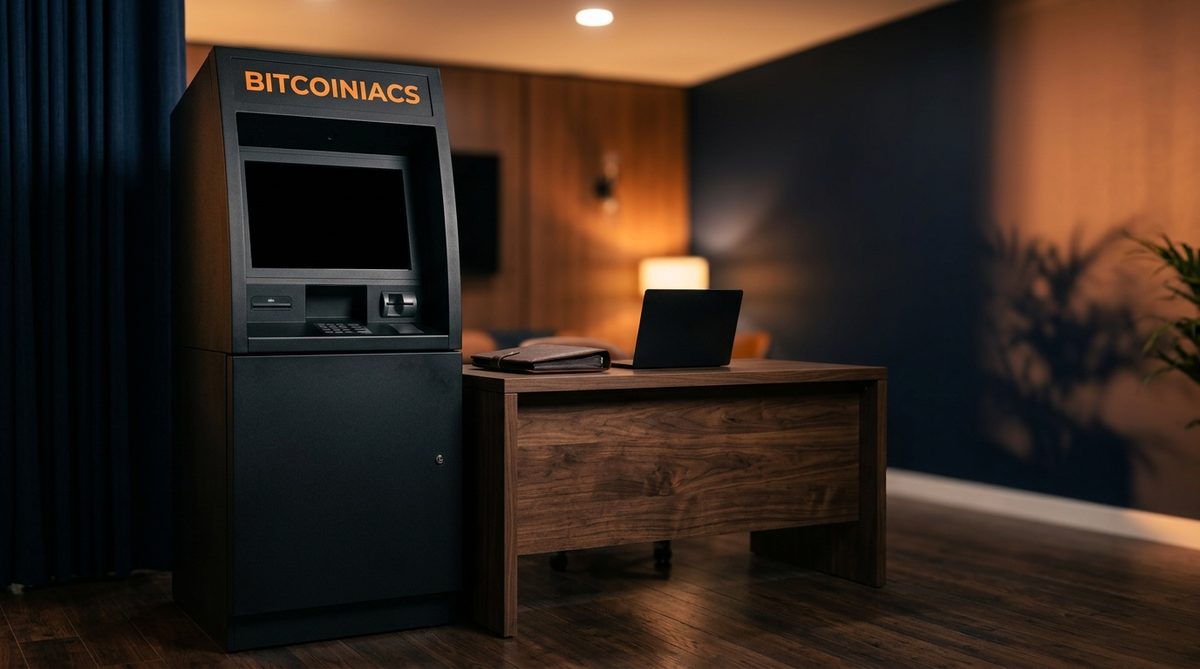
Three kinds of venues use the term. An exchange’s OTC desk is an arm of a large platform and typically wants institutional size. A brokerage quotes a retail-friendly price sourced wholesale behind the scenes. An in-person desk, like the Bitcoiniacs OTC Bitcoin desk in Vancouver, sits at the cash end: you verify in person, agree a CAD quote, and settle face to face.
Principal versus agency: who is on the other side
When a desk gives you a firm price and holds it, it is usually acting as principal — taking the other side and managing its own inventory. When it takes your order and finds a counterparty, it is acting as agent. A principal trade tells you exactly what you will receive and when, and the desk carries the market risk during the window. An agency fill depends on whether a buyer turns up.
“Is this a firm quote or indicative?” is the most useful question in the entire process. A desk that cannot answer it clearly is a desk to walk away from.
What OTC trading is not
It is not a way to stay off the books: a Canadian desk dealing in virtual currency is a reporting entity, and large transactions get reported. It is not anonymous — verification is part of the process. And it is not automatically cheaper, since a quote bundles the spread into one number and makes comparison harder, not easier. Anyone selling OTC as “untraceable” is describing something that does not exist here.
Why Large Orders Move Off the Order Book
Public order books are thin at the top. The visible bids near the mid-price might cover a few thousand dollars before the price starts stepping down. Send a six-figure market sell into that and you do not get the price you saw — you get an average of every level your order consumed, which is worse. That gap is slippage, and on a thin book it can cost more than a desk’s spread ever would.
The second cost is information. A large print is a signal. Traders watch for size, and some will front-run visible flow or fade it deliberately once they see it. If you are exiting a position held for years, broadcasting the exact moment and size is an expensive habit. For the practical side of a big exit, our guide to cashing out large Bitcoin holdings in Canada covers the settlement and banking sequence in more detail.
The operational argument
Size creates paperwork, too. An order that fills across forty trades produces forty fee lines and a reconciliation headache at tax time. One OTC trade produces one confirmed price and one receipt with a timestamp.
When OTC is overkill
Buying a few hundred dollars a week? A desk is the wrong instrument. Book depth is irrelevant at that size, the spread you would pay is trivial, and scheduling friction costs more than the saving. For everyday amounts a Bitcoin ATM location or an online purchase settles faster. The desk earns its place once price impact, timing or privacy start to matter — a lower threshold than most people assume, but not zero.
How a Bitcoin OTC Trade Works, Step by Step
The sequence is consistent across venues, even when size and funding rail differ. Knowing it in advance keeps you from being rushed at the one moment where rushing is expensive.
- Define the trade. Decide the amount in CAD or BTC, the funding rail (bank transfer, Interac e-Transfer, or cash in person), and your timing. No desk can quote accurately against a vague request.
- Verify first. Expect government ID, and for larger amounts, questions about source of funds. Quoting before verifying is backwards.
- Get the quote and its window. Ask for the CAD price per bitcoin, whether it is firm, and how long it holds. A quote with no expiry is not a quote.
- Receive settlement details through a channel you initiated. Confirm the address or payment details by a second route — a number you looked up yourself, not one sent in the same message.
- Settle and confirm. Send the CAD, receive bitcoin to a wallet you control, check the transaction ID on a block explorer, then keep the receipt.
Questions to ask before you send anything
Six questions separate a professional desk from a confident stranger: What is the all-in CAD price per BTC? Is the quote firm, and for how long? What verification will you need? Which entity am I dealing with, and is it registered as a money services business? What happens if settlement is delayed on your side? What documentation will I receive afterwards? If any of those gets deflected, stop.
Costs, Verification and Tax Records in Canada
The advertised number is rarely the number you pay. A desk usually earns the gap between the price it quotes you and the price it sources at, so the fee is embedded rather than itemised. A “zero commission” OTC trade is not free; it means the cost lives in the spread.
Four things stack into the real cost: the spread, any explicit service fee, the cost of moving money (wire charges, foreign exchange), and cash handling if you settle physically. To compare two quotes properly, ask each desk for the CAD price per bitcoin on the same size at the same moment, then compare that to a public reference price. That percentage gap is your true cost, and it is the only number worth comparing.
Verification and reporting are not optional
Bitcoiniacs operates as a FINTRAC-registered money services business, so identity verification, record keeping and reporting are part of every transaction rather than a courtesy. Dealers in virtual currency must report large virtual currency transactions, including amounts aggregating to $10,000 or more within a 24-hour window. The FINTRAC 24-hour rule guidance sets out how that aggregation works. A desk offering to skip verification is offering to break the rules on your behalf — a bad trade at any spread.
The records to keep from an OTC trade
Disposing of bitcoin is a taxable event in Canada, whether you sold it for dollars, swapped it, or spent it. Buying and holding generally is not. Because an OTC trade produces one clean price rather than many fills, it is unusually easy to document — if you keep the right pieces: the CAD amount, the BTC amount, the quote you accepted, all fees, the timestamp, the receiving wallet address, the transaction ID and the desk’s receipt. The CRA’s guidance for crypto-asset users is the reference for how those amounts feed into capital gains or income.
One practical note: if you paid a spread rather than a stated fee, your cost base reflects what you actually paid, not the mid-market price.
Bitcoin OTC Trading in Canada: Desk, ATM or Exchange?
Three realistic routes exist, and the right one depends on size and how much hand-holding you want. A registered platform suits people who want an app, a visible book and self-directed execution. An ATM suits cash purchases within its limits. A desk suits larger, less frequent trades where a fixed quote is worth more than a click.
Whatever the route, check who you are dealing with. The OSC’s list of crypto businesses shows which platforms have registration or exemptive relief in Ontario, and Canadian regulators publish investor alerts for unregistered operations. For an in-person cash trade, ask directly whether the business is a FINTRAC-registered MSB — and expect to be asked for ID in return, because that is what registration requires.
Scam patterns that cluster around large trades
Large trades attract a specific playbook: urgency (“the window closes in an hour”), guaranteed returns, a request to send crypto first to prove funds, a request for your seed phrase or a one-time code, and payment details that arrive by message and differ from any published channel. Nobody legitimate needs your seed phrase, ever, and no desk needs you to send bitcoin to a third-party address to “unlock” a better rate. The Canadian Anti-Fraud Centre tracks these patterns and takes reports; if someone pressures you to move fast and explains away verification, stop and call a number you found yourself.
To talk through a specific trade rather than read about one, book a crypto appointment and bring the size, timing and rail you want to use. The team that runs the ATM network handles the desk, so the same people answer the phone.
Frequently Asked Questions
Do OTC desks have a minimum order size?
Often, yes — and it varies widely. Desks attached to large exchanges commonly set minimums well into the six figures, because their economics only work at that size, while smaller and in-person desks quote much lower amounts. Ask for the minimum before you start verification, not after. There is no industry-wide number.
Is an OTC desk cheaper than a regular exchange?
Sometimes — not because the fee is lower, but because the slippage is. Below a certain size an exchange’s visible fees beat a desk spread. Above it, market impact through a thin book usually costs more than the spread. The break-even depends on book depth at that moment, so compare the CAD price per bitcoin on your actual size.
How do I cash out a six-figure Bitcoin position in Canada safely?
Slow down the parts that can be slowed. Verify with a registered business, get a firm quote with a defined window, confirm settlement details through an independently sourced channel, and settle in one transaction. Expect source-of-funds questions and plan for them. Keep every record from first quote to final bank statement.
Why would someone use an OTC desk instead of just selling on an exchange?
Three reasons recur: the order is too large for the book without moving the price, the seller wants a fixed price for a defined window instead of execution risk, and the paperwork is cleaner as one trade than dozens of fills. Privacy from the public tape is a fourth, though OTC is not private from regulators.
Is it a scam if a buyer offers to settle privately, off-exchange?
Not automatically — plenty of legitimate OTC trades settle off-exchange. The warning signs are structural: they contact you first with an offer above market, they want crypto sent before dollars arrive, they ask for a seed phrase or one-time code, they resist verification, or their payment details change mid-conversation. A real desk will accept that you check its registration and call back on a published number.
Bitcoin OTC trading is simple once you can see its shape: a quote with a window, verification before money moves, one settlement, one receipt. The complexity lives in what the spread hides and who is actually on the other side.