


A Bitcoin RRSP sounds simple until you try to open one. Canadians ask about it constantly, and the logic seems obvious: an RRSP shelters investment growth from tax, so why not park Bitcoin inside one and let the plan do the heavy lifting? The catch is structural. A registered retirement plan is a trust with rules about what it may own, and those rules decide whether you end up with bitcoin exposure or with a rejected transfer and a penalty notice. Below is what actually works in Canada in 2026, what does not, and the tax math behind each route.
Table of Contents
- How a Bitcoin RRSP Works in Canada
- What Qualifies Inside a Registered Plan
- Bitcoin RRSP vs a TFSA vs Buying Bitcoin Yourself
- The Tax Math: Deduct Now, Pay Income Tax Later
- Practical Routes to Exposure, and Where Cash Fits
- Frequently Asked Questions
How a Bitcoin RRSP Works in Canada
An RRSP is not an account in the same way a chequing account is. It is a trust registered with the Canada Revenue Agency. You are the annuitant; a bank, credit union, trust company or insurance company is the trustee. That trustee holds the property, files the paperwork, and answers to CRA for what sits inside the plan. The CRA is explicit that a self-directed plan still works this way: you make the investment decisions, but securities cannot be held in your own name.
That single sentence explains most of the confusion around a Bitcoin RRSP in Canada. You are not looking for a way to tuck a hardware wallet into a retirement account. You are looking for a security the trustee can legally hold, whose value tracks Bitcoin.
The Two Routes People Actually Use
In practice, Canadians get Bitcoin exposure into a registered plan through one of two vehicles. The first is a fund: spot Bitcoin exchange-traded funds trade on the TSX like any other ETF, and units of those funds are ordinary qualified investments. Your self-directed plan buys units, the fund’s custodian holds the coins, and you hold a position inside the tax shelter.
The second is equity. Shares of listed companies with Bitcoin exposure, including miners and treasury-holding firms, are qualified investments when they trade on a designated stock exchange. Some investors also look at private company shares, which can qualify under the small business corporation rules but arrive with valuation paperwork and prohibited-investment risk if you are not careful. Both routes give you price exposure. Neither gives you coins.
Why Your Own Keys Do Not Fit
Bitcoin sitting in a wallet you control is property, but it is not a qualified investment for a registered plan. There is no trustee to hold it, no custodian statement to back it, and no way for the plan to satisfy the rules that govern registered assets. You also cannot contribute coins in kind. Moving Bitcoin into an RRSP is a disposition at fair market value, which means the tax on any gain is triggered whether or not a dollar of cash changes hands, and the plan still cannot accept the asset.
What Qualifies Inside a Registered Plan
The definitive list lives in CRA’s Income Tax Folio S3-F10-C1 on qualified investments. It covers money, GICs, bonds, mutual funds, most securities listed on a designated stock exchange, and certain small business shares. Crypto assets as a category are not on that list.
The closest analogue is precious metal. The folio treats gold and silver bullion coins, bars and certificates as qualified investments under conditions, and notes that CRA expects the plan trustee to use a custodial trustee for the bullion. Even for metal with a centuries-old market, the asset only fits when a custodian stands between you and it. Bitcoin has no equivalent provision.
The Penalty for Getting It Wrong
Holding a non-qualified asset inside a registered plan is not a paperwork slap on the wrist. CRA applies a tax equal to 50 percent of the fair market value of the non-qualified property, charged to the annuitant rather than to the plan, and there is no grace period for removing it. If a platform ever offers to hold “physical Bitcoin inside your RRSP” without a fund structure, ask which qualified investment the trustee is actually recording, because the answer determines who pays that tax.
Bitcoin RRSP vs a TFSA vs Buying Bitcoin Yourself
Three structures, three different tax outcomes. The comparison that matters is not which one is “best” in the abstract, but which one matches your income now against your income later.
| Structure | Tax on growth | Tax on withdrawal | Can hold coins |
|---|---|---|---|
| RRSP | Deferred | Fully taxable as income | No, fund units only |
| TFSA | None | None | No, fund units only |
| Non-registered, self-custody | Taxed as realized | Not applicable | Yes |
For an asset with Bitcoin’s volatility, the TFSA is often the more forgiving shelter, because growth leaves the account tax-free instead of being converted into income later. The RRSP pulls ahead when your marginal rate today is meaningfully higher than the rate you expect in retirement, since the deduction is worth more than the future inclusion costs. Much of that reasoning is laid out in our guide to holding Bitcoin in a TFSA, and the same logic applies here in reverse. Registered plan or not, neither account will hold your keys.
The Tax Math: Deduct Now, Pay Income Tax Later
The mechanic is the same one that applies to any RRSP holding. Contributions within your deduction limit reduce taxable income for the year. Growth inside the plan is generally exempt from tax while it stays there. Withdrawals are added to income in the year you take them, at your marginal rate, which is why the CRA describes the arrangement as deferral rather than exemption on its RRSP overview.
One nuance catches people who assume a Bitcoin RRSP is tax-free. If your Bitcoin position inside the plan triples, nothing is taxed on the way up. If you then withdraw the proceeds, the entire amount lands on your tax return as ordinary income, not as a capital gain. A 100,000 dollar withdrawal is not taxed at the 50 percent inclusion rate that applies to capital gains in a non-registered account. That difference can be larger than the deduction you claimed years earlier.
Withholding Tax on Withdrawals
Lump-sum RRSP withdrawals also trigger withholding at source: 10 percent up to 5,000 dollars, 20 percent on the portion between 5,000 and 15,000, and 30 percent above that. Withholding is a prepayment, not the final bill. If your marginal rate is higher, you settle up at filing time, which is when most people discover a mid-year withdrawal to buy more Bitcoin was an expensive way to move money.
The order of operations matters too. Selling Bitcoin you hold outside a plan is a taxable event before any contribution happens. Contributing the cash afterwards earns a deduction, but it does not erase the gain you just realized. Our breakdown of Bitcoin taxes in Canada covers how CRA treats those dispositions.
Practical Routes to Exposure, and Where Cash Fits
If you want Bitcoin exposure inside a registered plan, the practical path is a self-directed RRSP at a brokerage that lists Bitcoin ETFs, or a robo-advisor portfolio that includes them. Check the management expense ratio before you commit, because a fund fee is charged every year whether Bitcoin rises or falls, and it compounds against you the same way returns compound for you. Also confirm the platform is registered. The OSC’s Check Before You Invest tool and the CSA’s registered platform list exist precisely because unregistered operators have taken Canadian money and disappeared.
Plenty of Canadians hold both. A registered position is convenient, sheltered and completely dependent on a custodian. A self-custody position is yours outright, with no fund fee and no counterparty, but it sits in a taxable account and the security burden is on you. For the mechanics of each, see our comparison of a Bitcoin ETF vs buying Bitcoin directly.
If You Want Coins, Not Units
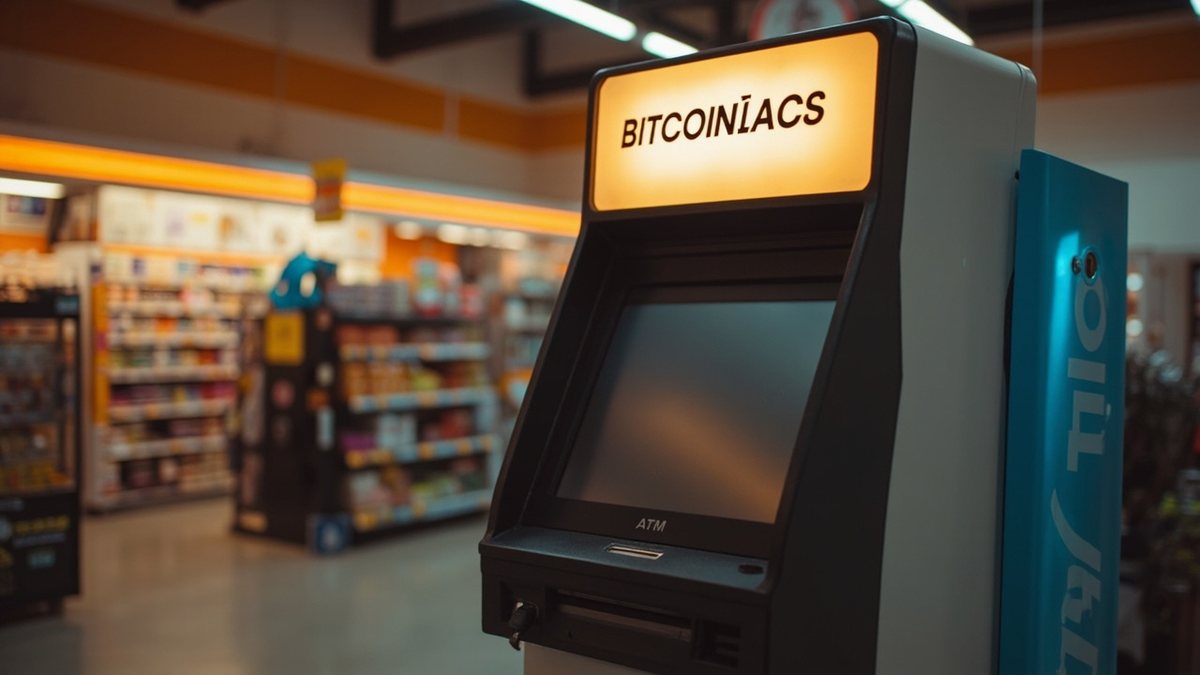
Buying actual Bitcoin happens outside the plan. Cash purchases at a Bitcoin ATM are cash-based: you pay at the machine, the coins go to a wallet you control, and no bank account or brokerage sits in the middle. That is the opposite trade-off from a registered fund position, and it is why the two often coexist in one household. You can find machines on our list of Bitcoin ATM locations across Canada.
Whatever route you take, keep records from the first purchase. For coins, that means the Canadian dollar amount, the amount of Bitcoin received, the quote you were shown, the fees, the timestamp, the wallet address and the transaction ID. For fund units, it means the trade confirmations and the plan statements. When you eventually sell, withdraw, or contribute, those records are what turn a guess into a defensible cost base.
Frequently Asked Questions
Can you hold Bitcoin directly in a self-directed RRSP in Canada?
No. A self-directed RRSP gives you control over investment decisions, but the trustee still holds the property, and only qualified investments are allowed. Bitcoin in a wallet you control is not a qualified investment, so it cannot be registered inside the plan. What you can hold is a security that tracks Bitcoin, such as units of a spot Bitcoin ETF, or shares of a listed company with Bitcoin exposure.
Is there a way to move Bitcoin I already own into an RRSP to avoid tax?
Not in kind. Contributing coins directly is a disposition at fair market value, so any gain is taxable in the year of the transfer, and the plan cannot accept the asset anyway. The workable sequence is to sell the Bitcoin, report the resulting gain or loss, contribute the cash if you have deduction room, then buy an eligible fund inside the plan. The contribution deduction softens the bill, but it does not cancel the gain you realized on the sale.
Is it better to hold a Bitcoin ETF instead of actual coins?
It depends on what you are optimizing for. A fund gives you registered shelter, simple reporting and no key management, at the cost of an annual fee and reliance on a custodian. Coins give you direct ownership with no fund fee, but they sit in a taxable account and you carry the full security burden. Many Canadians split the difference: a sheltered fund position for long-term registered savings, and a smaller self-custody stack bought with cash.
Do I pay capital gains or income tax when I withdraw from a Bitcoin RRSP?
Income tax. RRSP withdrawals are added to your taxable income for the year and taxed at your marginal rate, regardless of whether the plan held Bitcoin, mutual funds or cash. Withholding tax is deducted at the source as a prepayment. This is the key difference from holding Bitcoin in a non-registered account, where a sale usually produces a capital gain with only half the gain included in income.
Can I pull money out of my RRSP to buy Bitcoin?
You can, but it is usually the most expensive way to fund a purchase. The withdrawal is taxed as income, withholding applies immediately, and the contribution room you used is not restored, so you lose that sheltered space permanently. If the goal is simply to own Bitcoin, buying with cash outside the plan costs you a fee and a spread instead of a tax bill and lost room.
The short version: a Bitcoin RRSP in Canada is a fund position wearing a retirement label, not a vault for your own coins. Decide whether you want tax deferral or direct ownership, because the rules will not let you have both in the same account. If you want coins in hand, buy them with cash, take custody seriously, and let the registered plan hold the boring stuff.