


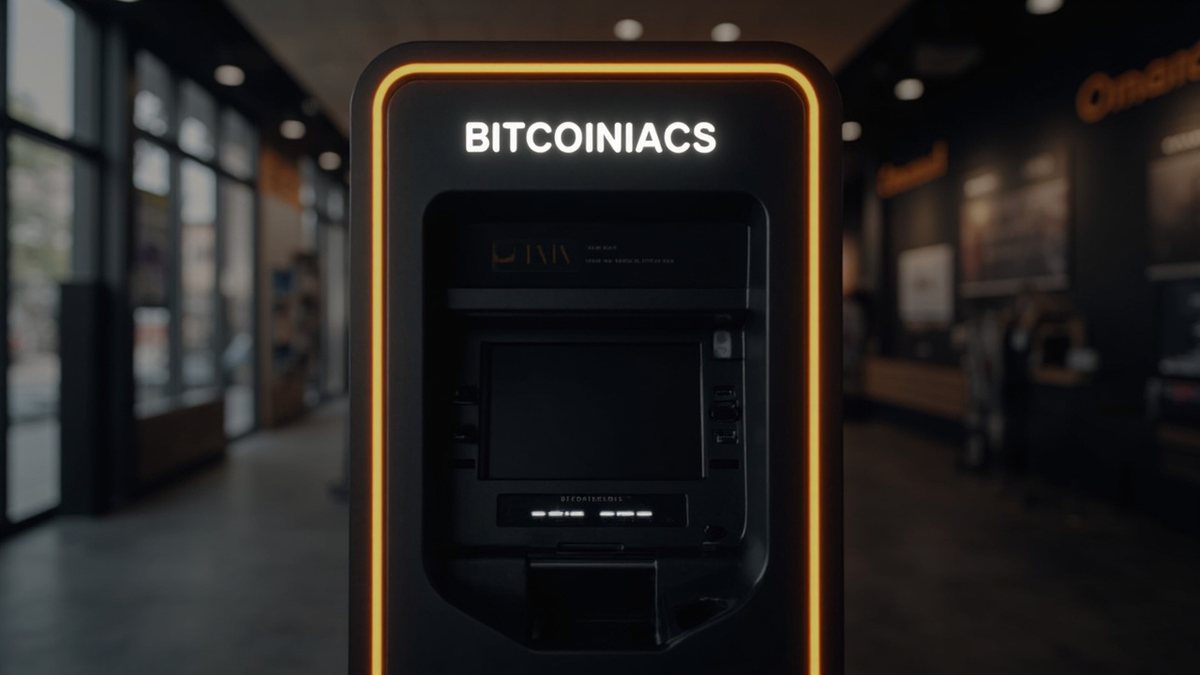
Searching “bitcoin ATM near me” returns a map covered in pins, and almost none of those pins tell you whether the machine is still plugged in, what it charges, or who operates it. Bitcoin ATM directories are largely crowd-sourced. Machines get removed from convenience stores and coffee shops every month, new ones appear without anyone updating the map, and duplicate pins sit next to each other for years. A five-minute check before you leave the house saves you a wasted trip with cash in your pocket.
This guide covers how to find a Bitcoin ATM near me searches should actually be answered: how to confirm a machine exists, how to read its fees before you commit, what identification to bring, and how to recognize the payment pattern scammers push people into. Everything here applies to cash-based machines in Canada, which is how Bitcoiniacs operates.
Table of Contents
- How to Find a Bitcoin ATM Near Me in Canada
- What a Bitcoin ATM Actually Costs
- ID Requirements and Daily Limits
- How to Use the Machine, Step by Step
- How to Spot a Bitcoin ATM Scam
- Frequently Asked Questions
How to Find a Bitcoin ATM Near Me in Canada
The fastest route is the operator’s own locator rather than a third-party map. An operator updates its own listing when a machine is pulled, because a dead listing costs them a support call. The Bitcoiniacs ATM locations page lists every active machine with the store name, street address, province and whether that location buys Bitcoin, sells Bitcoin, or both. That last detail matters more than people expect: a machine that buys Bitcoin for cash is not necessarily one that pays cash out for Bitcoin.
Confirm the Machine Is Still There
Call the host business before a long drive. Convenience stores, vape shops and coffee shops turn over quickly, and a machine can be offline for a week waiting on a part. Ask two questions: is the Bitcoin machine working today, and does it currently have cash if you plan to sell. Staff at the counter know both. If nobody at the store knows what you are talking about, you have the wrong address or an outdated listing.
Read the street address rather than the neighbourhood label. Two machines a kilometre apart can have completely different fees. Use the exact address, including the unit number, and check the store’s posted hours rather than assuming the machine follows mall hours.
Check That the Operator Is Registered
In Canada, a business that exchanges cash for virtual currency is a money services business and must register with the Financial Transactions and Reports Analysis Centre of Canada. You can look up any operator in the public FINTRAC Money Services Business Registry before you use a machine. Registration is not a quality rating or a government endorsement of the product, but an operator that is not listed is a serious warning sign, and it usually means the machine has no compliance program behind it, no reporting obligations and no paper trail for you.
What a Bitcoin ATM Actually Costs
Two separate charges sit inside every quote. The first is the operator fee, which is usually expressed as a percentage and appears somewhere on the screen. The second is the spread, meaning the difference between the price the machine pays for Bitcoin on the open market and the price it charges you. The spread is the number most people miss because it never appears as a line item. A machine advertising a modest fee can still be expensive if its spread is wide, and a machine with a higher headline fee can be cheaper if it quotes close to spot.
Work backwards from cash in hand. If you insert $300 and the all-in cost is 12 percent, you are buying roughly $264 worth of Bitcoin. Network fees are small but real, and many machines have a minimum transaction size, which is why small deposits feel disproportionate: put $20 into a machine with a minimum service charge and you can walk away with $13 of Bitcoin without anyone having cheated you. The full breakdown of how these numbers are built is in the Bitcoin ATM fees guide.
Compare the Quote to Spot Before You Confirm
Pull up a live Bitcoin price on your phone before you tap the buy button, then compare it to the rate on the machine screen. A quick percentage calculation tells you whether the spread is reasonable, and you can walk away before inserting cash. For background on how Bitcoin pricing works and why the Canadian dollar figure differs from the USD quote, the Bank of Canada’s digital currency explainer is a neutral starting point.
Keep the receipt, and keep a record of the Canadian dollar amount, the Bitcoin amount, the rate quoted, the fee, the timestamp, your wallet address and the transaction ID. Buying is not a taxable event by itself, but the Canada Revenue Agency’s guidance for crypto-asset users explains why that cost base matters later when you sell, trade or spend. An ATM receipt is often the only clean record a cash buyer has.
ID Requirements and Daily Limits
Expect to be asked for identification. Canadian operators verify identity because they are regulated money services businesses with know-your-customer obligations, and the exact threshold depends on the operator, the transaction size and the verification prompt at that machine. Bring a government-issued photo ID with your full legal name, plus a phone that can receive a text message. Verification may happen at the machine itself or through a short online step before your first purchase, so a first visit can take longer than a repeat visit.
Daily limits vary by operator and even by location, because they are driven by machine cash capacity, liquidity, fraud controls and the operator’s risk settings. There is no single national cap you can plan around. The guide to Bitcoin ATM limits in Canada explains how those ceilings are set and how to plan a larger transaction so you are not turned away at the counter.
What to Bring With You
Bring photo ID, a charged phone, and your wallet ready to receive. If your wallet shows a QR code, have it on screen before you start, because machine interfaces time out and a slow wallet search is the most common reason a first transaction gets abandoned halfway. Never let anyone else scan their own address at the machine.
How to Use the Machine, Step by Step
The mechanics are simpler than the screen suggests. The order below is what a typical cash-buy transaction looks like at a Canadian machine.
- Open your wallet and copy the receive address, or display the QR code.
- Tap the screen to start and choose Buy Bitcoin.
- Read the quoted rate and the fee before continuing, not after.
- Scan your wallet QR code, or paste the address, then check the first and last characters match your wallet.
- Insert cash. Machines accept specific denominations, and crumpled or damaged notes can be rejected.
- Confirm the transaction and take the printed receipt.
- Wait for the Bitcoin to appear in your wallet, then for the first confirmation on the network.
A machine usually broadcasts your transaction within minutes of accepting cash, but the balance can take longer to become spendable depending on how many confirmations your wallet requires. Do not send a second transaction because the first one has not appeared yet. Check the address you gave against the receipt, then check a block explorer with the transaction ID. The first-time guide to using a Bitcoin ATM walks through each screen, including what to do if the machine rejects a note or prints no receipt.
How to Spot a Bitcoin ATM Scam
The single most common Bitcoin ATM fraud in Canada does not involve breaking the machine. It involves a victim walking into a store with cash and a phone, being talked through the purchase by someone who is not there, and sending Bitcoin to an address they cannot get back. Police services have posted warnings at machines for exactly this reason; the RCMP’s notice on Bitcoin ATM fraud warnings describes the pattern in plain terms.
Four Red Flags
- Someone on the phone told you to use a Bitcoin machine, especially a caller claiming to be police, a bank investigator, a tax agency or tech support.
- You cannot explain why you are sending Bitcoin to that specific address, or the address came from a chat message.
- A stranger at the store offers to help you operate the machine, or asks you to scan their wallet instead of yours.
- You have been told not to discuss the transaction with staff, or that telling anyone will “cancel the investigation.”
No legitimate agency, bank, utility or company collects payment in Bitcoin. No real refund, prize, job, loan or legal settlement arrives as a request for you to deposit cash into a machine. If you are already mid-transaction and something feels wrong, stop before you insert the cash and speak to the staff. Operators can pause or refuse a transaction, and a genuine support person will never rush you. If you have already sent funds, report it to local police and to the Canadian Anti-Fraud Centre; speed matters, but recovery is never guaranteed, and anyone who promises to recover your Bitcoin for an upfront fee is running a second scam.
Frequently Asked Questions
Do all bitcoin ATMs require ID?
Not every single visit looks the same, but expect verification. Canadian operators are regulated money services businesses with identity and record-keeping obligations, and machines in Canada commonly ask for a phone number and government photo ID, at least above certain transaction sizes. Bring ID with your full legal name and a phone that can receive texts. If a machine lets you skip every check with no questions and no registration anywhere, that is a reason to be suspicious rather than reassured.
Why did my $20 deposit only buy $13 of Bitcoin?
Three things eat into a small deposit: a percentage fee, the spread between the machine’s price and the market price, and a minimum or flat service charge. On a $20 bill the flat components dominate, which is why the effective cost is far higher than the advertised percentage. Larger transactions dilute the flat charges. If you only want a small amount of Bitcoin, know that the per-dollar cost is at its worst at the bottom of the range, and read the quote screen before inserting cash.
How common are bitcoin ATMs in Canada, and why are they in convenience stores?
Canada has one of the larger Bitcoin ATM networks in the world, and most machines sit inside small retail businesses rather than bank branches. A cash machine needs a host that handles cash daily, has staff on site during opening hours, and has room for a countertop unit. Convenience stores, vape shops, coffee shops and grocery markets fit. It also means the machine is only as easy to find as the store, so check the exact address and hours, not just the pin on a map.
Which bitcoin ATMs don’t require ID?
Be careful with this question, because the honest answer is that no legitimate Canadian operator advertises an ID-free path around the rules. Verification requirements come from federal anti-money-laundering obligations, and an operator that quietly skips them is exposed to losing its registration. Machines differ in when and how they verify, and repeat customers sometimes move faster than first-time visitors, but “no ID, ever, no questions” is a claim that should make you walk away.
Finding a Bitcoin ATM near you is mostly an exercise in verification: confirm the machine is live, confirm the operator is registered, read the all-in cost before you insert a note, and never let anyone on the phone direct your transaction. Bitcoiniacs lists every active machine with the store name and address, so you can check the location, the hours and whether that machine buys, sells or does both before you leave home.