


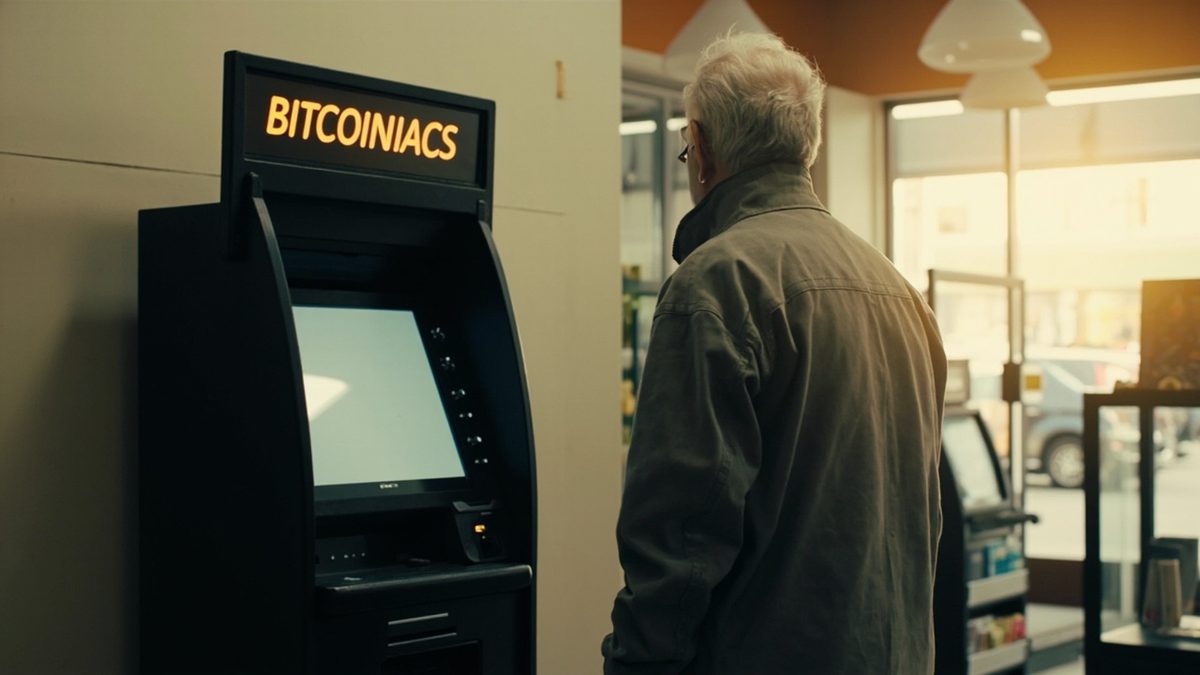
Bitcoin for seniors in Canada is not the same decision it is for a 30-year-old with a 30-year runway. The questions are different: how much of a fixed income can you afford to put at risk, how do you buy without downloading five apps, and who in the family knows what you own. This guide answers those plainly — how to buy small amounts with cash at an ATM, how to store coins so you cannot lose them, how the scams aimed at older Canadians work, and what the Canada Revenue Agency expects you to keep. If Bitcoin does not fit your situation after reading this, that is a perfectly good outcome.
Table of Contents
- Bitcoin for Seniors in Canada: What’s Different
- How to Buy Bitcoin With Cash at a Bitcoiniacs ATM
- Storing Bitcoin Safely: Custody Choices for Older Canadians
- Spotting Bitcoin Scams Aimed at Older Canadians
- Tax and Record-Keeping Basics for Retirees
- Frequently Asked Questions
Bitcoin for Seniors in Canada: What’s Different
The first difference is time horizon. A retiree drawing on savings cannot wait out a decade-long drawdown when the money is needed for groceries or medication. That argues for a small allocation — an amount you could see fall by half without changing any plan — rather than a percentage rule copied from a younger investor.
The second difference is income structure. Most retirees hold cash, GICs, and registered accounts that produce predictable returns. Bitcoin pays no interest and no dividend, so its only return comes from price changes. That makes it a speculative holding, not an income asset.
The third difference is access. Many older Canadians prefer to handle money in person, in cash, with a receipt in hand. A Bitcoin ATM fits that habit better than an online exchange that requires selfies, bank links, and an app you have to keep updated. The Bank of Canada’s plain-language look at cryptoassets is a reasonable starting point for the central bank’s view on what these assets are and are not.
What does not change with age is the core rule: never buy Bitcoin with money you cannot afford to lose, and never buy it because someone else told you to. Every serious fraud case involving older Canadians starts with a person who was told what to do.
How to Buy Bitcoin With Cash at a Bitcoiniacs ATM
A cash purchase at a Bitcoin ATM is the simplest route for someone who does not want an exchange account. You insert banknotes, scan a wallet address, and the machine sends bitcoin to that address. No bank login, no linked account, no card. Bitcoiniacs machines are cash-based — they are not bank ATMs and do not take debit or credit cards.
Step by step
- Set up a wallet first, on your own, before you leave the house. Write the recovery phrase on paper.
- Find a machine using the Bitcoiniacs ATM location directory, which lists the store name and street address for each one.
- Bring government photo ID. Canadian rules require identity verification for cash-to-crypto transactions, and the exact thresholds are covered in this guide to Bitcoin ATM ID requirements in Canada.
- At the machine, choose Buy, scan the wallet QR code, and confirm the address on screen matches your wallet.
- Insert cash. Count it as you go and confirm the total on screen before accepting the quote.
- Keep the receipt. It shows the amount, the fee, the bitcoin price used, and the transaction ID.
What it actually costs
ATM purchases carry a higher all-in cost than a large exchange order, because the operator covers cash handling, machine maintenance, rent, and identity checks. Expect the quoted price to include a spread plus a service fee. Ask for the total before you insert cash, and compare it against the amount of bitcoin you actually receive — not against the headline price on a news site.
Two habits reduce error. Never send bitcoin to an address someone gave you by phone, text, or chat — only to a wallet you control. And buy small until you have done it once successfully; a first purchase of $50 teaches the whole process without exposing much money.
Storing Bitcoin Safely: Custody Choices for Older Canadians
Bitcoin does not sit in a bank. It sits on a public ledger, and access to it is controlled by a private key or, more commonly, by a wallet’s recovery phrase — usually twelve or twenty-four words. Whoever has those words controls the coins. That single fact drives every storage decision.
Phone wallet versus hardware wallet
A phone wallet is free and fine for small amounts, but a lost or wiped device means the coins are gone unless you have the recovery phrase. A hardware wallet stores the key offline and requires a PIN plus physical confirmation for each transaction. It suits larger holdings and people comfortable with one more piece of technology.
Whichever you choose, the recovery phrase is the whole ballgame. Write it on paper — not in a phone note, not in an email, not in a photo. Store it somewhere a fire will not reach, and do not photograph it. This guide to Bitcoin seed phrase security walks through the storage options and the mistakes that cost people their coins.
Plan for someone else to find it
This is the step older holders most often skip. If nobody knows the phrase exists, the coins are effectively lost when you die or become incapacitated. Put a sealed envelope with your executor, add a note to your will saying where the phrase is stored (never the phrase itself — a will becomes a public document in probate), and make sure one trusted family member knows the wallet exists. Test the handoff while you are healthy.
Protect the accounts around your wallet with multi-factor authentication. The Government of Canada’s Get Cyber Safe guide to multi-factor authentication explains the difference between an app-based code and a text message code, and why the app is harder to intercept.
Spotting Bitcoin Scams Aimed at Older Canadians
Older Canadians are targeted because they hold savings, answer the phone, and are often polite to strangers. The scripts are consistent, and once you know the shape of them they are easy to recognise.
The four patterns that matter
- The fake investment platform. A friendly contact — often met online — walks you through opening an account on a slick website showing rising balances. The balance is fiction. Withdrawals require “tax” or “release fees” paid in bitcoin, and the money never comes back.
- The government or police call. Someone claiming to be from the CRA, Service Canada, or a police service says you owe money or your identity was used in a crime, and demands payment in bitcoin at a machine. No Canadian government agency accepts bitcoin.
- The romance and companionship scam. Weeks of warm conversation, then an emergency, a business opportunity, or a “trading tip” that requires you to buy and send crypto.
- The recovery scam. After losing money, you are contacted by a “recovery specialist” who charges an upfront fee in crypto to get it back. This is a second theft, aimed at people already hurt once.
The rules that stop all of them
Urgency is the tell. Every script creates a deadline — a warrant, an account closure, a price about to move. Legitimate financial decisions do not require you to act within the hour.
Never share your recovery phrase, never let a stranger install remote-access software, never pay with gift cards, and never send bitcoin to an address supplied by someone who contacted you. If a person you met online is guiding your purchase, stop and talk to someone you know in real life first. Our breakdown of crypto scams in Canada covers the variations, and the Canadian Anti-Fraud Centre takes reports and publishes current alerts.
Tax and Record-Keeping Basics for Retirees
Buying bitcoin is not a taxable event in Canada. Selling it, trading it for another cryptoasset, or spending it is. The Canada Revenue Agency then treats the gain as capital or income depending on how you acquired and used the asset — a question worth asking an accountant rather than guessing. The CRA’s own guidance for crypto-asset users is the authoritative reference.
What you can control is the paper trail. For every purchase, keep the date, the dollar amount paid, the bitcoin received, the fee, the machine used, and the transaction ID. ATM receipts capture most of this on one slip — staple it to a note with the wallet address and keep it with your tax file. Reconstructing cost years later from a wallet history is painful.
One caution: bitcoin cannot be held directly inside a TFSA or RRSP. Products that hold it inside a registered account exist, but they are securities, not coins, with their own fees and rules. If a salesperson says otherwise, end the conversation.
Frequently Asked Questions
How can I help my aging parents get into Bitcoin without them getting hurt?
Start with a small, fixed amount they can lose without consequence, and do the first purchase together in person. Set up the wallet yourself, write the recovery phrase on paper, and keep a copy where the family can find it. Then agree on one rule: nobody — not a caller, not an online friend, not a “trading coach” — gets to direct a purchase. Most harm done to older buyers comes from following instructions, not from Bitcoin’s price.
My elderly parent is being scammed and will not listen. What do I do?
Stop arguing about whether Bitcoin is a good investment — that lets the scammer frame you as the obstacle. Contact the bank and ask for a fraud flag or temporary hold, report it to the Canadian Anti-Fraud Centre, and involve local police if money is still moving. If their home or life savings are at risk, a power of attorney or guardianship application through your province may be necessary.
What is the easiest and safest way for a beginner to buy Bitcoin?
The safest first purchase is small, in person, with a receipt. For cash buyers in Canada that means a Bitcoin ATM: bring photo ID, scan your own wallet address, insert a modest amount, keep the slip. It takes a few minutes and requires no bank link. Buy more only after you have moved, stored, and — if you choose — sold a small amount once.
What security measures should I take when storing Bitcoin?
Write the recovery phrase on paper and store it offline, in a place protected from fire and water. Do not keep it in a phone note, an email draft, or a cloud photo. Put a PIN or biometric lock on the phone that holds the wallet, enable multi-factor authentication on any exchange or email account connected to it, and never type the phrase into a website or read it to anyone on the phone. For holdings large enough to hurt, move to a hardware wallet.
Is it too late to start buying Bitcoin at 65 or older?
It is not too late to learn, but the purpose changes. At 65, bitcoin is not a retirement plan — it is a small speculative position on the edge of a portfolio that already works. Size it so a 50 percent drop changes nothing about your income, and make sure your executor knows it exists. Anyone promising that bitcoin will fund a retirement starting now is selling something.
Bitcoin can be a reasonable small holding for an older Canadian who understands the risks, keeps records, and buys without being pushed. It is a poor fit for anyone buying under pressure, with borrowed money, or with funds earmarked for rent and medication. If you want to try it, start with fifty dollars at a machine and keep the receipt.