


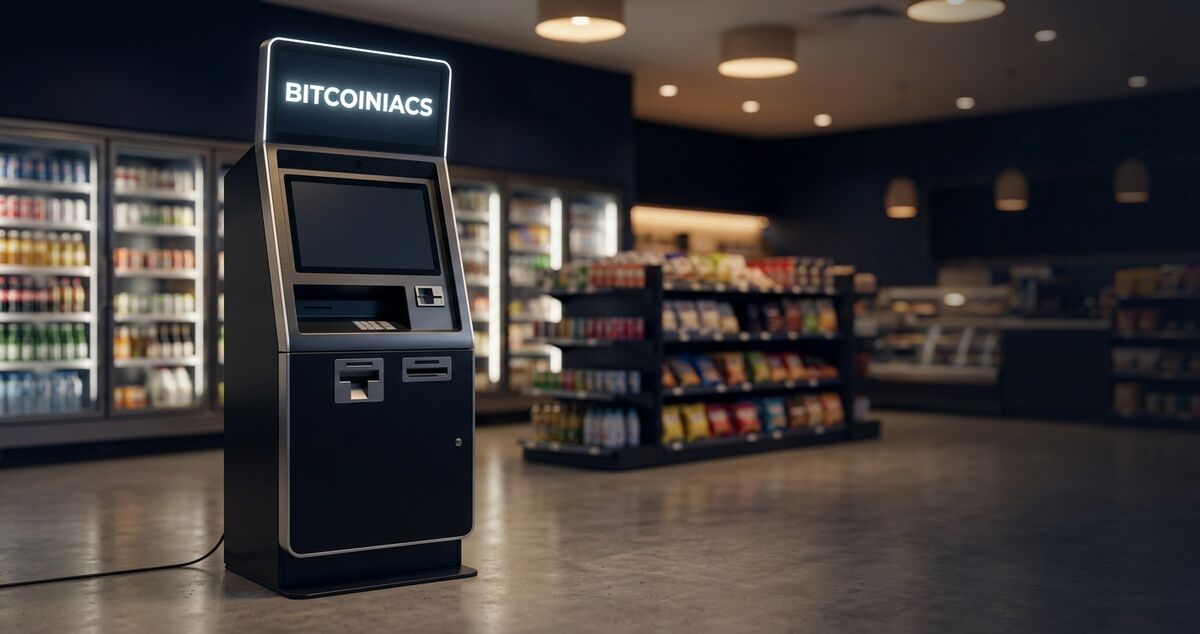
If you are wondering how to use a Bitcoin ATM for the first time, the short version is this: find a machine, scan your wallet’s receive address, insert your cash, and confirm the rate before you press the final button. A first-time purchase at a Bitcoin ATM usually takes under ten minutes, and the whole thing happens without a bank account. This guide walks through every step a Canadian first-timer needs, where to actually find a machine that buys Bitcoin, what the machine will and will not do for you, and the mistakes that cost new users money on their very first transaction.
Table of Contents
- What a Bitcoin ATM Is and What It Is Not
- How to Use a Bitcoin ATM Step By Step
- Fees, Rates and Costs at a Bitcoin ATM
- Safety Rules for Your First Visit
- Frequently Asked Questions
What a Bitcoin ATM Is and What It Is Not
A Bitcoin ATM looks like a bank machine, but the money moves in the opposite direction for most first-time users. Instead of dispensing cash from your account, a Bitcoin ATM takes physical Canadian cash from you and sends the equivalent value in Bitcoin to a wallet address you provide. The machine is connected to an operator’s trading system, and the whole transaction settles on the Bitcoin network.
There is no order book to study. The screen shows one Bitcoin price at one moment, you accept it or walk away, and you can be done in minutes. That simplicity is exactly why many beginners start here. First-timers on Reddit ask the same setup questions repeatedly: whether a phone number is enough, what actually happens to the coins you buy, and how to know the ATM is legitimate. The machine itself is simple hardware: a bill acceptor, a scanner, a screen, and an internet connection to the operator’s backend.
Federal Reserve economists describe the Bitcoin ATM industry in plain terms: operators self-report a median buy fee around 16 percent, and a median sell fee around 15 percent, with additional markups sometimes layered on top of that. Those figures are worth knowing before your first visit, because the sign on the screen is not the whole cost. See the Kansas City Fed’s research briefing on the industry for the full numbers here.
How to Use a Bitcoin ATM Step By Step
Before you leave home: set up a wallet
The single most common first-time mistake is arriving with no wallet to receive the Bitcoin. The machine sends the coins to a wallet address; if you have no wallet, the machine can print a paper wallet with a private key on it, but that piece of paper is now your only access to the funds.rip it, and the Bitcoin is gone forever. Download a reputable, non-custodial wallet app before you leave, let it create a new wallet for you, and safely write down the recovery phrase somewhere that is not a photo on the same phone. Knowing the difference between the address string and the wallet that generated it matters here; if that is new to you, our guide on the Bitcoin address vs wallet distinction walks through it in Canadian terms. If you want to be extra safe before you buy, do a tiny test transfer between two wallets you control first.
At the machine, step by step
Once you are standing at the machine, the flow is the same at nearly every operator:
- Pick Buy. Most machines have a Buy and a Sell option on the first screen. If you only see a QR code prompt and no Buy button, use the Back button.
- Enter your phone number. Canadian Bitcoin ATM operators are registered money services businesses, and a phone number is the minimum identification for small cash purchases. FINTRAC’s guidance covers how operators report qualifying large virtual currency transactions, which is why that phone number is required in the first place (see FINTRAC’s rules here).
- Scan your wallet’s receive QR code. Open your wallet app, tap Receive, and hold the QR code up to the machine’s scanner. Double-check the first and last four characters on the screen against your app, because a mismatch means you are sending coins into space.
- Insert your cash. The machine counts the bills and shows the exact amount of Bitcoin you will receive at the current rate.
- Review the fee and rate line. Before the final confirm, the screen shows the all-in cost. If it does not, back out. Do not confirm a transaction where you cannot see the total cost.
- Confirm and wait for the broadcast. The machine sends your Bitcoin to the address you scanned. The transaction now enters the Bitcoin network’s confirmation queue.
Most purchases show up in your wallet within seconds to a few minutes. First-time users sometimes panic here because the wallet briefly shows nothing, but this is normal. Bitcoin needs network confirmations before your wallet displays it as spendable; the transaction exists on the blockchain, but your wallet may hold it in a “pending” state until confirmations arrive. Moving Bitcoin from one wallet to another takes minutes on a good day and up to an hour or more on a congested network. Do not press the button again thinking it failed.
What if you don’t have a wallet yet?
Some machines will print a paper wallet on the spot. It works, but it is the least beginner-friendly option: paper fades, can be lost, and anyone who sees the private key can take the funds. Set up a phone wallet first whenever possible. If you bought and now find yourself with a paper wallet, sweep the funds into a proper wallet the same day. If buying Bitcoin to spend it at a store or online later is your goal, having it arrive in a real wallet you control is the whole point of the exercise.
Fees, Rates and Costs at a Bitcoin ATM
Fees are the thing first-time users complain about online most often. They vary by operator, machine, and province. What makes them confusing is that the fee usually has two parts: a posted operator fee and an exchange-rate spread, meaning the difference between the live market rate and what the machine quotes you. The Canadian Securities Administrators regulatory overview for crypto assets notes that the sector is regulated as a securities and derivatives market, but that does not tell you the fee the ATM across the street charges
Here is how to read the fee line before you confirm: the screen should show how much Bitcoin you will receive for the cash you inserted, at the current rate. That is the number that matters, not the posted fee percentage. If you insert $200 CAD and the screen says you will receive Bitcoin worth, say, $180 CAD, the effective all-in fee is 10 percent. Compare that effective fee against what you would get on an online exchange, and decide whether walking up and paying cash is worth the difference to you.
If you have a specific retail or payment goal in mind, consider other rails like a standard online exchange or a Canadian OTC desk, which can be considerably cheaper per dollar. Keep that in mind if the purchase is for a specific payment instead of a first buy. ATMs earn their fee for a specific job: speed, cash-in-hand, and a physical location you can walk up to without an account.
Safety Rules for Your First Visit
First-time Bitcoin ATM stories on Reddit skew heavily toward two themes: fee shock and scams. The fee is one thing. The scams are a different problem, and the Canadian Anti-Fraud Centre has flagged crypto and romance fraud as a major Canadian loss category specifically because victims are walked through cash purchases like this one step at a time (see the CAFC’s warning here).
- Never buy because someone told you to over the phone. A stranger guiding someone on a phone call through a Bitcoin ATM purchase is a scam pattern, full stop. Government agencies, banks, tech support, and legit investment firms do not take payment in Bitcoin bought from a kiosk.
- Never scan a QR code someone else hands you. The wallet address must come from your own wallet on your own phone. A “representative” holding up a QR code for you is sending your Bitcoin to themselves.
- Never share your seed phrase or one-time codes with anyone. A legit operator will never ask for your wallet’s recovery phrase. Anyone who does is a scammer, and our guide to Bitcoin seed phrase security covers the details worth knowing before you need them.
- Check the address before confirming. Compare the on-screen address against your wallet app, character by character, at least the first and last few.
- Treat the purchase as non-refundable. Bitcoin transactions are irreversible. There is no chargeback and no customer support that can claw back a completed send.
There is also the quiet tax question. Buying Bitcoin with cash is not a taxable event in itself, but knowing the CRA treats cryptocurrency as a commodity with disposition rules later means keeping a record of what you bought, when, and at what price is worth ninety seconds of your time (the CRA’s plain-language crypto overview spells it out here). Snap a photo of the receipt, or screenshot the transaction details from your wallet app before you walk away.
If something actually goes wrong at the machine, a real operator has support staff. If you are standing at a machine and it ate your cash or the transaction genuinely failed, our Bitcoiniacs ATM locations page lists every machine with contact details for the specific store it lives in.
Frequently Asked Questions
Do I need ID to use a Bitcoin ATM?
For small purchases, a phone number that can receive a verification code is usually the minimum. Above operator-specific thresholds, Canadian ID matching your name becomes mandatory because operators are regulated money services businesses. The Reddit thread “Do all bitcoin ATMs require IDs?” reflects exactly this: Canadians are often surprised at how little friction the first purchase has, and equally surprised when a bigger amount triggers a full ID check.
Are Bitcoin ATM fees really that high?
Yes, compared to an online exchange. That is the deal you are making for speed and cash. Fees vary widely by operator and machine, and the true all-in cost is the rate quoted on screen versus the live market rate. Read that line before you confirm, and decide if the convenience is worth it to you. Do not discover the fee after the fact by comparing what your wallet received against what you inserted.
How does the Bitcoin actually get to my wallet?
The machine broadcasts a Bitcoin transaction to your wallet address the moment you confirm. It appears in your wallet within seconds to minutes, but your wallet may hold it as pending until the network confirms it. That panic is very common at first and it is completely normal. The Reddit thread “How does buying bitcoin at a bitcoin ATM work?” walks through the same flow: coins go to whatever address you scan, from any wallet you control.
Can I scan a QR code someone shows me on their phone?
No. Never. Anyone asking you to buy Bitcoin and send it to a QR code they are holding is running a scam, whether it is “tech support,” a government agency, a romantic partner you have never met in person, or someone claiming your bank account is compromised. Legitimate crypto purchases are made to a wallet you generate and control, on your own device. If you did not create the wallet, you do not own what goes into it.
A first trip to a Bitcoin ATM does not need to be intimidating. Set up a wallet at home, bring your cash, read the rate line before confirming, and double-check the address you scan. Ten minutes later you hold Bitcoin in a wallet you control, and you know exactly how to do it again the next time, faster and with no surprises. When you are ready to try it, find the nearest machine on our Buy Bitcoin Vancouver page, and if you would rather have a human walk you through the first purchase in person, you can book a crypto appointment instead.