


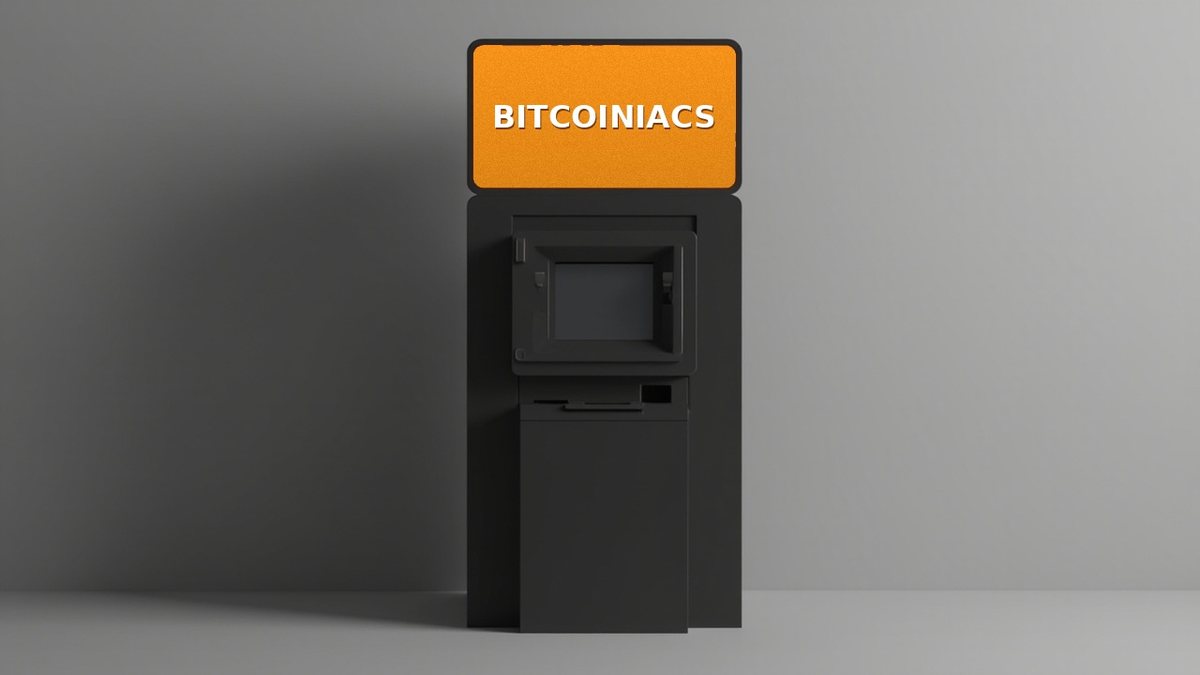
Bitcoin privacy in Canada is one of the most misunderstood parts of owning cryptocurrency. People hear “crypto” and assume it means anonymous money moving quietly outside the banking system. The reality is closer to the opposite: every confirmed transaction is written to a permanent public ledger, and the identity link usually comes from the place you bought the coins. If you have ever wondered how much of your Bitcoin activity is actually private, where the exposure comes from, and what you can reasonably do about it, this guide walks through it step by step.
Table of Contents
- Is Bitcoin Private? What the Blockchain Records
- Bitcoin Privacy in Canada: The Rules at the Counter
- Why Your ID Data Is the Bigger Privacy Question
- Practical Steps to Improve Your Bitcoin Privacy
- What Privacy Cannot Do, and the Scams That Exploit It
- Frequently Asked Questions
Is Bitcoin Private? What the Blockchain Records
Bitcoin is not a private payment network. It is a public accounting system that happens to use pseudonyms instead of names. Anyone with a block explorer can see that a specific address received 0.05 BTC on a given date, where it came from, and where it went next. What they cannot see directly is who controls that address, which is why the design is usually described as pseudonymous rather than anonymous.
Pseudonymous, not anonymous
A pseudonym is only as strong as the gap between the address and your real identity. That gap closes fast. If you post a wallet address in a forum, use the same address to receive money from a friend, or buy coins with a card tied to your name, the link is created once and stays in the public record forever. Analysts call the follow-on work “clustering”: grouping addresses that were spent together in the same transaction, or that appear in the same wallet, so that one confirmed identity can end up labelling a whole set of coins.
The identity link usually comes from the on-ramp
Very few privacy leaks originate inside the Bitcoin network itself. They come from the on-ramp and off-ramp: the exchange account, the card payment, the e-Transfer, or the ATM session where you first bought the coins. That is the moment a name attaches to an address. Everything downstream inherits the association unless you deliberately manage it. Bitcoin.org’s own guidance on protecting your privacy makes the same point: the blockchain is transparent by design, and privacy is something you have to actively maintain with address hygiene and careful handling of your wallet.
Bitcoin Privacy in Canada: The Rules at the Counter
Canada treats virtual currency dealing as a regulated financial activity. Crypto dealers, including Bitcoin ATM operators, are money services businesses that must register with FINTRAC and comply with anti-money-laundering obligations. Those obligations include client identification, record keeping, and reporting duties. The practical result is that a legitimate Canadian Bitcoin ATM is not a privacy tool, and no operator advertising anonymity in Canada is describing a lawful service.
In practice, most Canadian machines ask for a mobile number and photo ID on transactions above a set threshold, and some ask on every transaction. Bitcoiniacs follows that model: identification requirements are set by compliance policy, not by how the customer pays. If you want the specifics for a machine near you, our breakdown of bitcoin ATM ID requirements in Canada covers what is asked, when, and why.
The underlying rule set is public. FINTRAC publishes its money services business requirements, including the identification and record-keeping duties that apply to virtual currency exchange. Reading it is a useful reality check: the identity capture is a legal requirement on the operator, and a compliant operator cannot waive it because a customer prefers cash.
What cash does and does not change
Paying cash removes the card processor and the bank statement entry. It does not remove the compliance record at the operator. Settling that expectation up front matters, because a lot of the confusion about Bitcoin privacy comes from assuming that “cash in, Bitcoin out” equals “no records anywhere”. It does not. What cash does give you is a shorter trail on the fiat side and no credit card issuer profiling your spending, which is a real but limited benefit. Our guide to buying Bitcoin with cash in Canada explains how the cash rail works end to end without overstating the privacy it provides.
Why Your ID Data Is the Bigger Privacy Question
Here is the shift most people miss. The blockchain record is permanent but thin: an address, an amount, a timestamp. The customer record behind a verified purchase is compact but thick: legal name, date of birth, address, phone number, a photo of your ID, sometimes a selfie, and a history of transactions. A single breach of that database exposes far more about you than a decade of on-chain activity.
Canadian businesses that handle personal information are subject to PIPEDA, which sets out consent, purpose limitation, retention and safeguard obligations. The Office of the Privacy Commissioner of Canada publishes a plain-language summary of PIPEDA and what it requires. In practical terms, the questions worth asking any provider you use are simple: what do you store, how long do you keep it, who can see it, and what happens if it leaks.
That is also why privacy advocates treat identity collection as the main issue rather than a side note. The Electronic Frontier Foundation’s privacy programme focuses on exactly this asymmetry: data collected today gets reused, subpoenaed, sold, or breached tomorrow. The coin on the blockchain does not change; the database around it does.
Practical Steps to Improve Your Bitcoin Privacy
You cannot undo a KYC record, and you should not try to evade one. What you can do is limit how much extra information you leak on top of what is legally required. These habits are the ones that actually move the needle.
Use a fresh address for every payment
Address reuse is the single biggest self-inflicted privacy problem in Bitcoin. If you hand out one address forever, anyone who learns it can see your entire balance and every payment you have received. Modern wallets generate a new receive address each time by default; use that, and treat a repeated address as a mistake. If you need a static identifier, use a payment code or a lightning address rather than a bare on-chain address.
Keep wallets separated by purpose
Mixing coins bought with verified ID together with coins received from other sources in one wallet creates a single cluster that ties all of it to your name. A simple split, one wallet for the coins you bought through a regulated rail and another for anything you received peer to peer, keeps those clusters apart. It also makes bookkeeping easier at tax time. For the storage side of that decision, our comparison of hot wallets and cold wallets in Canada explains which kind of wallet suits each purpose.
Do not publish your addresses or balances
Screenshots of wallet balances, public donation addresses, and “look at my stack” posts are voluntary disclosures that permanently attach your identity to an address. The same applies to pasting an address into a random “check your wallet” website, which is a common way to get both your privacy and your funds taken. Verify balances in your own wallet, not on a third-party page.
Protect the keys before you worry about the metadata
Privacy work is worthless if someone takes the coins. A seed phrase photographed in a cloud-synced folder, stored in a notes app, or typed into a website is the most common self-custody failure. Our guide to seed phrase security covers offline storage, metal backups, and the recovery scams that target people who have lost access. Treat the phrase as the account itself, because that is what it is.
What Privacy Cannot Do, and the Scams That Exploit It
Privacy hygiene is not invisibility, and anyone selling you invisibility is selling you something else. Chain analysis is mature, exchanges share risk signals, and a determined investigator with a single identity link can often follow funds several hops. Assuming otherwise leads people into worse decisions than the exposure they were trying to avoid.
Be equally clear about the legal boundary. Privacy is not a licence to skip reporting. Disposing of Bitcoin is a taxable event in Canada, and the CRA expects a record of proceeds and cost base whether the coins arrived through a bank, cash, or a peer-to-peer trade. Keeping your own transaction log, with dates, CAD amounts, BTC amounts, and wallet addresses, is both a privacy practice and a tax practice. It keeps your records in your hands rather than scattered across providers.
Then there is the scam layer. “Untraceable Bitcoin”, “mixer” services that promise to launder the trail, and “private” wallets that ask for your seed phrase all share the same tell: they promise something Bitcoin cannot technically deliver, and they want either your coins or your keys. Legitimate providers will never ask for a seed phrase, a one-time code, or a transfer to a wallet address someone sent you in a chat. Urgency is the other reliable signal: real compliance processes do not expire in ten minutes.
Frequently Asked Questions
Is Bitcoin actually anonymous, or can every transaction be traced?
Bitcoin is pseudonymous, not anonymous. Every transaction is publicly visible and permanent, so anyone can follow the movement of coins between addresses. What is not public is the name behind an address, and that link usually comes from an exchange, a card payment, or an ATM session. Once an address is tied to an identity, analysts can often cluster related addresses and follow the funds further.
Why do Canadian crypto services require my ID?
Because Canadian crypto dealers, including Bitcoin ATM operators, are money services businesses regulated by FINTRAC. The anti-money-laundering rules require client identification, record keeping, and reporting. A compliant operator cannot skip verification because a customer prefers cash, so any Canadian service advertising no-ID Bitcoin purchases is either misdescribing its service or operating outside the rules.
Can I buy Bitcoin anonymously in Canada?
Not through a regulated Canadian business. Peer-to-peer trades with a private individual are a different category, but they carry counterparty risk, price risk, and their own record-keeping and tax obligations, and many “no-KYC” platforms are unreliable or outright fraudulent. The realistic goal in Canada is not anonymity, it is limiting unnecessary data exposure and keeping your own records in order.
Does paying cash at a Bitcoin ATM keep me private?
Partially. Cash removes the card network and keeps the purchase off your bank statement, which reduces how much your spending is profiled. It does not remove the ATM operator’s compliance record, and it does not make the on-chain transaction private. Treat cash as a way to shorten the fiat trail, not as anonymity, and never assume a cash purchase means no identification will be requested.
Why does my wallet keep changing the receive address?
Because address reuse destroys privacy. A new address for each payment stops anyone who sees one payment from viewing your whole balance and history. All the addresses still belong to the same wallet and are recovered from the same seed phrase, so there is nothing to keep track of: generate a fresh address, and the wallet handles the rest.
Bitcoin privacy in Canada is less about hiding and more about not giving away information you were never required to publish. The legal identity record is set by regulation and is not going anywhere, but the extra exposure, reused addresses, posted balances, shared seed phrases, careless screenshots, is entirely optional. Handle that part deliberately and you will have a cleaner footprint than most people who assume the network is protecting them. If you are buying in person, start with a machine you can verify, use your own wallet, and keep your own records.