


P2P bitcoin trading in Canada sounds like the cleanest deal available: you meet another person online, agree on a price, send an Interac e-Transfer, and receive bitcoin straight to your own wallet. No exchange account, no order book, sometimes no ID. That is the pitch. The reality is messier, because a P2P trade is two irreversible things happening in sequence, and whoever moves second holds all the leverage.
This guide explains how peer-to-peer bitcoin trades actually work in Canada, where they break down, what the banks and regulators do when they see them, and when a cash-based machine is the simpler answer.
Table of Contents
- How P2P Bitcoin Trading Works in Canada
- Why P2P Trades Go Wrong
- What Canadian Rules Apply
- What P2P Actually Costs You
- A Safer Way to Buy and Sell with Cash
- Frequently Asked Questions
- The Bottom Line
How P2P Bitcoin Trading Works in Canada
A P2P trade removes the exchange from the middle. Instead of placing an order against a company’s book, you trade directly with a stranger through a marketplace that holds the bitcoin in escrow while the two of you settle the fiat side. The marketplace is a notice board plus a referee, not a counterparty. It never owns the dollars and it does not guarantee that your bank transfer is genuine.
The typical sequence looks like this:
- The seller locks bitcoin into the platform’s escrow.
- The buyer sends Canadian dollars by Interac e-Transfer, bank transfer, or occasionally cash in person.
- The seller checks that the money actually landed and is not going to be clawed back.
- The seller releases escrow, and the bitcoin moves to the buyer’s wallet.
Every step depends on the seller trusting a payment that a bank can reverse, or the buyer trusting a seller who still controls the release button. Escrow solves only half of that. It protects the bitcoin side of the trade and does nothing about the cash side.
Where P2P Fits, and Where It Does Not
Peer-to-peer makes sense for people who already understand wallet hygiene and can wait through verification. It is a poor fit for a first purchase or anyone buying under time pressure. If you are moving size rather than a few hundred dollars, a negotiated desk trade is a different workflow, covered in the Bitcoin OTC trading guide.
Why P2P Trades Go Wrong: e-Transfer Reversals and Frozen Accounts
Search any Canadian crypto forum for a week and the same three failure stories repeat. They repeat because the underlying mechanics make them predictable, not because the people involved were careless.
The Reversed e-Transfer
Interac e-Transfers are built for consumers sending money to people they know. Fraud departments can and do reverse transfers when an account holder reports unauthorized activity or when the sending account was itself compromised. A seller who releases escrow the moment a deposit notification arrives is exposed to that reversal. The bitcoin is gone, the dollars are clawed back, and the marketplace will point at its own terms: settle only after funds are confirmed and the counterparty is verified.
A related version targets the buyer. The seller accepts the transfer, releases nothing, and disappears. Because the payment was legitimate and voluntary, the bank has no fraud claim to act on, and the platform’s dispute process usually ends with a flagged account and no recovery.
Bank Accounts Flagged or Frozen
Canadian banks monitor for patterns that resemble money laundering: many incoming e-Transfers from unrelated senders, rapid pass-through of funds, or repeated small crypto-adjacent transfers. A P2P seller can trip those rules without doing anything illegal, because the pattern is the risk signal. Accounts get restricted while the bank investigates, and that can take weeks.
This is also where third-party fraud lands on you. If a scammer uses a P2P trade to move stolen money into your account, your bank sees proceeds of crime arriving and your account is the one that gets frozen. The Canadian Anti-Fraud Centre tracks these reports and takes complaints, but it does not recover funds.
Pressure Tactics and Fake Escrow
Most P2P losses start with urgency: a buyer who insists on moving off-platform to “save fees,” a seller who sends a screenshot instead of a release, a link to an escrow site that is a convincing clone. Once a trade leaves the marketplace’s escrow, no one is holding anything. Treat a request to go direct as the end of the conversation.
What Canadian Rules Apply to P2P Bitcoin Trades
Trading bitcoin person to person is legal in Canada. What changes is who carries obligations, and the line is drawn by whether you are doing it as a business.
Registration Applies to Dealers, Not to Occasional Sellers
Businesses that deal in virtual currency are money services businesses for anti-money-laundering purposes and must register with FINTRAC. FINTRAC’s MSB requirements set out the obligations that follow: a compliance program, client identification, record keeping, and reporting. A person selling their own coins occasionally is not running an MSB. Someone running a steady P2P desk with advertised rates and repeat clients is much closer to one, and “I was just trading on a platform” is not a defence that carries much weight.
Large Cash and Virtual Currency Transactions Get Reported
Reporting entities must file large virtual currency transaction reports for amounts of $10,000 or more in a single transaction, and the rules apply whether the transaction settles in fiat or in crypto. The large virtual currency transaction reporting guidance lays out what has to be captured. If a P2P platform is registered, that reporting happens on the platform side, and it happens whether or not you thought of the trade as a large one.
Tax Does Not Care That It Was Peer-to-Peer
The CRA treats crypto as a commodity for tax purposes. Disposing of bitcoin, whether you sell it for dollars, trade it for another coin, or spend it on goods, is a disposition that has to be reported, and the gain or loss is calculated in Canadian dollars at the time of the trade. The CRA’s crypto-asset guidance for users is the reference to work from. A cash handshake and a marketplace chat log do not change the reporting requirement, so keep the amount in CAD, the amount in BTC, the price, the date, and the transaction ID.
What P2P Actually Costs You
P2P is often marketed as the cheap option. Sometimes it is, and the advertised spread is only one part of the bill. Add up everything before you decide the price is good:
- Counterparty spread — the gap between the marketplace midpoint and the price the other side will accept.
- Platform fee — charged on one side or both, and often higher for new accounts.
- Payment rail costs — e-Transfer is usually free to send, while wire or courier costs land on top.
- Bank risk cost — the real price of a frozen account is not a fee, it is weeks without access to your money.
- Time — verification, waiting for confirmations, and disputes all take days that a machine transaction does not.
The comparison that matters is the all-in number for the amount you actually want, not the headline rate on a listing. A cash purchase at a machine has a published fee, and you can read that fee before you leave the house. Our breakdown of Bitcoin ATM fees in Canada explains how those charges are structured and what to check at the screen. If e-Transfer is the rail you prefer, the e-Transfer purchase route through Bitcoiniacs is the version that keeps a company, not a stranger, on the other side of the trade.
A Safer Way to Buy and Sell Bitcoin with Cash
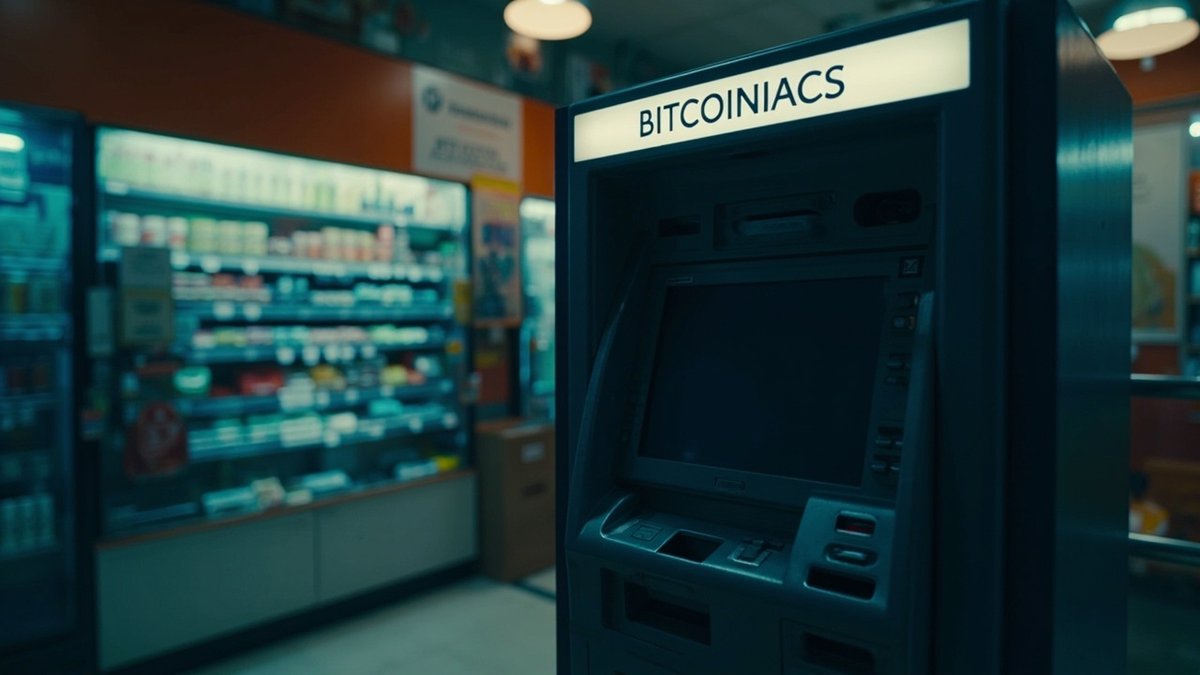
Most of the risk in P2P comes from the settlement gap: one side has already moved value while the other side still has a choice to make. A cash transaction at a Bitcoin ATM closes that gap. You insert the notes, the machine quotes the rate, you confirm, and the bitcoin goes to your wallet in one continuous process. There is no counterparty to trust, no escrow to release, and no bank transfer that can be reversed later.
That does not make it anonymous or risk-free. Machines are regulated, purchases carry identification thresholds, and the rate includes a fee that is higher than a large exchange order. What you get in return is a transaction that finishes in minutes and cannot be unwound by a stranger’s dispute. You can find a Bitcoiniacs ATM location in Alberta, British Columbia, Ontario, New Brunswick, Nova Scotia, and Yukon, and check the machine’s buy and sell availability before you go.
Three habits keep a cash purchase clean. Count the notes before you start, confirm the quoted rate on screen rather than a price you saw earlier, and send the bitcoin to a wallet you control. If someone you met online is walking you through your first purchase and supplying the wallet address, stop. That is the shape of a scam, not a tutorial.
Frequently Asked Questions
Is P2P Bitcoin trading safe in Canada?
It can be, but the safety comes from the counterparty and the escrow, not from the platform’s branding. The recurring failure on Canadian forums is a seller who releases bitcoin against an e-Transfer that is later reversed, or a buyer who pays and never receives a release. Treat every new counterparty as unknown, keep the trade inside escrow, and expect the first trade with anyone to be slow.
What happens if a buyer disputes an Interac e-Transfer after I send Bitcoin?
The bank investigates the transfer on its own terms, and your bitcoin is already gone. If the sender’s account was compromised or the transfer is reported as unauthorized, the deposit can be pulled back while you are left arguing with a marketplace that has already closed the trade. That asymmetry is why sellers are told to wait for confirmed funds and verified accounts, and why selling for cash at a machine removes the problem entirely.
Why is my bank flagging e-Transfers to crypto platforms as fraud?
Banks score transfers on pattern, not intent. Repeated transfers to crypto-adjacent recipients, round-number sends, or a sudden change in activity can trigger a fraud hold even when you are the account holder doing exactly what you meant to do. Call the bank before assuming the transfer failed, and keep records of what each transfer was for so the review has something to work with.
Can I buy Bitcoin P2P without ID?
Some marketplaces advertise trades without identity verification, and the trade-off is that you have no recourse if the other side cheats. In Canada, registered dealers and money services businesses are required to identify clients, and a platform that skips that is either not registered or not telling you the whole process. Buying without ID usually means buying without protection.
Do I have to report P2P Bitcoin trades to the CRA?
Yes, if you dispose of the bitcoin. Selling it for dollars, swapping it for another crypto asset, or spending it counts as a disposition, and the gain or loss is reported in Canadian dollars. The platform does not report on your behalf in a way that replaces your own records, so keep the CAD amount, the BTC amount, the rate, the fees, the timestamp, and the transaction ID for every trade.
The Bottom Line
P2P bitcoin trading in Canada is legitimate, and it asks more of you than a counter transaction does: you are the fraud department, the settlement desk, and the record keeper at once. If you take that on, do it inside escrow, with a counterparty whose history you have read, and assume any payment you accept can be reversed. If you would rather the trade end when the cash leaves your hand, a machine does that in minutes.