


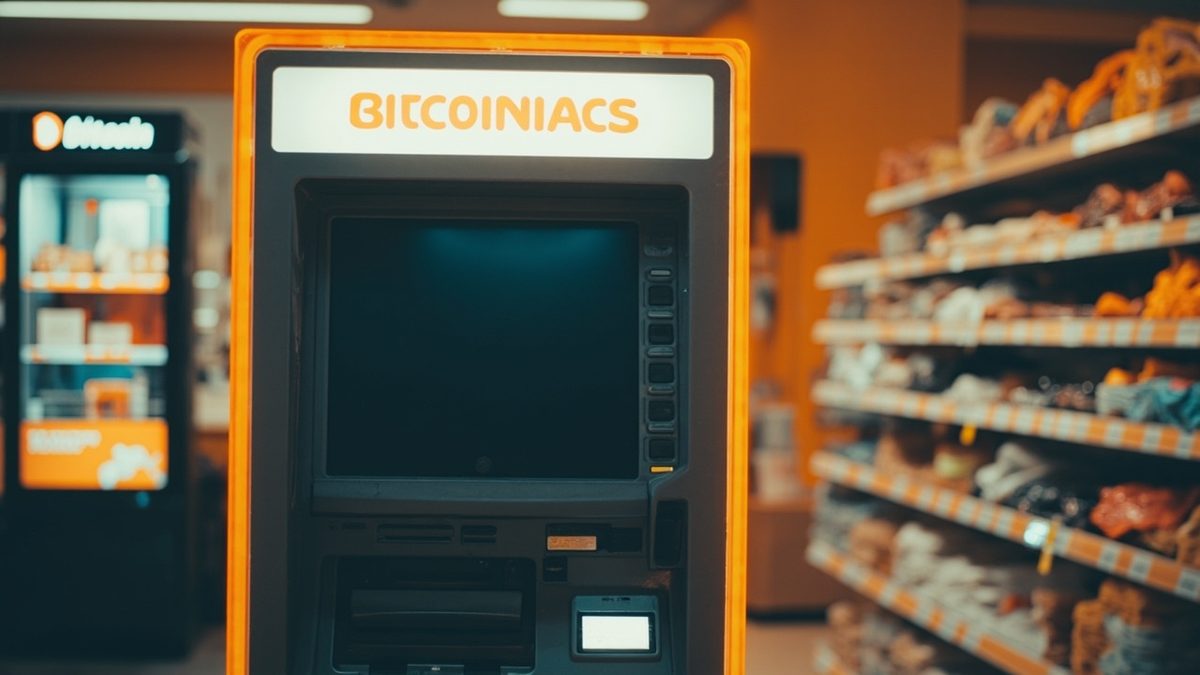
A Bitcoin ATM pending transaction is one of the most common and most misunderstood moments in buying crypto with cash. You fed $200 into the machine, the screen said the transfer was sent, your wallet shows a greyed-out entry, and then nothing happens for ten minutes. In almost every case the money is not gone. The operator’s system has broadcast a real Bitcoin payment and the network is simply waiting to include it in a block. This guide explains what pending actually means at a Canadian Bitcoin ATM, how long it should take, what to do when it runs long, and the warning signs that mean you should stop waiting and contact the operator.
Table of Contents
- Why a Bitcoin ATM Transaction Goes Pending
- How Long a Bitcoin ATM Transaction Should Take
- What to Do When the Transaction Stays Stuck
- Bitcoin ATM Pending Transaction vs. a Scam
- How to Avoid a Pending Transaction Next Time
- Frequently Asked Questions
Why a Bitcoin ATM Transaction Goes Pending
A cash-to-Bitcoin purchase at an ATM involves three separate systems, and confusion usually comes from mixing them up. First, the machine takes your banknotes and counts them. Second, the operator’s backend builds a Bitcoin transaction that pays your wallet address. Third, the Bitcoin network confirms that transaction by mining it into a block. A wallet that says “pending” is describing step three. It is not describing whether the machine took your cash, and it is not describing whether the operator sent the coins.
The most frequent cause of a pending state is ordinary network congestion. Bitcoin produces a block roughly every ten minutes, and each block has limited space. When more people are sending transactions than the blocks can hold, payments queue in the mempool, which is the waiting room for unconfirmed transactions. A transaction that pays a lower fee per byte can sit in that queue for hours while higher-fee payments jump ahead. If you want to see how full the queue is at any given moment, mempool.space shows live block space, fee estimates, and the current backlog.
Operator-side delays happen too
Not every delay is the blockchain’s fault. Some machines hold a payment for a few minutes after the cash is accepted, either because the operator batches payouts or because a compliance check has to clear first. Canadian operators are money services businesses, and FINTRAC registration brings identity verification duties that can add a short hold to a first transaction.
Wallet-side issues that look like pending transactions
Sometimes the coins have arrived and the wallet has not noticed. An app that has not synced, a weak connection, or a wallet restored from a seed phrase can show an empty balance while the payment is already confirmed. Check the receiving address in a block explorer before assuming the worst: if the payment is visible there, the problem is your app, not the machine.
A different and more serious cause is an address or network mismatch. Bitcoin ATMs send BTC on the Bitcoin network. If you paste a Bitcoin Cash address, a Lightning invoice, or an address from a different chain, the payment cannot be credited the way you expect, and that is a support issue rather than a waiting issue. It is also why the step-by-step guide to using a Bitcoin ATM insists on scanning the QR code from the receiving wallet rather than typing an address by hand.
How Long a Bitcoin ATM Transaction Should Take
For a typical cash purchase, the operator’s broadcast happens within a minute or two of the machine taking your notes, and the first confirmation usually lands within ten to thirty minutes. Many wallets show the incoming payment as pending almost immediately, which means the transaction exists and is waiting for a block. One confirmation is normally enough for a retail-sized purchase, though exchanges often wait for two or three before they let you trade or withdraw.
Three confirmations at ten minutes per block is thirty minutes of chain time, plus whatever queue you joined. That arithmetic explains most of the anxious Reddit posts about transactions “stuck for four hours” during busy periods. How many confirmations a service requires varies with the size of the payment and the platform you are sending to, and an exchange deposit almost always waits longer than a personal wallet.
When a wait stops being normal
A useful rule of thumb: no confirmation after two hours in normal conditions deserves a support ticket. A payment that never appears in a block explorer at all is a different problem, because it was never broadcast, and that distinction is the first thing a support agent will ask you to check.
What to Do When the Transaction Stays Stuck
Work through these steps in order. Each one narrows the problem down and gives you something concrete to send to support.
- Find the transaction ID. It is usually printed on the receipt or emailed to the address you entered at the machine. If you have no receipt and no email, note the exact time, the machine location, and the amount.
- Check the receiving address in a block explorer. Paste your wallet address into a public explorer and look for an incoming payment matching the amount. If it is there with confirmations, your wallet is the issue.
- Refresh the wallet. Force a resync, reconnect to the internet, or reopen the app. Do not reinstall or import a seed phrase on a device you do not trust.
- Contact the operator with specifics. Send the transaction ID, the machine location, the timestamp, the amount, and a screenshot of the wallet view. That combination resolves most cases quickly.
- Do not send more money. Nobody legitimate will ask you to pay a release fee, a tax, or a verification deposit to unlock a pending Bitcoin transaction. That request is the single strongest sign of fraud.
If you bought through a Bitcoiniacs machine, the location details and contact path for each site are listed on the Bitcoiniacs ATM locations page, and the fee structure that applied to your purchase is set out in the Bitcoin ATM fees guide. Knowing the fee in advance also helps you verify that the amount credited matches what you should have received.
Keep records you may need later
Save the receipt, the transaction ID, the CAD amount, the BTC amount, the quoted rate, the fee, and a screenshot of the confirmation screen. Those records let the operator reconcile a late payment instead of starting from scratch, and they are the acquisition cost you will need if you later sell. Treat the receipt as part of the purchase.
Bitcoin ATM Pending Transaction vs. a Scam
A genuine Bitcoin ATM pending transaction has a paper trail even when it is slow: a receipt, a transaction ID, a machine that belongs to a registered operator, and a support channel that answers. A scam has none of that, and it usually arrives with a story attached. The pattern is remarkably consistent. Someone you met online tells you to pay at a specific machine, encourages urgency, and then asks you to send the coins onward to a “trading platform” or a “wallet verification” address. The machine works perfectly; the money leaves your control the moment the coins land.
Three details separate the two situations. A real support agent asks for the transaction ID and machine location, never for your seed phrase or a one-time code. Bitcoin payments are irreversible by design, which is why bitcoin.org’s wallet safety guidance tells new users to treat a wallet with more care than a physical one. And no legitimate business needs you to convert cash into Bitcoin to receive a refund or prove your identity.
If money has already moved and the story does not add up, report it to the Canadian Anti-Fraud Centre and to your local police, then contact the operator with the transaction details. Speed matters: the sooner an address is flagged, the better the chance the receiving account can be identified.
Warning signs worth acting on
- A stranger on a dating app, job offer, or investment group directs you to a specific machine.
- Someone asks for a screenshot of your seed phrase or a six-digit code from your authenticator.
- The “platform” shows profits you can only withdraw after paying a fee in Bitcoin.
- A caller claims to be from your bank, the CRA, or the police and demands payment in crypto.
How to Avoid a Pending Transaction Next Time
You cannot control network congestion, but you can control almost everything else. Set up and test the receiving wallet before you leave home: open the app, confirm it is synced, and copy the address from inside the app rather than from a text message. Avoid exchange-deposit addresses for small purchases when a mobile wallet will do.
Buy during quieter periods when you can. Middle-of-the-night purchases in North America often face a heavier mempool than a weekday morning, simply because global demand does not follow your timezone. Skip purchases during headline-driven price spikes, when everyone transacts at once and fees climb. And if you are buying a meaningful amount rather than a round hundred, compare the cash route with an online rail: Bitcoiniacs runs a crypto exchange service alongside the ATM network for larger orders and for customers who prefer to fund from a bank account instead of cash in hand.
Frequently Asked Questions
How long should a Bitcoin ATM transaction actually take?
Most purchases reach your wallet as an unconfirmed payment within a couple of minutes and pick up a first confirmation within ten to thirty minutes. The broadcast is fast; the confirmation depends on block space. If the machine has issued a transaction ID, the payment exists and is in the queue. If two hours pass with no confirmation and no visible transaction in a block explorer, treat it as a support case.
The ATM took my cash but my wallet shows nothing. What went wrong?
Either the payment has not been broadcast yet, or your wallet has not synced to see it. Check the receiving address in a block explorer first. A visible incoming payment means the wallet is the problem, so resync or reopen the app. No visible payment means the operator’s system has not sent the coins yet, which is a support request with your receipt and timestamp attached.
My transaction has been pending for 24 hours. Is the money lost?
Almost certainly not. A payment sitting in the mempool is still valid and will confirm when fees or congestion allow, and one that was never broadcast can be investigated and re-sent. What genuinely loses money is sending a second payment to a “recovery” address someone gave you. Keep the receipt and use the operator’s official support channel.
Can I cancel or speed up a stuck Bitcoin ATM transaction?
As the recipient, no. You cannot cancel or re-fee a payment you did not construct, and the ATM’s keys belong to the operator. Replacement transactions and fee bumps are decisions the sending side has to make. What you can do is contact the operator with the transaction ID and ask whether they will rebroadcast or replace it. Never pay a third party who claims they can “unstick” a Bitcoin transaction for a fee.
What should I send the operator when I ask for help?
The transaction ID if you have it, the machine location, the date and time, the cash amount inserted, the receiving wallet address, and a screenshot of your wallet. Send them through the published support channel. No legitimate operator asks for a seed phrase, private key, or authenticator code to resolve a pending payment.
Pending transactions are a patience problem far more often than a loss problem. Check the transaction ID, look at the address in a block explorer, keep your receipt, and talk to the operator before you believe anyone who says they can fix it for a fee. That routine handles nearly every case, and it keeps the exceptions from turning into expensive mistakes.