


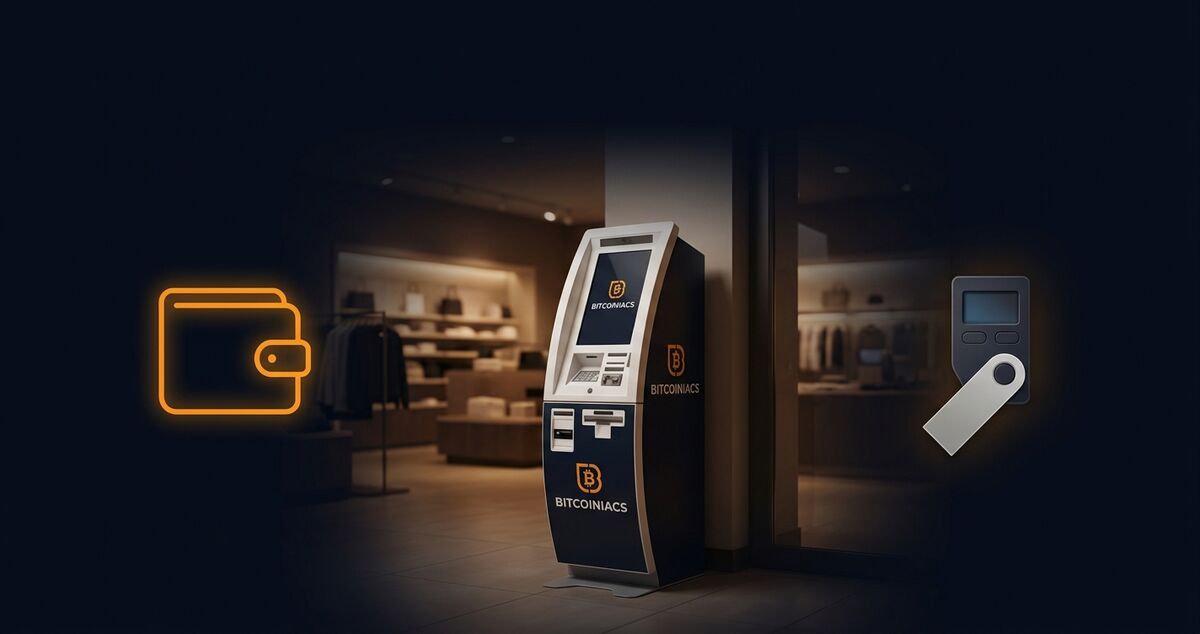
A bitcoin hot wallet vs cold wallet canada 2026 comparison matters when you actually own Bitcoin rather than just watch a chart. Canadians who buy Bitcoin through a Bitcoiniacs ATM receive their coins on a blockchain address they control, which is the moment a wallet choice starts to matter. Pick the wrong storage and a stolen phone, a careless screenshot, or a phishing page can empty your balance overnight. Pick the right one and you keep fast access for daily use plus cold-storage safety for the bulk of your holdings.
Table of Contents
- What Is a Bitcoin Hot Wallet?
- What Is a Bitcoin Cold Wallet?
- Hot vs Cold Wallet: The Key Differences
- How Canadians Should Split Their Bitcoin
- Scams and Storage Mistakes to Avoid
- Frequently Asked Questions
What Is a Bitcoin Hot Wallet?
A Bitcoin hot wallet is any wallet that holds your private keys on an internet-connected device. That covers mobile apps, desktop apps, browser extensions, and custodial accounts at exchanges. The defining trait is connectivity: the device the keys live on can talk to other machines without you plugging anything in.
Hot wallets are convenient. You can send Bitcoin to a friend, pay a merchant, or sweep a balance from a paper slip in seconds. For Canadians who buy Bitcoin through an ATM and want to spend or transfer small amounts right away, a hot wallet is usually the first stop.
The trade-off is exposure. Anything connected to the internet can be attacked, and the wallet surface area is wide: phishing pages, malicious browser extensions, compromised phones, and fake wallet apps are all real threats. Bitcoin developer documentation treats wallet security as a layered problem, with hot wallets filling the convenience layer at the cost of a larger attack surface.
Common Hot Wallet Types
Three flavours cover most Canadian users. Mobile wallets like BlueWallet or Muun run on your phone and use your device’s secure element to store keys. Desktop wallets like Sparrow or Electrum run on your computer and let you pair with a hardware device later. Exchange accounts are custodial — the exchange holds the keys for you, which means the trade-off shifts from “can my phone get hacked?” to “can the exchange get hacked or freeze withdrawals?”
New users often start with an exchange account because it is the path of least resistance. That is fine for small amounts you plan to spend soon, but it should not be where retirement-sized holdings sit.
What Is a Bitcoin Cold Wallet?
A Bitcoin cold wallet stores your private keys on a device that is never connected to the internet. The most common form is a hardware wallet — a small dedicated device, roughly the size of a USB stick, that signs transactions offline and then broadcasts them through a companion app. The keys never leave the device, so a compromised computer can see the transaction but cannot extract the keys.
Cold storage can also mean a paper wallet or a metal seed phrase backup. Those work, but they trade the user-friendliness of a hardware device for a different set of risks — paper burns, metal rusts, and a single photographed backup becomes a single point of failure. Wikipedia’s cryptocurrency wallet overview walks through the spectrum from hot to deep cold, with hardware wallets sitting in the practical middle ground.
How Hardware Wallets Protect Keys
The device generates your seed phrase (usually 12 or 24 words) on first setup and never exposes it again. When you want to send Bitcoin, you compose the transaction on a connected computer or phone, hand the unsigned transaction to the hardware wallet, confirm the details on the device’s own screen, and let the device sign it. The signed transaction goes back to the companion app for broadcast. A hacker watching your network sees the broadcast but never sees the key.
The seed phrase itself is the real backup. Lose the device and you can restore everything on a new hardware wallet using the same 12 or 24 words. Anyone who finds those words owns your Bitcoin, which is why the phrase belongs offline, ideally stamped into metal and split across separate physical locations.
Hot vs Cold Wallet: The Key Differences
The two wallet types solve different problems. A bitcoin hot wallet vs cold wallet canada 2026 comparison usually lands on the same handful of dimensions: connectivity, exposure to attack, convenience, recovery story, and cost. Here is how they line up side by side.
Security and Attack Surface
Hot wallets face the full internet. Phishing kits clone legitimate wallet sites, fake browser extensions steal seed phrases the moment they are typed, and malware can swap destination addresses in the clipboard during a send. Cold wallets avoid most of this because the keys never touch the internet-connected machine. The strongest realistic attack on a hardware wallet is physical access plus a coerced PIN, which is why hardware wallet manufacturers emphasise both the PIN and the seed phrase backup as separate defensive layers.
Convenience and Spending Speed
Hot wallets win on speed. A few taps and the payment is broadcast. Cold wallets add steps — connect the hardware wallet, confirm the amount and address on its small screen, sign, then broadcast — which makes them awkward for small daily transactions but perfect for balances you want to protect long-term. Most experienced holders end up using both, with hot for spending money and cold for savings.
Cost and Upfront Effort
Hot wallets are free. Cold wallets cost roughly the price of the hardware device (typically $80 to $200 CAD for mainstream brands), plus the time to set up the seed phrase and store it safely. The setup cost is real — losing a poorly stored seed phrase is the most common way Canadians lose access to their Bitcoin.
How Canadians Should Split Their Bitcoin
Most experienced Bitcoin holders use a hybrid setup. A small “spending wallet” balance covers weeks or months of expected transactions, while the bulk of holdings sits in cold storage that you only move when you actually want to sell, send, or spend. This is the same logic that separates a checking account from a savings account, and it scales with how much Bitcoin you hold.
For Canadians who sell Bitcoin occasionally, the same split applies in reverse: keep a working balance on the hot wallet and move larger sale proceeds through cold storage until you are ready to actually cash out. The Bitcoiniacs ATM network lets you convert a hot-wallet balance back to cash in minutes at any of our 25+ Canadian locations, so you do not need to keep large amounts of idle cash on your phone.
A Practical Starting Split
A common beginner split looks like this: 10–20% in a mobile hot wallet for spending, 80–90% in a hardware cold wallet for long-term holding. The exact ratio depends on how often you transact and how much you would lose if your phone were stolen today. Bigger balances warrant a smaller hot-wallet percentage, and balances large enough to be a life-event (house purchase, retirement) belong almost entirely in cold storage with the seed phrase split across multiple secure locations.
Regardless of split, always keep a written record of every buy, sell, transfer, and fee in CAD. The Canada Revenue Agency treats Bitcoin as a commodity, and CRA reporting guidance expects you to track the CAD value, BTC amount, timestamp, fees, wallet addresses, and transaction IDs for each event.
Scams and Storage Mistakes to Avoid
The single most common Bitcoin loss is a leaked seed phrase. That happens through fake wallet apps, phishing pages that mimic legitimate wallet recovery flows, support imposters who ask you to “verify” your phrase, and screenshots that end up in cloud photo backups. Nobody legitimate — wallet company, exchange, or Bitcoiniacs staff — will ever ask for your seed phrase or a one-time code. Treat any such request as a scam and walk away.
Other frequent mistakes include typing the seed phrase into a computer, storing the phrase as a photo, sending Bitcoin to an address copied from a clipboard that malware has already swapped, and chasing “guaranteed return” schemes that pressure you to deposit Bitcoin into a third-party wallet you do not control. Bank of Canada research on digital currencies and fintech tracks the consumer-protection side of these scams and is a good reference for recognising new variants.
The fix is unglamorous but effective: write your seed phrase on paper (or stamp it into metal) and store it somewhere offline that only you can access. Never type it into a phone, computer, or website. Confirm any wallet address by reading the first and last six characters against the source you generated it from. Use a passphrase-protected hardware wallet for the bulk of your holdings. And if a stranger — even someone claiming to be from a real company — asks for your seed phrase, treat that as a five-alarm fire.
Whether you hold your Bitcoin in a hot wallet, a cold wallet, or a thoughtful mix of both, the goal is the same: keep the keys safe, keep the seed phrase offline, and keep the records that the CRA expects. Done well, a good wallet setup lets you spend Bitcoin when you want to without worrying about losing it when you do not.
Frequently Asked Questions
Is a hot wallet safe enough for small amounts of Bitcoin?
For small balances — amounts you would not miss if your phone were lost today — a reputable mobile hot wallet is reasonable. The risk is real, but bounded. For anything larger, move the bulk into cold storage and leave only your spending balance on the hot wallet.
Do I need a hardware wallet if I already use an exchange account?
Yes, if the balance is meaningful. An exchange account is custodial, meaning the exchange holds your keys and you trust them not to be hacked, freeze withdrawals, or fail. A hardware wallet puts the keys in your hands instead.
What happens if I lose my hardware wallet?
Your Bitcoin is still safe as long as your seed phrase backup is intact. Buy a new hardware wallet (or use a compatible one), enter the seed phrase during setup, and your balance reappears. The device is replaceable; the seed phrase is not.
Should I keep my seed phrase in a bank safety deposit box?
Many long-term holders do. The trade-off is convenience (you cannot easily access the phrase in an emergency) versus physical safety (the bank protects against fire, flood, and theft). For balances that warrant a safety deposit box, a stamped metal backup split across a personal location and a bank box is a common approach.
How do taxes work when I move Bitcoin between hot and cold wallets?
In Canada, moving Bitcoin between wallets you control is generally not a taxable event — you are not disposing of anything. Selling, swapping, or paying for goods and services in Bitcoin is. Keep records of every disposition event (CAD value, BTC amount, fees, timestamp, wallet addresses, transaction ID) so the CRA can see what you reported.