


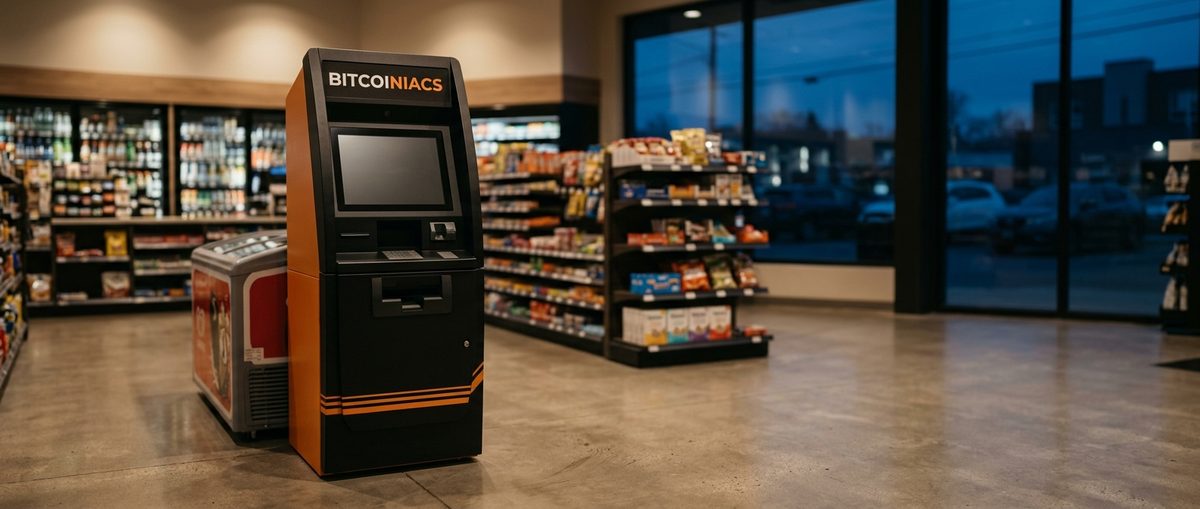
If you have ever typed “is Bitcoin legal in Canada” into a search bar before making your first purchase, you are not alone. The short answer is yes: buying, owning, and selling Bitcoin is legal for adults in Canada. The longer answer is where people get tripped up. Bitcoin is not legal tender, exchanges and Bitcoin ATMs operate under federal anti-money-laundering rules, and every sale has tax consequences. This guide explains what the law actually says, who regulates the market, and what you need to do to stay on the right side of it in 2026.
Table of Contents
- Is Bitcoin Legal in Canada? What the Law Actually Says
- Bitcoin Is Not Legal Tender: What That Means
- Who Regulates Bitcoin in Canada?
- Do Bitcoin ATMs Require ID in Canada?
- Staying Compliant, and Staying Safe
- Frequently Asked Questions
Is Bitcoin Legal in Canada? What the Law Actually Says
Canada has never banned Bitcoin. There is no federal statute that makes it illegal to buy, hold, or sell crypto-assets, and no province prohibits residents from owning them. What Canada did instead was fold crypto into the same regulatory framework it already uses for money services, securities, and taxes. In practice, that means the activity is legal but regulated, and the rules apply to the businesses you deal with more than to you personally.
The legal status is best described in three layers:
- Legal to own. Individuals can buy and hold crypto-assets without restriction, the same way they can hold foreign currency, gold, or collectibles.
- Regulated businesses. Companies that trade or transfer virtual currency for customers must register as money services businesses with FINTRAC and follow anti-money-laundering obligations.
- Taxable. Selling, trading, or spending crypto-assets is a disposition that must be reported to the Canada Revenue Agency.
Because crypto-assets sit outside the banking system, budgets and regulators have adjusted over time. The federal government’s 2023 budget confirmed that crypto-asset trading platforms dealing with Canadians fall under securities law, and Canada has been an early mover on international reporting standards. For an ordinary buyer, none of that changes the core fact: you can legally walk into a store, use cash at a branded machine, and buy Bitcoin.
Bitcoin Is Not Legal Tender: What That Means
Here is the distinction that confuses the most people. Legal and legal tender are not the same thing. Bitcoin is legal to use, but it is not legal tender in Canada, which means no business is obligated to accept it as payment for a debt. A merchant can accept Bitcoin if it wants to, and a growing number do, but a store cannot be forced to take it the way it must accept Canadian bank notes.
The Bank of Canada has explained that only bank notes issued by the central bank, plus coins from the Royal Canadian Mint, hold legal tender status. Crypto-assets are treated as property or commodities for legal purposes, not as a currency issued by the state. The Bank has also researched a potential digital Canadian dollar, precisely because a central-bank-issued digital currency would be fundamentally different from a private crypto-asset like Bitcoin.
Two practical consequences follow from this. First, when you sell or spend Bitcoin, the CRA looks at the transaction in Canadian dollars, and the asset’s value must be converted to CAD at the time of the transaction. Second, because Bitcoin is property, the mechanics of buying it at a machine are closer to a currency exchange than to a bank withdrawal, which is why machines publish their own buy and sell prices rather than a single posted rate.
The amount you can move through a machine in a day is set by the operator under its compliance program, and limits often change with verification status. Our guide to Bitcoin ATM daily limits in Canada breaks down how those caps are structured and what triggers a higher tier.
Who Regulates Bitcoin in Canada?
There is no single “crypto regulator” in Canada. Oversight is split across three groups, and knowing which is which helps you tell a legitimate operator from a careless one.
FINTRAC: anti-money-laundering oversight
FINTRAC is Canada’s financial intelligence unit. Virtual currency exchange businesses, including the operators of Bitcoin ATMs, must register as money services businesses, verify customer identity above certain thresholds, keep records, and report suspicious or large transactions. The agency publishes its requirements publicly, so any serious Canadian operator should be able to explain plainly how it complies. You can read the framework directly on FINTRAC’s money services business requirements page.
Provincial securities regulators
Platforms that offer crypto contracts, staking, or anything resembling an investment product to Canadians are subject to provincial securities law, coordinated nationally through the Canadian Securities Administrators. This is the layer that pushed several offshore trading platforms to restrict Canadian accounts. It mostly affects trading platforms and token offerings, not a straightforward cash purchase at a physical machine.
The CRA: tax oversight
The Canada Revenue Agency does not license anyone, but it does care about what you do with the asset. Crypto-assets are taxable property in Canada. If you are mapping out how a purchase, trade, or sale will be reported, start with the CRA’s own crypto-asset guidance hub, which links to the agency’s pages on record-keeping, valuation, and reporting income from crypto transactions.
Bitcoiniacs operates physical machines across Canada, and every one of them runs under the same compliance posture you would expect from a registered Canadian operator. If you want to see what is available near you, our Bitcoiniacs ATM locations directory lists every active machine with its street address.
Do Bitcoin ATMs Require ID in Canada?
Sometimes, and increasingly so. Canada’s anti-money-laundering rules apply to virtual currency dealers, which is why identity verification is common at Canadian machines and universal at regulated online exchanges. Requirements are usually tiered: a smaller purchase may go through with just a phone number, while larger amounts trigger a government-issued ID scan and sometimes a selfie check.
If a machine in Canada advertises “no ID, no limits, no questions,” treat that as a warning rather than a bargain. Either the operator is not complying with its obligations, or the advertised terms do not survive contact with the screen. A legitimate operator will tell you the limits, the verification threshold, and the price before you insert cash.
What about platforms outside Canada?
Offshore platforms that serve Canadians are still expected to respect Canadian requirements, and several have withdrawn from the market rather than comply. It is not illegal for you to hold Bitcoin on a foreign platform, but you carry more risk: no Canadian recourse if the platform freezes withdrawals, and a harder time documenting cost base for tax purposes.
Staying Compliant, and Staying Safe
Legality is the floor, not the ceiling. Most of the pain people experience with Bitcoin in Canada comes from record-keeping and fraud, not from the law itself. A few habits prevent nearly all of it.
- Keep the paperwork. Save the CAD amount, the BTC amount, the quoted price, the fees, the timestamp, the wallet address, and the transaction ID for every purchase and sale. This is exactly the record set the CRA expects you to be able to produce.
- Separate buying from disposing. Buying and holding is not itself a taxable event. Selling, trading one asset for another, or paying for goods is. Knowing which category you are in makes filing far simpler. Our overview of how crypto is taxed in Canada walks through the difference.
- Never buy on debt. Using a credit card advance or a loan to buy Bitcoin is a bad trade even when the market cooperates, because interest starts immediately and the asset can fall.
- Watch for pressure tactics. No legitimate operator or support agent will tell you to act urgently, promise guaranteed returns, ask for your seed phrase, request a one-time code, or tell you to send funds to a wallet address they control. Those four asks are the core of almost every crypto fraud reported in Canada. The Canadian Anti-Fraud Centre publishes current fraud alerts and reporting tools if you ever need them.
- Pay attention to the price on screen. The rate a machine shows is the rate you get. Compare it with the live market price before you insert cash, and if it looks far off, walk away and ask why.
Fraud is the one area where the law will not protect you after the fact. Once Bitcoin has moved to a scammer’s wallet, there is no chargeback and no reversal. That single fact is why our guide to common Bitcoin ATM scams in Canada is worth ten minutes before a first purchase, not after.
Frequently Asked Questions
Is Bitcoin legal tender in Canada?
No. Only Canadian bank notes and coins hold legal tender status, which means a business cannot be compelled to accept Bitcoin for a debt. You can still legally buy, hold, and sell Bitcoin in Canada; it is simply treated as property rather than currency. That property treatment is why the CRA requires you to convert every transaction to Canadian dollars for reporting purposes.
Do all Bitcoin ATMs in Canada require ID?
Not every transaction, but many. Canadian operators are subject to anti-money-laundering rules, so machines typically allow smaller purchases with minimal information and require government-issued ID or a selfie check above a threshold. Requirement levels vary by operator and are usually posted on the screen. A machine promising unlimited no-ID cash purchases is a compliance red flag, not a feature.
Do I have to report Bitcoin to the CRA if I only hold it?
Simply buying and holding is not a taxable event, so there is nothing to report for the purchase itself. Reporting kicks in when you dispose of the asset: selling it, trading it for another crypto-asset, or using it to pay for something. At that point you calculate a capital gain or loss, or business income if your activity looks like a business, and report it on your return.
Are crypto exchanges and Bitcoin ATMs legal in Canada?
Yes, provided they comply. Virtual currency dealers must register with FINTRAC as money services businesses and meet identity-verification, record-keeping, and reporting obligations. Platforms offering crypto contracts or investment-like products also fall under provincial securities law. That is why some offshore exchanges have withdrawn from Canada rather than comply, and the operators that remain are the ones that chose regulation.
Is Bitcoin arbitrage or day trading legal in Canada?
The activity itself is not prohibited, but heavy, frequent trading can change how the CRA classifies your income. If your buying and selling resembles a business, with frequent trades, short holding periods, substantial time spent on the market, or financed positions, your gains may be taxed as business income rather than capital gains. Frequent traders should keep rigorous records and consider professional tax advice.
Canada’s approach to Bitcoin is permissive but structured: legal to own, regulated at the business level, and taxable at the individual level. If you understand the three layers of legality, tender status, and tax, you already know more than most first-time buyers. Buy at a machine you can verify, keep every receipt, and treat any pressure to act fast as a reason to stop.
The Bank of Canada’s ongoing research into a digital Canadian dollar is a useful reminder that the legal landscape will keep evolving. Rules change; the discipline of keeping good records does not.