


You can spend Bitcoin in Canada in 2026, but not nearly as widely as the marketing around it suggests. The places that take it directly fall into a few narrow buckets: independent coffee shops, convenience stores, a handful of online retailers, and gift-card or bill-payment services that convert your coins behind the scenes. Almost everything else runs through a middleman who turns Bitcoin into dollars before the merchant sees anything. That distinction changes what you pay in fees, what the merchant receives, and what you owe the CRA afterwards. Here is what genuinely works, what it costs, and the record-keeping most people forget until tax season.
Table of Contents
- Who Actually Accepts Bitcoin in Canada
- How to Spend Bitcoin in Canada Without Losing It to Fees
- The Tax Rule Most People Miss: Spending Is a Disposition
- Topping Up With Cash When You Want to Spend
- Frequently Asked Questions
Who Actually Accepts Bitcoin in Canada
There are two ways a Canadian business can take your Bitcoin. Either the merchant holds a wallet and receives the coins directly, or a payment processor accepts the Bitcoin, converts it to Canadian dollars instantly, and deposits cash into the merchant’s account. From your side of the counter both look identical. From the merchant’s side they are completely different businesses, which is why some shops quietly stop accepting crypto when their processor changes terms.
It helps to see how small this corner of the payment world still is. Payments Canada’s 2025 payment methods report found cash accounted for about 11 per cent of transaction volume in 2024 and roughly 1 per cent of value, while credit and debit cards together handled around 63 per cent of volume. Bitcoin does not appear in those totals as a distinct category at all.
Even cash, backed by legal-tender status, is a shrinking slice of the average checkout. The Bank of Canada’s own account of what makes a payment method universal points to an issuance monopoly, stable purchasing power, and social convention. Bitcoin has none of the three, and the Bank notes in its 2025 methods-of-payment survey that more than three in four adults still keep cash on hand. A merchant taking your Bitcoin is choosing to, not obliged to.
Independent shops and local retailers
The real acceptance sits at the independent level: coffee roasters, vape shops, barbershops, computer parts dealers, a few grocers. If you run a business and want to join them, the practical route is in our guide on how to accept Bitcoin payments in Canada. As a spender, check a community directory such as BTCMap, then phone the shop. Directories go stale fast, and a sticker on the door does not always mean the terminal still works.
Gift cards, bill payments, and online checkout
Most Canadian spending of Bitcoin happens without a merchant ever touching crypto. Gift-card resellers take your Bitcoin and hand you a code for a major retailer. Bill-payment services use it to settle a credit card, utility, or property tax bill in dollars. A few online electronics and hobby retailers accept Bitcoin at checkout through a processor.
All of these carry a built-in cost: a service fee, a conversion spread, or a gift card sold at a premium, stacked on top of whatever you paid to acquire the Bitcoin. Read the terms first, and be wary of any reseller that wants coins up front and promises the code later.
What you will not find at the till
No national grocery chain, major gas station chain, or big-box retailer in Canada accepts Bitcoin at the register. There is no tap-and-go Bitcoin option at Canadian checkouts and no debit-style terminal settling in BTC. Anyone describing otherwise means a service converting at the moment of payment, with a fee attached.
How to Spend Bitcoin in Canada Without Losing It to Fees
The quoted fee is rarely the fee you pay. Spending Bitcoin costs you something at up to three points: when you acquire the coins, when the network confirms the transaction, and when the merchant or processor converts to dollars. The Bitcoin Lightning Network in Canada removes most of the middle cost for small payments, but nothing about the other two.
Lightning for everyday amounts
Lightning settles in seconds for a fraction of a cent, the only sensible rail for a coffee. The catch is on the merchant’s side: they need a Lightning-capable wallet or processor, and most Canadian shops taking Bitcoin still run on-chain only. If you use Lightning, keep a small balance in a reputable wallet, treat it as a spending account, and top it up when it runs low.
On-chain for larger one-off payments
For a purchase over a few hundred dollars, on-chain is fine. Expect ten minutes to an hour for comfortable confirmation, and set the fee yourself rather than accepting a wallet default. Paying a premium fee to move $40 is waste; paying a modest one to close a $2,000 deal is not.
The spread usually costs more than the network fee
Here is the number most people ignore. A processor converting your Bitcoin to dollars typically applies a spread of a couple of percentage points, and gift-card services add margin on top. On a $100 purchase, a 2 per cent spread costs $2, well above a typical on-chain fee. Compare the all-in cost of the route, not the line labelled “network fee”.
Before you send: three checks
Bitcoin payments are final. Confirm the destination address by reading the first and last six characters yourself, or by scanning a QR code you can see, never one someone read to you over the phone. No legitimate service needs your twelve or twenty-four word recovery phrase, and none needs a one-time code from your phone. Anyone creating urgency, promising guaranteed returns, or demanding a fee before releasing funds is running a scam. If a purchase requires sending Bitcoin to a wallet you have not verified independently, walk away.
The Tax Rule Most People Miss: Spending Is a Disposition
In Canada, buying a coffee with Bitcoin is not a payment to the tax system. It is a disposal of property. The CRA is explicit that using a crypto-asset to buy goods or services is a disposition, and that you must report a capital gain or loss, or business income, depending on how you are treated. Our walkthrough of Bitcoin taxes in Canada covers the mechanics; the part people miss is that every individual purchase creates its own small calculation.
What the CRA expects you to track
For each spend, record the date and time, the Canadian dollar value of what you received, the amount of Bitcoin sent, its fair market value in CAD at that moment, any fees, the receiving address, and the transaction ID. Keep the receipt. Those fields are enough to compute your adjusted cost base and the resulting gain or loss, and they are exactly what an auditor would request. Spending as a business is a barter transaction for CRA purposes, and GST/HST can apply to the fair market value received; that is a conversation for your accountant.
A twelve-dollar coffee still counts
The CRA publishes no small-purchase exemption for crypto dispositions. A $12 spend is a disposition like a $12,000 one; it simply produces a tiny gain or loss you aggregate with the rest on your return. The defence is boring: keep a spreadsheet, export transaction history from every wallet and platform you use, and reconcile quarterly while the details are still easy to find.
Topping Up With Cash When You Want to Spend
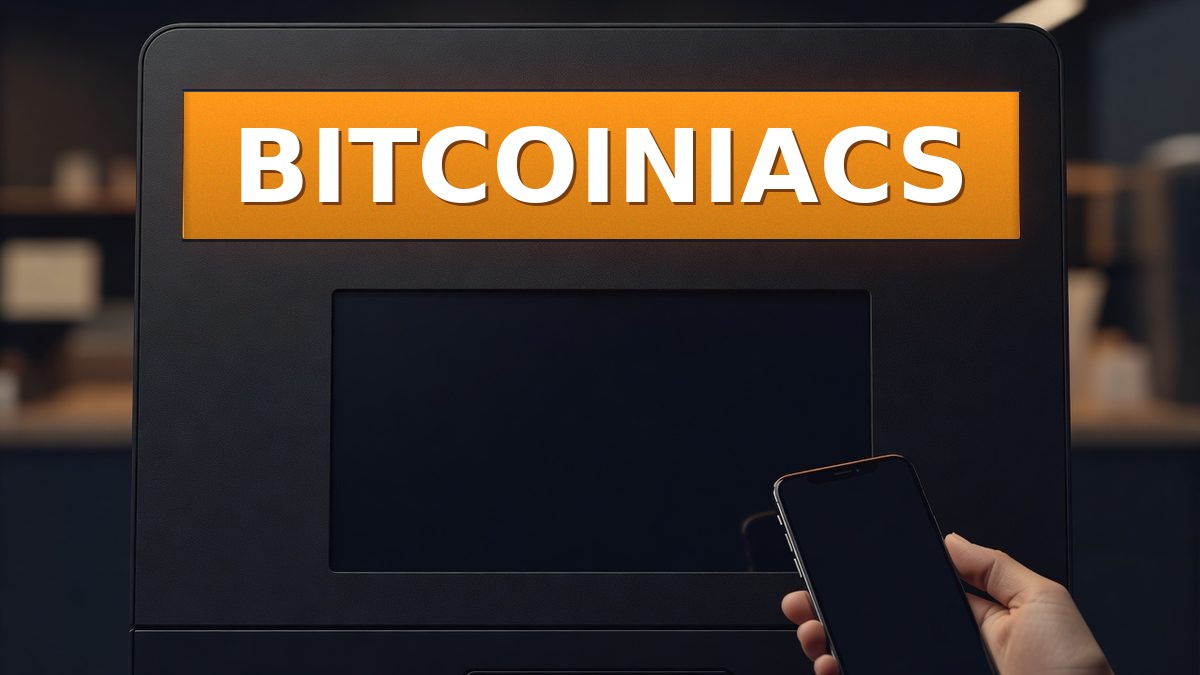
If the goal is spending rather than holding, buying in small amounts with cash is often cleanest. Bitcoiniacs runs Bitcoin ATMs across Alberta, British Columbia, Ontario, New Brunswick, Nova Scotia, and Yukon, with the full list on our Bitcoiniacs ATM locations page. You insert cash, the machine sends Bitcoin to the wallet address you provide, and it prints a receipt with the transaction ID you need for your records.
Bring government-issued photo ID. Canadian operators are required to verify identity, and a machine that does not ask is one you should not use. Fees and limits are disclosed on screen before you confirm, so read that screen instead of tapping through it.
Match the amount to the purchase
An ATM purchase carries a premium over spot, so buying $40 of Bitcoin to spend on a $45 item starts you behind. Buy for a planned expense, not an impulse, and buy an amount you will use within a few weeks. Sitting on a small ATM-bought balance for months just to spend it later is an expensive way to hold Bitcoin.
Frequently Asked Questions
Where can I actually spend Bitcoin in Canada?
Independent shops are the realistic answer: coffee roasters, convenience stores, barbershops, computer parts dealers, and a scattering of online retailers. Beyond that, gift-card resellers and bill-payment services let you turn Bitcoin into spending without the retailer accepting crypto. No national chain in Canada takes Bitcoin at the register today.
Do I pay capital gains tax when I spend Bitcoin in Canada?
Usually yes, on the gain rather than the whole amount. The CRA treats a crypto purchase as a disposition of property, so you compare the Canadian dollar value at the time of the spend against your adjusted cost base. The difference is a capital gain or loss, or business income if you are treated as carrying on a business. Spending at a loss can create a reportable capital loss too.
Why do so few Canadian stores accept Bitcoin directly?
Volume is tiny relative to cards, so the integration rarely pays for itself. Volatility means a merchant holding coins can lose money between sale and conversion. And each crypto sale needs a fair-market-value record for accounting. Most stores that do accept Bitcoin use a processor that converts to dollars immediately, which removes the volatility and adds a fee.
Is it cheaper to spend Bitcoin or cash out to my bank first?
Cash out first, in most cases. A withdrawal to your bank typically costs one conversion spread, then you spend dollars with no further fee and no per-transaction tax record. Spending Bitcoin directly adds a processor spread on top. The exception is small amounts on Lightning, where the fee can be a fraction of a cent and convenience wins.
Can I pay bills or buy gift cards with Bitcoin in Canada?
Yes, through third-party services, and both charge a fee. Gift-card resellers issue a retailer code for your Bitcoin, usually at a premium of a few per cent. Bill-payment services settle a credit card, utility, or tax bill in Canadian dollars on your behalf. Check whether the provider is registered as a money services business with FINTRAC before trusting it with a large amount.
Spending Bitcoin in Canada works, but it works best as a deliberate choice rather than a habit. Use it where a merchant genuinely takes it, keep amounts small enough that fees and tax records stay manageable, and treat every spend as a taxable event from the moment you hit send. If you would rather hold than spend, that is a rational conclusion too, and it is the one most Canadian holders reach once they add up the true cost.