


Bitcoin remittances from Canada have moved from an experiment to a routine for thousands of households, particularly families sending money to the Philippines, India, Nigeria, Vietnam, and across Latin America. The pitch is straightforward: buy Bitcoin here, send it over an open network in minutes, and let your family convert it to local currency on the other side. The reality has more moving parts than the pitch suggests, and the all-in cost depends on every link in the chain rather than the headline transfer fee alone.
Table of Contents
- What Bitcoin Remittances from Canada Actually Mean
- How the Bitcoin Remittance Route Works
- What Sending Money Home Really Costs
- Risks, Scams, and the Rules That Apply
- Records the CRA Expects You to Keep
- Frequently Asked Questions
What Bitcoin Remittances from Canada Actually Mean
A remittance is money sent by one person to another, usually across a border and usually to family. What makes the Bitcoin version different is the middle of the journey. Instead of a correspondent banking chain or a transfer operator’s ledger, the value moves across the Bitcoin network, which does not close on weekends or wait for the receiving bank to approve the transfer.
That does not make it free. Someone still buys the Bitcoin with Canadian dollars at the start, and someone still converts it into pesos, rupees, naira, or dong at the end. Both ends carry a spread, and both ends can involve identity checks.
Who Gets the Most From This Route
People who send regularly rather than once benefit most, because a fixed fee hurts less and a percentage spread matters more. Their recipient already holds crypto or lives near a place where it can be sold quickly, and they are comfortable double-checking a wallet address. Anyone sending a single large amount for a house purchase or a medical bill should weigh predictability heavily; conversion friction on both ends makes the arriving figure less certain, and certainty is worth more than a small saving when money is earmarked.
Where Bitcoiniacs Fits
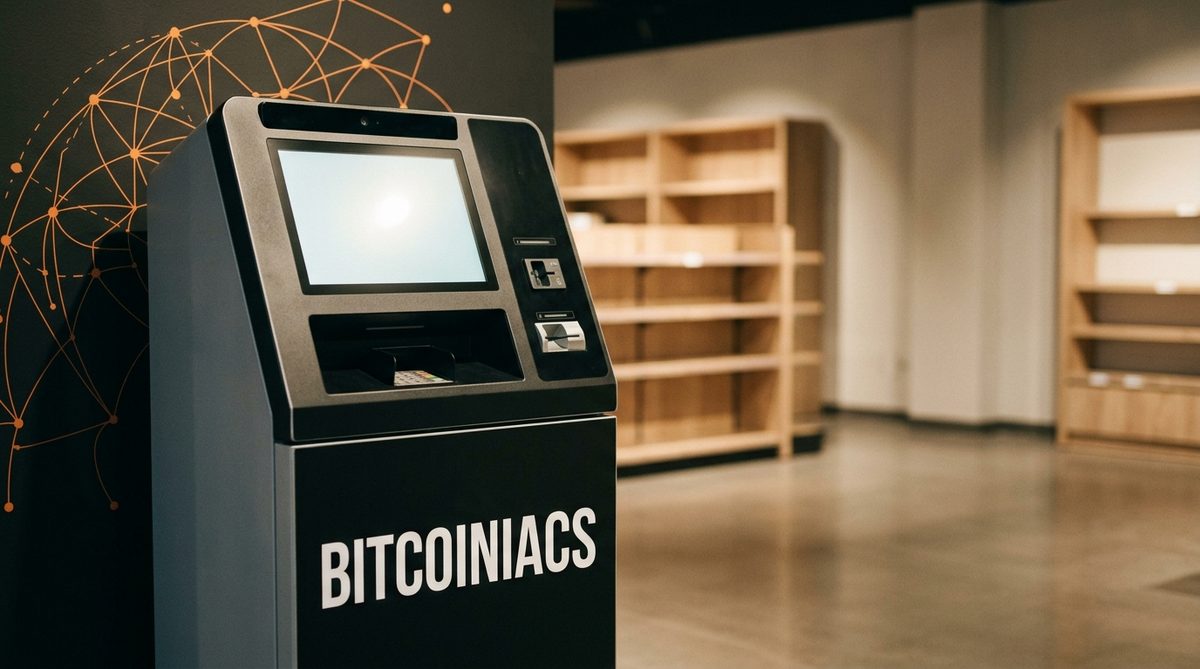
Bitcoiniacs runs Bitcoin ATMs across Western Canada, Ontario, the Maritimes, and Whitehorse, with machines in the shops people already visit: convenience stores, markets, and coffee shops. Since the first step in the route is turning cash into Bitcoin, a machine two blocks from home beats a bank branch across town. The full network is listed on the Bitcoiniacs ATM locations page, including community hubs such as the Bitcoiniacs ATM at JRV Filipino Market in North York.
Purchases at these machines are cash-based. A Bitcoiniacs ATM does not take a credit card and does not work like a bank ATM just because it resembles one. Identification requirements and transaction limits apply, and they are disclosed on screen before you commit.
How the Bitcoin Remittance Route Works
Step 1: Buy Bitcoin Locally with Cash
Choose a buy amount, complete the identity step if the amount requires it, pay in cash, and the Bitcoin is sent to a wallet address you provide. Our walkthrough on how to use a Bitcoin ATM covers the screen flow and the two or three points where first-timers hesitate. Fund the purchase with money you already have: using credit adds interest and turns a transfer into debt.
Step 2: Send It to the Recipient’s Wallet
Bitcoin moves the moment you broadcast the transaction, but it is not confirmed instantly. Miners include transactions in blocks, and each confirmation reduces the chance of a reversal. For a remittance, most people wait for one or two confirmations before saying the money is there, which usually means minutes rather than hours. When blocks are busy, minimum fees rise and settlement slows, so a weekend transfer can cost slightly more than the same send on a quiet Tuesday.
Step 3: The Recipient Converts to Local Currency
This step is the one senders underestimate. Your family member needs a way to turn Bitcoin into money they can spend: a local exchange account, a peer-to-peer buyer, or a crypto ATM that pays out cash. Each option has its own spread and verification process, and the receiving-side spread often exceeds everything that happened in Canada. If they already sell crypto locally, the route is smooth. If nothing nearby converts it, Bitcoin may not be the right rail for that corridor yet, because sending to someone who cannot convert just moves the problem across a border.
What Sending Money Home Really Costs
The Financial Consumer Agency of Canada publishes plain-language guidance on sending money to someone in another country, and its main theme applies to crypto routes too: the advertised transfer fee is one line of the bill, not the bill. Compare the total that lands in your family’s hands.
The Sending Side
You pay the machine’s service fee, the gap between market price and the quote you receive (the spread), and the network fee that gets your transaction mined. Those numbers differ by operator and city and are displayed before you pay. Do not assume a low network fee means a cheap purchase; the network fee is usually the smallest of the three.
The Receiving Side
Your recipient may pay a trading fee, a spread between the offered sell price and the local market rate, a withdrawal fee, or a payout spread at a local ATM. Bank wires and card services charge for currency conversion too, so the real comparison is one all-in total against another. If your recipient plans to cash out at a Canadian machine instead, our guide to selling Bitcoin for cash in Canada explains that half of the process.
How to Compare Two Routes Honestly
Pick one amount, such as $500, and ask each route a single question: how much local currency reaches the recipient, and how long does it take? Include every deduction on both sides and the exchange rate you were actually given. Then repeat the test with a smaller amount, because fixed fees hit small transfers harder. Start with a test transfer small enough that a mistake would be annoying rather than devastating, verify the wallet address character by character, and scale up only once the recipient has converted and confirmed.
Risks, Scams, and the Rules That Apply
Crypto assets are volatile and are not legal tender in Canada, as the Financial Consumer Agency of Canada states on its crypto assets page. In a remittance the risk is asymmetric: the money is in transit for a short window, and a sharp move during that window changes what your family receives.
Scams That Start With a Transfer Request
Most crypto losses among ordinary users are social, not technical. The Canadian Anti-Fraud Centre’s page on investment fraud documents the recurring patterns, and they appear in remittance corridors constantly: an urgent request to send funds today, a guaranteed return, a “support agent” who needs your one-time code, or a sudden instruction to use a different wallet address.
The defences are unglamorous and they work. Nobody legitimate needs your seed phrase. No real platform phones to ask for a two-factor code. No genuine investment guarantee exists. Treat urgency as a warning sign rather than a reason to hurry, and confirm any new wallet address by voice call to a number you already had, never through the message that carried the address.
Verification and Reporting Rules
Crypto dealers in Canada are money services businesses, so identity verification and reporting obligations apply. Expect to show government-issued photo identification at a Bitcoin ATM above certain thresholds, and expect the operator to be able to explain why. A machine promising fully anonymous large transfers is describing something a registered Canadian operator cannot legally offer.
Keeping the Transit Window Short
Buy, send, and have your recipient convert within the same day where possible. If the amount is large, split it across two or three transfers so one bad minute does not decide the outcome. A price move in your favour is luck, not a strategy; timing the market is not the point of a remittance.
Records the CRA Expects You to Keep
The Canada Revenue Agency treats crypto assets as property, and its guidance on reporting income from crypto-asset transactions explains how dispositions are treated. Buying and holding is not a taxable event for most people. Selling, trading, or spending is, and the gain or loss is measured in Canadian dollars.
Buying and Holding vs Disposing
In a typical remittance you buy Bitcoin and then send it, and sending crypto you own is generally a disposition. Keep the Canadian dollar amount you paid, the amount of Bitcoin you received, the quote and fees, the timestamp, the wallet address you sent to, and the transaction ID. That record is easy to assemble at the time and tedious to reconstruct a year later. If the transfer is a gift to a family member, the treatment can differ from a payment for goods or services; an accountant who knows your situation is the right person to confirm it, especially if you send regularly or the amounts are substantial.
Frequently Asked Questions
Is Bitcoin actually cheaper than a bank transfer for sending money overseas?
Sometimes, and not automatically. The network itself is cheap to use, but you still pay a spread and service fee when buying and another spread when your recipient sells. On a mid-sized monthly transfer to a corridor with good local conversion options, the all-in total can beat a bank wire plus foreign exchange markup. On a small transfer, or to a place where cashing out is expensive or impossible, the traditional route usually wins. Compare totals, not fee lines.
How does sending money internationally with Bitcoin actually work?
Three steps. You buy Bitcoin with Canadian dollars at a local machine or exchange, you send it to a wallet address your recipient controls, and they convert it into local currency or cash. The Bitcoin network handles the middle section in minutes, but the start and end of the journey depend on local services, identity checks, and opening hours on both sides.
What is the cheapest way to send money from Canada to another country?
There is no single answer, because the cheapest route depends on the corridor, the amount, and how your recipient can receive funds. Low-cost transfer operators frequently win on price for small and mid-sized amounts, while crypto-based routes can be competitive for regular senders who already hold crypto and whose recipient can convert it locally. Test one amount through two or three services and choose based on the local currency that actually arrives.
Can my family receive money without a bank account?
It depends on what is available near them. A crypto wallet needs no bank account, but converting Bitcoin into cash requires a local service: an exchange, a peer-to-peer buyer, or a crypto ATM that pays out. Some transfer operators also support cash pickup at agent locations. Check the receiving end first, because a wallet balance your family cannot spend is not a remittance.
Do I need ID to buy Bitcoin in Canada for a remittance?
Yes, at registered Canadian operators. Crypto dealers are regulated as money services businesses, so identity verification applies and reporting obligations come with it. At a Bitcoin ATM you should expect to provide government-issued photo identification, and limits may apply to a single transaction or a rolling period. The requirements are usually shown on the machine before you begin.
What happens if the price drops while the money is in transit?
Your recipient receives the same amount of Bitcoin you sent, but it may be worth less in local currency by the time they convert it. Keep the in-transit window short, convert promptly, and avoid sending amounts whose purpose depends on hitting an exact figure. If you are sending for a specific bill, a route that fixes the payout in local currency may suit you better.
Bitcoin remittances from Canada work best as one tool among several, not a universal replacement for the banking system. Send a test amount, measure what arrives, and keep your records.