


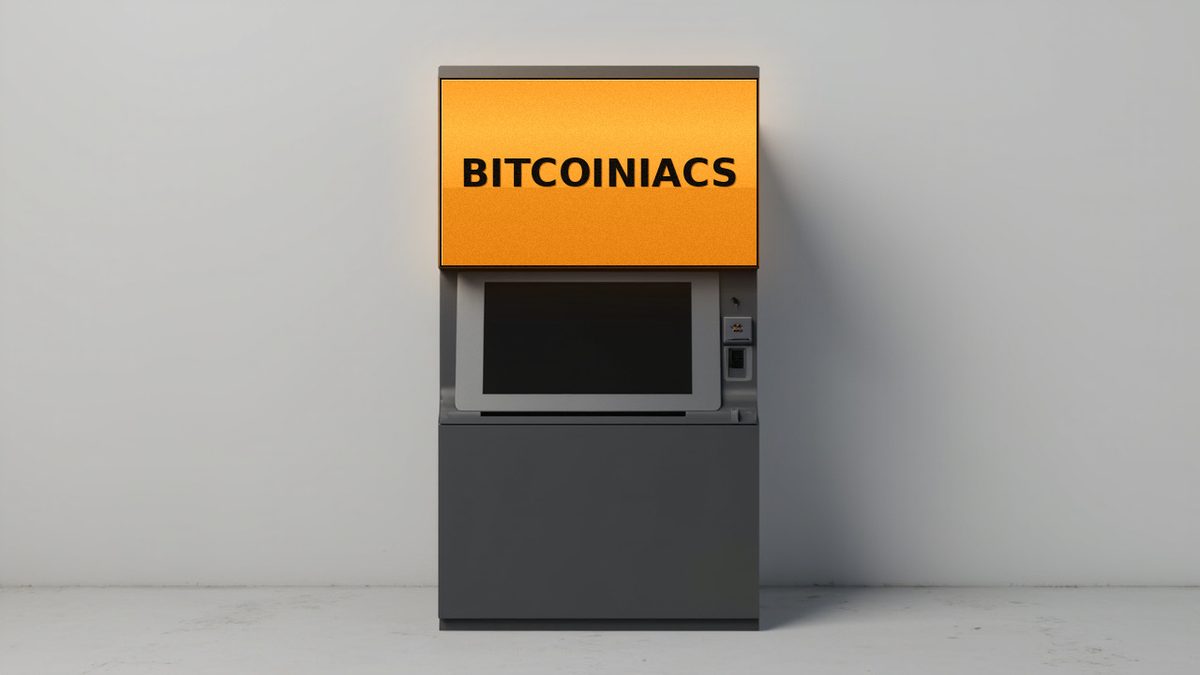
If you want to buy a small amount of Bitcoin in Canada — twenty dollars, fifty, maybe a hundred — the mechanics matter more than the philosophy. Small purchases behave differently from large ones: fixed costs eat a bigger share, machine minimums decide whether your plan works at all, and the wallet you send to has to be ready before you insert a single bill. This guide walks through the practical version, with the actual numbers a Canadian sees in 2026.
Table of Contents
- How to Buy a Small Amount of Bitcoin in Canada
- What a Small Bitcoin Purchase Actually Costs
- Buying a Small Amount at a Bitcoin ATM
- Cheaper Ways to Buy Tiny Amounts of Bitcoin
- Records and Tax on Small Bitcoin Purchases
- Frequently Asked Questions
How to Buy a Small Amount of Bitcoin in Canada
The sequence is short: choose a method, clear identity verification once, and have a wallet address ready before money changes hands. Everything else is detail.
Step 1: Decide what “small” means in Bitcoin terms
Bitcoin divides into 100 million units called satoshis, so no purchase is ever “too small” for the network itself — the limits come from the seller, not the protocol. As the reference FAQ at bitcoin.org explains, the smallest amount a transaction can move is one satoshi, which is a fraction of a cent. That means a $25 purchase is a perfectly valid Bitcoin transaction. It also means the constraint you will actually hit is a business rule: a machine minimum, an exchange minimum, or a fee floor that makes the math ugly.
Step 2: Complete verification once, then reuse it
Every regulated Canadian provider verifies identity. It is a one-time annoyance rather than a per-purchase cost, and it is the reason the second small purchase is faster than the first. Have a government photo ID with your name matching your bank details, and expect a selfie or liveness check on app-based services. Nothing about buying $40 should require a branch visit.
Step 3: Pick a wallet sized to the amount
For amounts under a few hundred dollars, a reputable mobile wallet is a reasonable place to start, and moving to hardware later is straightforward. What matters is that you control the keys and that you have written the recovery phrase on paper before you buy. Do not let a store clerk, a machine, or a helpful stranger set up your wallet for you.
What a Small Bitcoin Purchase Actually Costs
Small purchases are not expensive because Bitcoin is expensive. They are expensive because fixed costs do not shrink with the amount. A percentage fee scales gracefully; a flat fee does not. If a service charges a $5 minimum spread or a flat network handling charge, that fee is 25% of a $20 order and 2.5% of a $200 order. Same service, ten times the relative cost.
The fee-floor trap, with real numbers
Take a Bitcoin ATM sitting at an all-in cost near the low end of the Canadian range. On a $200 purchase, a combined fee and spread of roughly 9% leaves you with about $182 of Bitcoin. On a $20 purchase at the same rate, you receive roughly $18 — but if that machine also applies a flat minimum, the effective cost can jump well past 10%. This is the exact reason people post that they inserted $20 and received $13 of Bitcoin. The percentage quoted on screen is only part of the picture; the spread between the machine’s quoted price and the live market price is the other part. Our breakdown of Bitcoin ATM fees in Canada walks through both line items and the typical 8% to 13% all-in range for buys.
Measure the purchase in purchasing power, not in price
One habit separates people who stick with Bitcoin from people who quit after a month: they stop watching the dollar price of a whole coin and start watching what their own stack does. Twenty dollars is not “0.0002 BTC” in any meaningful sense — it is twenty dollars of exposure. If you want to sanity-check what that money would have bought you elsewhere, the Bank of Canada inflation calculator shows how fast cash loses ground, which is usually the more useful comparison than a one-day Bitcoin candle.
Buying a Small Amount at a Bitcoin ATM
Cash machines are the most common route for a first small purchase in Canada, largely because they work without a bank account, a credit check, or an app store download. You walk in, insert bills, scan a wallet address, and leave with Bitcoin confirmed on-chain within minutes. For a $20 to $100 purchase the trade-off is straightforward: you pay more in percentage terms than an exchange account would charge, and you get speed and privacy from a bank statement in return.
Minimums, bill denominations and daily caps
Machines set their own minimums — often $10 to $20 per transaction — and most bill acceptors read $20s, $50s and $100s but not coins. Daily caps are a separate layer: they exist because of cash logistics and Canadian anti-money-laundering rules, and they rise once your identity is verified. FINTRAC’s consumer guidance on money services businesses explains why a machine asks for ID and why the operator is registered rather than licensed; the practical version is that a small first purchase usually needs only basic verification, while larger totals trigger more. Our guide to Bitcoin ATM limits in Canada lists what drives the tier you land in.
What to expect at the machine
Read the quote screen before you feed any cash. It should show the amount, the fee as a percentage, and the Bitcoin you will receive. If your phone’s wallet needs a QR scan, open the receive screen first so you are not holding up the line. Then confirm, wait for the on-chain confirmation, and keep the receipt. Bitcoiniacs machines are listed with addresses and hours on the Bitcoin ATM locations page, and staff at partner retailers can point you to the unit but cannot advise on your purchase.
Cheaper Ways to Buy Tiny Amounts of Bitcoin
If your goal is the lowest all-in cost on a $20 to $100 buy, and you have a Canadian bank account, an e-Transfer-funded exchange account usually wins on percentage. You trade a day of setup for a fee that is frequently a fraction of a kiosk’s. The catch is that “no fee” marketing usually hides the cost in the spread — the gap between the price you are quoted and the market price at that moment — so compare the Bitcoin you actually receive, not the fee line.
When cash is still the right answer
Cash makes sense when you want the purchase to happen now, when you do not want a bank account involved, or when the amount is small enough that the convenience is worth the percentage. There is a real market for that: Canadians who buy $50 of Bitcoin on payday with the change in their pocket are not making an investment mistake, they are making a convenience trade. Buying Bitcoin with cash in Canada covers the bill denominations, receipt handling and ID expectations in more detail.
Recurring small buys beat one big guess
Twenty-five dollars a week for a year is $1,300 spread across 52 price points, which removes the pressure of picking a moment. The trade-off is that you pay the fee floor 52 times instead of once, so recurring purchases belong on the cheapest rail you can access, and weekly is usually better than daily for exactly that reason.
Records and Tax on Small Bitcoin Purchases
Buying Bitcoin is not a taxable event in Canada. Selling, trading or spending it is, and the Canada Revenue Agency treats crypto as a commodity for tax purposes. Keep the receipt from every purchase — amount in CAD, amount of Bitcoin, the fee, the timestamp and the transaction ID — because your adjusted cost base is built from those numbers and reconstructing them a year later is genuinely painful. The CRA’s crypto-asset guidance sets out how gains and income are reported.
Small disposals still count. If you sell $40 of Bitcoin at a gain, that gain is reportable, even if the dollar figure is tiny and even if no slip arrives. Keep the paperwork and let an accountant decide materiality rather than assuming the amount is too small to matter.
Frequently Asked Questions
Why did I get less Bitcoin than the cash I put in?
Because the machine’s fee and its price spread are both deducted before your Bitcoin is sent. A $20 insertion at a 9% all-in cost lands roughly $18 of Bitcoin, and a machine with a flat fee minimum can leave noticeably less. The quote screen shows the fee percentage before you confirm — if the number you receive in your wallet looks short of that, check the spread in the quoted price against a live market chart.
Is it worth buying $20 of Bitcoin at an ATM?
For the convenience and speed, sometimes. For the percentage cost, rarely. At an all-in cost near 9%, $20 becomes about $18 of Bitcoin, and the fee floor makes small machine purchases the most expensive way to accumulate. Buy $20 once to learn how the machine works, then move recurring purchases to a cheaper rail.
What is the minimum amount of Bitcoin you can buy?
Technically one satoshi — a hundred-millionth of a Bitcoin. Practically, it is whatever the seller allows: many Canadian machines start around $10 to $20 per transaction, and exchange accounts usually have a small minimum e-Transfer deposit. Below those thresholds the fee, not the rule, is what stops you.
What are sats, and should I buy them instead?
Sats are just Bitcoin measured in smaller units, the same way cents measure dollars; there is no separate “sat” asset to buy. Thinking in sats helps because it reframes a purchase as a stack of units rather than a fraction of an expensive coin, and some wallets display balances that way. The Bitcoin is identical either way.
What is the cheapest way to buy a small amount of Bitcoin in Canada?
Usually an e-Transfer-funded exchange account with a low spread, because percentage costs beat flat kiosk fees once you have a bank account. Compare the Bitcoin received, not the headline fee. Cash at a machine is the fastest option and the most private from a bank statement, but it is rarely the cheapest for small repeated purchases.
Start small on purpose. Buy an amount you would not miss, walk through the full loop once — verification, quote, wallet address, confirmation, receipt — and you will know exactly what your chosen rail costs before you commit real money to it. The first purchase is tuition; every one after that should be cheaper and faster.