


Bitcoin for teens usually starts as a curiosity and ends as a family argument: a fifteen-year-old who has watched clips about turning a hundred dollars into a fortune, and a parent who has watched the price drop forty percent in a month. Both of you are partly right. In Canada the rules are clearer than most families expect — minors generally cannot buy Bitcoin on their own — but there are legitimate ways to let a teenager learn with real money and a small enough stake that a mistake stays a lesson instead of a disaster.
Table of Contents
- Why Bitcoin for Teens Comes Up at the Kitchen Table
- Can a Minor Buy Bitcoin in Canada?
- Three Ways Parents Actually Set This Up
- Wallets, Seed Phrases and the First Real Lesson
- Scams That Target Young Bitcoin Buyers
- Bitcoin for Teens and the CRA
- Frequently Asked Questions
Why Bitcoin for Teens Comes Up at the Kitchen Table
The conversation rarely begins with an interest in monetary policy. It begins with a friend who made money, a short video about a coin that “can’t lose,” or a birthday cheque a teenager would rather convert than deposit. That is exactly why the topic is worth taking seriously. A teenager allowed to buy a small position — with their own money and a parent looking over their shoulder — learns more in a month than from years of lectures about saving.
The catch is that Bitcoin is not a savings account. It trades around the clock, has no deposit insurance, and can lose a large share of its value in weeks. Parents who frame the experiment honestly, as speculation with a capped budget, tend to get a better outcome than parents who either ban it outright or hand over a credit card and hope for the best.
Can a Minor Buy Bitcoin in Canada?
In almost every practical sense, no. Canadian crypto trading platforms are registered or registered-as-restricted dealers under securities rules, and their onboarding requires a customer to be an adult who can enter a binding contract. Age of majority is 18 in Alberta, Manitoba, Ontario, Quebec and Saskatchewan, and 19 in British Columbia, New Brunswick, Newfoundland and Labrador, Nova Scotia, Prince Edward Island, Yukon, the Northwest Territories and Nunavut.
The Rule Behind Every Account: Capacity to Contract
This is not a Bitcoin-specific rule. Banks, brokerages and payment apps apply the same logic. A minor can hold property and receive a gift, but a minor cannot be bound to the terms of service that come with a trading account. That is why the workaround you read about online — using a parent’s name, ID and bank account — is a bad idea. It puts the parent’s identity on an account the parent does not control.
What a Bitcoin ATM Requires
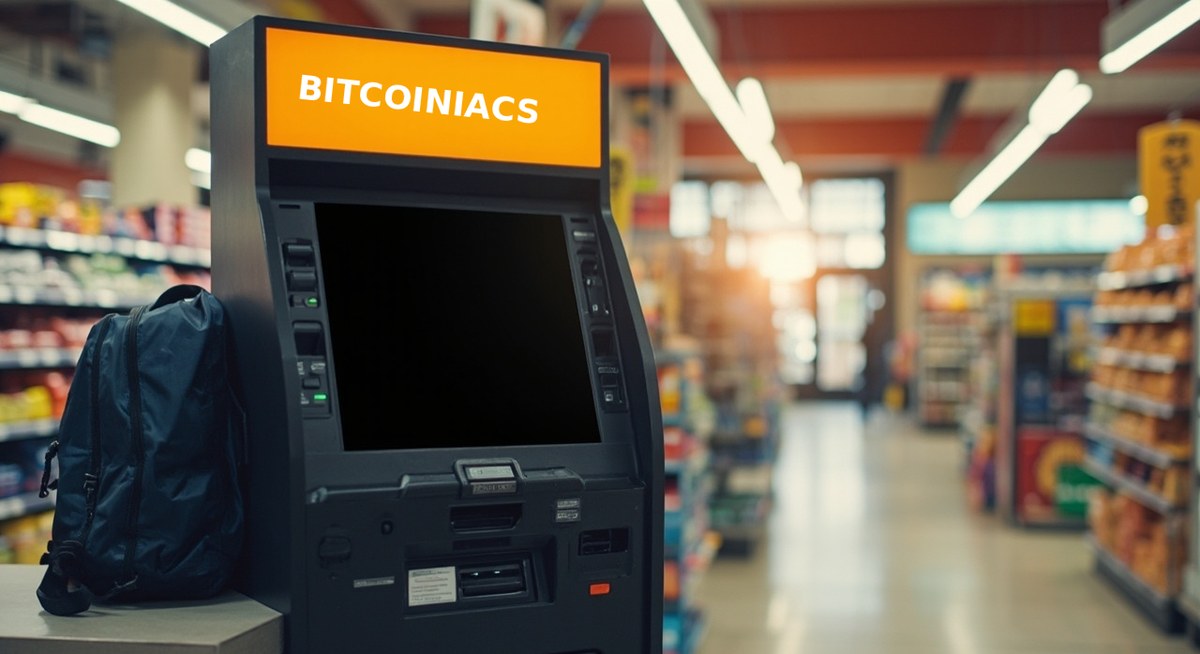
Cash machines are stricter in one sense and simpler in another. Operators must verify who is standing in front of the machine, which means government-issued photo ID and, in practice, an adult customer. Our own breakdown of Bitcoin ATM ID requirements in Canada covers what is scanned, what is stored and what a first-time buyer should bring. A parent can complete a purchase at a machine and then transfer the coins to a wallet the teenager controls — that is a legitimate, common arrangement, and it keeps every step visible to both people.
Three Ways Parents Actually Set This Up
There is no official “teen Bitcoin account” in Canada, so families improvise. Three arrangements cover most of what works, and each one teaches something different.
Option 1: The Parent Holds, the Teenager Watches
You buy a small amount in your own account and keep a written note of what was spent, the price, the date and the amount of bitcoin. The teenager tracks the position weekly and reports back. This is the safest option and the best teaching tool, because nobody can lose access to funds if a phone is dropped in a lake. It also keeps tax reporting simple, since the asset stays yours.
Option 2: Buy Together, Then Move It to Their Wallet
You complete the purchase, then send the coins to a wallet installed on the teenager’s phone. From that moment the money is genuinely theirs — which is the point, and also the risk. Start with an amount you could lose completely, set the wallet up together, and write the recovery phrase on paper kept at home. The first time they see a balance change while they sleep, the lesson about volatility lands without a lecture.
Option 3: Treat It as a Gift With Strings Attached
Birthdays and graduations are the natural entry point. If you are putting coins in a teenager’s hands, our guide to how to gift Bitcoin in Canada walks through the mechanics and the record-keeping, including what to write down so the gift does not become a tax surprise later. A card with a printed address and a short explanation of what you gave them works better than a screenshot.
Wallets, Seed Phrases and the First Real Lesson
Most teenage Bitcoin losses do not come from a bad price call. They come from a lost phone, a forgotten PIN, a seed phrase photographed into a camera roll that gets restored onto someone else’s device, or a “support agent” in a direct message. Wallet choice matters less than the habits built around it, but the choice is still worth getting right. A phone wallet with a reputable developer and a small balance is the right starting point; hardware comes later, once the amount justifies the friction. A comparison of the best Bitcoin wallets for Canadians covers the trade-offs without assuming the reader already knows the vocabulary.
Two habits are non-negotiable. First, the recovery phrase goes on paper or metal, offline, in a place the teenager can find five years from now — never in a photo, a notes app, a cloud drive or a group chat. Second, the wallet must never be set up while someone is talking them through it on a call or a screen share. The wallet security guidance from Bitcoin.org is a good plain-language briefing to read together before the first transfer, and it is short enough that a teenager will actually finish it.
Scams That Target Young Bitcoin Buyers
Teenagers are a favoured target for two reasons: they are new enough to believe a stranger who sounds authoritative, and they are embarrassed enough not to tell a parent when something goes wrong. The scams follow a pattern. Someone offers to “double” a small deposit. Someone claims to be from a platform’s support team and needs the recovery phrase to unlock an account. Someone selling a phone or a game account asks for payment in Bitcoin and disappears. Someone on a dating app builds a relationship for three weeks and then introduces an “investment opportunity” with a convincing dashboard.
The Canadian Anti-Fraud Centre publishes current warning lists and takes reports at antifraudcentre-centreantifraude.ca, and its reporting data is the reason most of these schemes eventually get named publicly. Make one rule absolute: no one legitimate ever needs the recovery phrase, and no one legitimate ever asks a 16-year-old to send bitcoin to “verify” a wallet. Our longer piece on how crypto scams in Canada work breaks down the scripts line by line, which is more useful to a teenager than a general warning about strangers.
Basic device hygiene closes another door. The Get Cyber Safe campaign from the Government of Canada covers passcodes, two-factor authentication and app permissions in language aimed at ordinary households, and every one of those habits applies directly to a phone that holds bitcoin.
Bitcoin for Teens and the CRA
The Canada Revenue Agency treats crypto assets as a commodity, not as money. Buying and holding is not a taxable event. Selling, trading one coin for another, or spending bitcoin on goods is a disposition, and any gain is generally a capital gain reported on the taxable portion of the increase in value. For a teenager with a hundred dollars of bitcoin, the practical consequence is small — but the habit of tracking it is not.
Keep a simple record from day one: the date, the amount in Canadian dollars, the amount of bitcoin, the fee, and the wallet address that received it. If the coins sit in a parent’s account, the parent reports the disposition. If the coins were gifted and are controlled by the teenager, the teenager — or the parent filing on their behalf — reports it. Attribution rules for minors are genuinely technical, so if the amounts grow beyond pocket money, ask an accountant rather than relying on a forum answer. The CRA’s crypto-asset guide is the primary source and it is written in plain enough English to read with a 16-year-old.
The first purchase is often a cash purchase, which means a machine. Cash purchases at a Bitcoin ATM give a teenager something a trading app cannot — a physical transaction with a receipt, a fixed amount spent and a visible fee. You can check Bitcoin ATM locations across Canada before you go so the trip does not turn into a search for a machine that moved last year.
Frequently Asked Questions
Can a minor buy Bitcoin in Canada?
Not directly. Registered Canadian crypto platforms require an adult account holder who can enter a binding contract, and the age of majority is 18 or 19 depending on the province. Bitcoin ATMs likewise verify government photo ID and serve adult customers. A minor can still own bitcoin that a parent buys and sends to a wallet the minor controls, which is the arrangement most Canadian families use.
How can a 15-year-old get Bitcoin in Canada?
Through a parent. The parent completes the purchase — at an ATM with cash, or through an account in their own name — and then transfers the coins to the teenager’s wallet. Some families run it as a matched savings plan, where the teenager contributes birthday money and the parent matches it. Peer-to-peer platforms that skip identity checks exist, but they carry counterparty and legal risk that is not worth it for a first purchase.
How do parents hold Bitcoin for their kids?
Most keep it in their own account with a written record of which coins belong to which child, then transfer at 18 or 19. Others set up a separate wallet per child with the recovery phrase stored with the family’s important documents. The awkward middle ground — coins in the parent’s account with no notes and no plan — is where disputes start, especially between siblings.
Can I pay my teenager’s allowance in Bitcoin?
You can, and it is a decent teaching tool if the amount is small and the volatility does not become a source of household stress. Buy in advance, send a fixed amount each week or month, and show the balance change together. Keep the cash equivalent in the conversation so the teenager learns that a rising balance and a rising purchasing power are not always the same thing.
How much Bitcoin should a teenager start with?
An amount the family can lose without changing anything. For most households that is the price of a video game, not a semester of tuition. The goal of a first position is familiarity — how a wallet works, how a fee is charged, how a price moves overnight — not returns. Increase the amount only after the teenager has held the position through a double-digit drawdown without panicking.
Bitcoin for teens works best as a supervised experiment with a hard budget and an honest record. Buy a small amount, move it to a wallet you set up together, write the recovery phrase on paper, and keep the receipts. Whatever the price does next, the teenager will come out of it knowing how a wallet, a fee and a tax record actually work — and that knowledge outlasts any single trade.