


Bitcoin dollar cost averaging is the habit of buying a fixed amount of Bitcoin on a fixed schedule, whatever the price happens to be that week. It sounds almost too simple to matter, yet it is the single most common strategy used by people who keep buying through bull markets and drawdowns without losing sleep. In Canada the strategy runs into a specific set of realities: cash-only machines, exchange spreads, a volatile CAD rate, and a tax system that treats every sale as a disposition. This guide walks through how the mechanics work, what the strategy genuinely costs, and how to set up a schedule you will still be following a year from now.
Table of Contents
- How Bitcoin Dollar Cost Averaging Works
- Bitcoin Dollar Cost Averaging vs Lump Sum
- What Bitcoin DCA Really Costs in Canada
- Setting Up a DCA Plan You Can Keep
- Bitcoin Dollar Cost Averaging Mistakes to Avoid
- Frequently Asked Questions
- The Plan Beats the Prediction
How Bitcoin Dollar Cost Averaging Works
You choose an amount in Canadian dollars, a cadence, and a place to buy. Then you repeat it without editing the plan based on how the chart looks that morning. That is the whole method. The interesting part is what the repetition does to your cost basis over time.
The mechanics of a fixed buy schedule
If you buy $100 every two weeks, you receive more bitcoin when the price is low and less when it is high. The result is an average cost per bitcoin that sits somewhere below the average of the prices you saw on the days you bought, because your cheap purchases carry more weight in coins. That is the entire mathematical edge. It is not a prediction about the future, and it does not stop Bitcoin from falling after you buy.
Three things make a schedule repeatable: a funding rail you can use on the same day each cycle, an amount that never competes with rent, and a destination wallet you control. Most abandoned plans fail on the funding rail.
Why your average price never matches the chart
The price on a chart is an index, usually quoted in US dollars. What you pay is your provider’s ask, converted at their CAD rate, plus their fee. Bitcoin’s own documentation is blunt about that volatility: prices can move several percent inside a day. Read the Bitcoin.org FAQ on volatility if you want the plain-language version before your first purchase.
Judge your plan on the all-in cost per bitcoin you actually received, not on a price widget. In Canada those two figures differ, and the gap compounds across fifty-two buys a year.
Bitcoin Dollar Cost Averaging vs Lump Sum
The honest comparison is not “which strategy makes more money” but “which strategy will you actually execute.” Both have a real case, and the case depends on where the money came from.
When a lump sum makes more sense
If you already hold cash earmarked for bitcoin, spreading it over twelve months leaves most of it idle while the asset does whatever it does. In rising markets the earliest money usually did best. That is not a guarantee, and anyone who says otherwise has not watched a two-year drawdown.
What the United States regulator’s investor education glossary is careful to say is that dollar cost averaging reduces the risk of investing a large sum at an unlucky moment, and that it does not assure a profit or protect against loss. That framing is worth keeping. See the Investor.gov explanation of dollar cost averaging for the neutral version of the argument.
When DCA clearly wins
Most Canadians do not have a lump sum; income arrives on the fifteenth and the last day of the month. For them DCA is not market timing, it is the only structure that matches the cash flow — and it removes the most expensive decision in retail crypto: picking the exact day to go all in.
A second advantage is behavioural. Someone with a $60 weekly plan buys through a 25% drop because the plan already decided. Someone waiting for a good entry usually buys nothing during the drop, then buys higher out of frustration.
What Bitcoin DCA Really Costs in Canada
Fees are the part of DCA that people discover in month six, when they compare coins received against dollars spent. A small recurring purchase can carry a surprisingly large percentage cost, and the smaller the purchase, the worse it gets.
The full cost stack
Six costs can appear on one buy: the service fee, the spread between buy and sell price, the network fee (sometimes absorbed), a currency conversion if the provider quotes in US dollars, a cash-advance charge if you use credit, and for cash purchases the premium baked into the machine’s rate. Cash advances usually accrue interest immediately, which is why funding bitcoin with borrowed money is a bad plan even when the price rises.
Do not assume one published percentage applies to you: schedules differ by provider, payment rail, and order size. Ask for the all-in number before you commit — dollars out, satoshis in, implied price per bitcoin. That implied price is the only figure worth comparing across providers.
Cash at a Bitcoiniacs ATM versus an online exchange
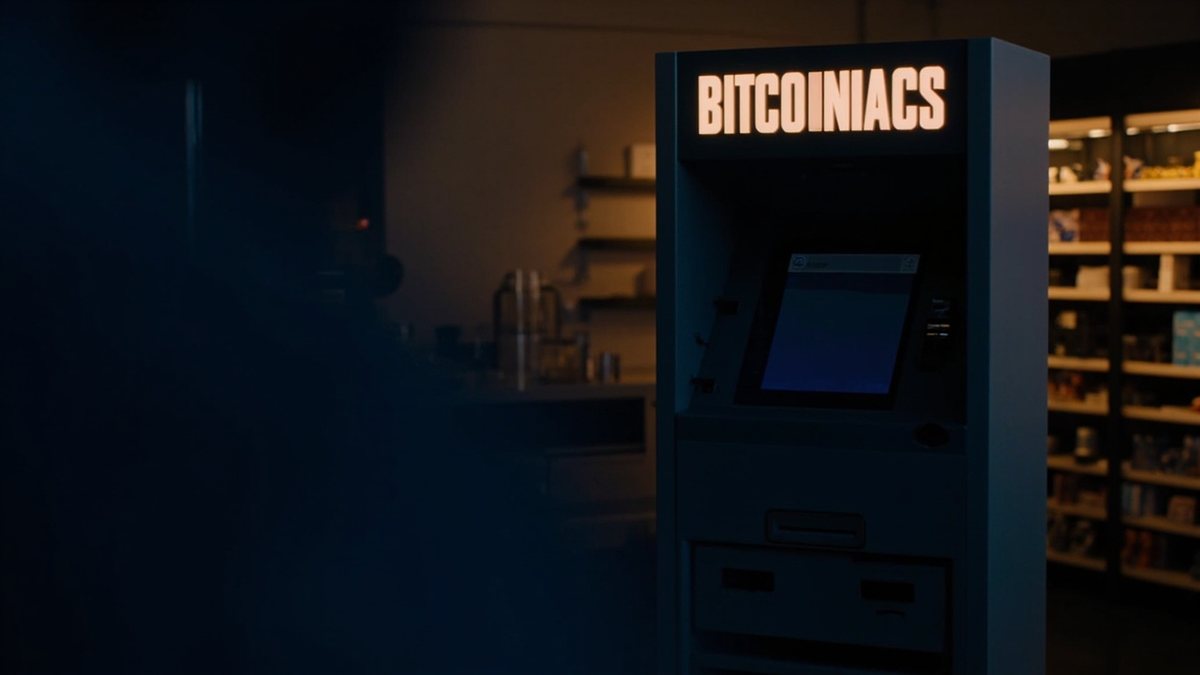
These rails solve different problems. A machine purchase needs no bank account, login, or multi-day settlement: you walk in with bills and leave with bitcoin in a wallet you control, and that convenience is priced in. An online or over-the-counter desk usually quotes tighter pricing on larger amounts, but needs identity verification, a funding source, and time to settle.
For a weekly $40 habit, the flat and percentage costs of a machine can add up to a meaningful share of the purchase. For a $2,000 buy, the same structure is far less painful. That is why the sensible pattern is to match cadence and rail: small frequent buys on the cheapest available rail, or larger less frequent cash buys that keep the per-dollar cost down. You can see live pricing on the Bitcoiniacs crypto exchange page and find machines through the Bitcoiniacs ATM locations directory.
A quick worksheet
Divide your planned purchase by the fee plus spread you expect. A hypothetical $30 weekly buy carrying a $5 combined cost loses about 17% before the price moves at all; at $150 the same $5 is 3.3%. Nothing about the market changed; only the batch size. If your provider charges a flat component, batching every two weeks usually beats weekly, and monthly beats both.
Setting Up a DCA Plan You Can Keep
Choose a cadence that matches your pay cycle
Weekly, biweekly, and monthly all work. What does not is a cadence that competes with a bill. Buy two days after your deposit lands, so rent clears first, and automate the reminder even if the purchase is manual — a manual plan without a calendar entry becomes a plan you used to have.
Decide where the bitcoin lives
Leaving purchases on a provider’s platform means you own a claim, not keys. Moving each buy to your own wallet removes that counterparty, but adds a withdrawal fee per transfer and a pile of small unspent outputs that make future spending expensive. A common compromise: accumulate, then withdraw to self-custody once the balance justifies the fee. If you are unsure whether a transfer arrived, see our guide to Bitcoin transaction confirmations in Canada.
Keep records from buy number one
In Canada, buying Bitcoin is not a taxable event, but selling, trading, or spending it generally is. Every purchase establishes an adjusted cost base, and the Canada Revenue Agency expects you to be able to support it. The CRA’s crypto-asset guidance for users sets out the record-keeping expectation directly.
For every buy, store six things: the CAD amount, the bitcoin amount, the timestamp, the fee, the implied price, and the destination address or transaction ID. A spreadsheet is fine; a folder of e-transfers is not. When you eventually sell, you will be glad the cost base was captured at the time.
Bitcoin Dollar Cost Averaging Mistakes to Avoid
Most of the damage in a DCA plan comes from a small set of predictable errors, not from bad luck on entry prices.
Funding the plan with debt
A credit-card cash advance against a volatile asset turns a drawdown into a payment problem. The Bank of Canada has been consistent on this point for years: crypto-assets are volatile and speculative, and its own remarks on crypto-assets describe them as an immature asset class with real risk. If a price drop would force you to sell to cover interest, you are not investing, you are borrowing at the worst possible rate.
Editing the plan every week
A schedule you override is discretionary trading with extra steps. Pausing is defensible when your income changes; pausing because the price fell is the exact behaviour the strategy exists to prevent.
Ignoring the operational side
Two quiet costs build up over a hundred small buys: withdrawal fees on frequent transfers, and a wallet full of tiny outputs. Batch your withdrawals, and never share a seed phrase or one-time code with anyone offering to “set up” or “recover” your DCA account.
Frequently Asked Questions
How does Bitcoin dollar cost averaging actually work?
You buy a fixed dollar amount at fixed intervals, so your coin count rises when prices are low and falls when they are high. Your average price ends up weighted toward the cheaper purchases. Over a full cycle that usually produces a cost basis below the simple average of prices you saw, but it guarantees nothing: if the price falls for years, every buy is down.
Is it better to DCA daily, weekly, or monthly?
Cadence matters far less than whether you keep going. Daily buys are the tightest smoothing but generate the most transactions, the most fees, and the most record-keeping work. Weekly and biweekly suit people paid on a schedule. Monthly is cheapest if your provider charges a flat fee, and often the practical choice for larger amounts. Pick the interval that matches your cash flow and stop optimizing it.
Do the fees on small recurring buys eat the gains?
They can, and this is the most underrated part of DCA. A flat fee on a $25 purchase is a much larger percentage than the same fee on a $250 purchase. Small weekly buys on an expensive rail can quietly cost several percent of everything you invest. Compare the implied price per bitcoin across providers, and if a flat fee applies, batch your purchases instead of shrinking them.
Is DCA better than investing a lump sum?
Not automatically. If you already hold the cash and your horizon is long, entering sooner has historically captured more of the market’s upward drift. DCA’s real value is behavioural and practical: it removes the pressure of picking one day, and it fits people whose money arrives in paycheques rather than a windfall. Neither approach protects you from a prolonged decline.
Should I stop DCA when the price keeps falling?
Only if your financial situation changed. Stopping because the price is down locks in the worst possible pattern: buying high through enthusiasm and stopping low through fear. If you cannot afford the next purchase, reduce the amount rather than cancelling the plan, and never fund it with borrowed money. Buying your first coins during a quiet week is easier than you think, and our first-time Bitcoin ATM walkthrough covers the mechanics step by step.
The Plan Beats the Prediction
Bitcoin dollar cost averaging converts an impossible forecasting problem into a scheduling problem. You are not required to know where the price goes next; you are required to keep buying the same amount on the same day and record what you paid. Control the all-in cost per purchase and the consistency of the schedule, and the rest is patience. Write the plan down before the next payday and let it run.