


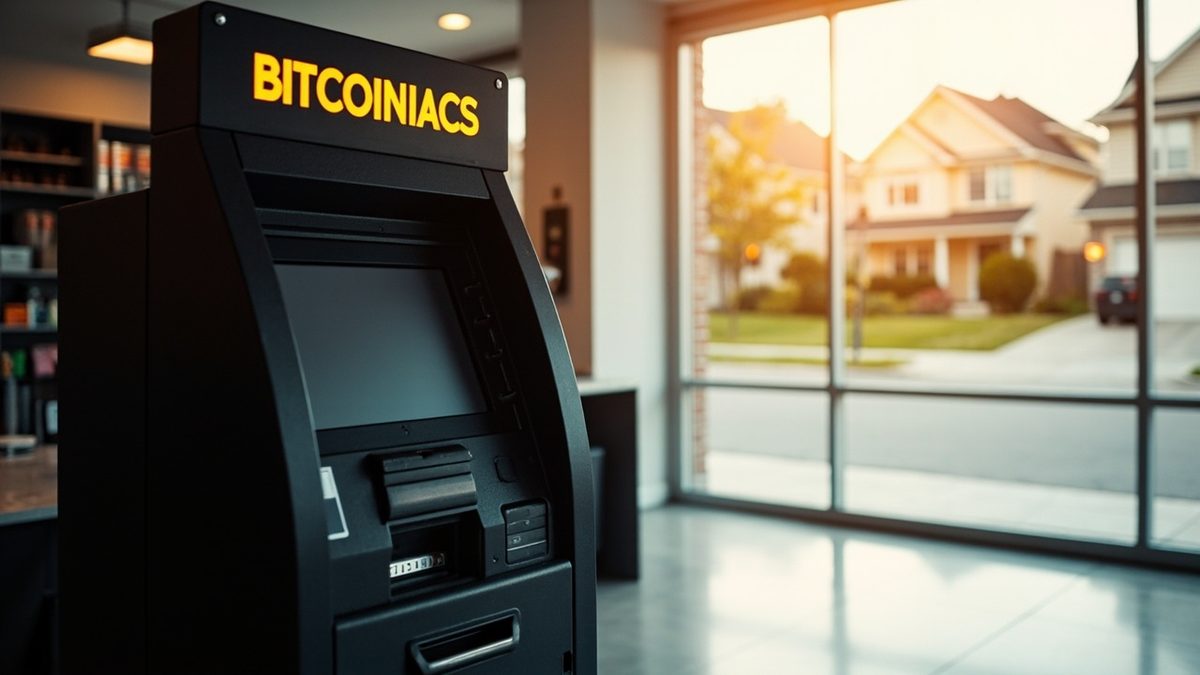
Bitcoin vs real estate is the comparison Canadians keep making, and it usually starts with a simple question: where does my savings do more work? The two assets behave nothing alike. One is a digital bearer asset you can move from a phone in minutes; the other is an illiquid physical asset most households buy with a mortgage and sell once a decade. Comparing them on a single scoreboard leads to bad decisions in both directions. This guide looks at them the way a Canadian household actually experiences them — upfront costs, carrying costs, liquidity, tax treatment, and what happens when you need the money fast.
Table of Contents
- Bitcoin vs Real Estate: The Core Difference
- Liquidity and Access
- Costs and Carrying Expenses
- Tax Treatment in Canada
- Using Bitcoin for a Down Payment
- Frequently Asked Questions
Bitcoin vs Real Estate: The Core Difference
The first thing to get straight is that these are not the same kind of asset wearing different clothes.
Bitcoin’s supply is capped by code at 21 million coins, a design choice laid out in the original Bitcoin whitepaper. Nobody can vote to issue more, and no central bank can decide that this year’s issuance should be larger. Real estate supply is the opposite: it responds to zoning, interest rates, construction costs and immigration policy. When prices rise, builders eventually build, and when credit tightens, transactions freeze.
Leverage Changes Everything
A Canadian home purchase is usually a leveraged position from day one. A 20% down payment controls an asset worth five times that amount, which magnifies gains and losses in both directions. Bitcoin is normally bought outright with cash you already have. Borrowing to buy bitcoin — through a loan, a line of credit, or a credit card — is one of the fastest ways to turn a volatile asset into a permanent problem, and it is not something we recommend to anyone.
Cash Flow Versus No Cash Flow
A rental property pays rent. A principal residence saves you rent. Bitcoin pays nothing — it produces no yield, no dividend and no income, and any product promising a yield on your coins involves lending them to someone else and taking on their risk. If you need an asset that throws off monthly cash, bitcoin is the wrong tool. If you want exposure to an asset whose supply cannot be inflated, it is a different conversation entirely.
Volatility in Both Directions
Bitcoin moves fast, and daily swings of several percent are normal. Canadian housing moves slowly but it does not only move up — regional markets have had multi-year stretches where nominal prices fell and owners discovered that selling meant accepting a loss after fees. The difference is velocity, not the existence of risk.
Liquidity and Access: Where the Two Diverge Fastest
Liquidity is the practical difference most people underestimate until they need money.
Selling a home in Canada typically takes weeks to months. You pay a realtor commission, legal fees, and often a mortgage prepayment penalty, and the sale can collapse on a financing condition. Bitcoin settles in minutes to an hour. You can sell a portion — a few hundred dollars’ worth — instead of the whole position, which is something you cannot do with half a house.
That easy access cuts both ways. An asset you can liquidate at 2 a.m. is an asset you can panic-sell at 2 a.m. Households that hold bitcoin sensibly tend to separate a small emergency buffer in cash from the long-term holding, so a furnace failure never forces a sale at the wrong moment. If you want to check what the market is doing before you move, the live crypto price dashboard shows current rates without an account.
For physical cash transactions, Bitcoin ATM locations across Canada let you buy or sell in person with a machine that dispenses or accepts cash, which is useful when you want to transact without linking a bank account to an exchange. It is not anonymous — Canadian operators apply identity verification and reporting rules — but it is a different rail with different trade-offs.
Costs and Carrying Expenses: The Number Nobody Adds Up
Comparing headline prices is the most common mistake in the bitcoin vs real estate debate. The honest comparison is total cost of ownership.
What a Home Actually Costs
On top of the purchase price, a Canadian buyer faces land transfer tax (or its provincial equivalent), legal fees, an inspection, title insurance and moving costs. Then come the ongoing expenses: mortgage interest, property tax, home insurance, maintenance (budget roughly 1% of value per year for a detached home), and condo fees where applicable. Mortgage interest is the line item that swings hardest with rates, and the Bank of Canada’s published rate data is the reference point for where those costs have been heading.
For a sense of how prices are actually moving rather than how they feel, CREA’s national housing market statistics publish benchmark prices and sales volumes by region.
What Bitcoin Actually Costs
Bitcoin has no property tax, no insurance and no maintenance. Its costs show up at the edges: the spread and fee at purchase, the network fee when you move coins, and the cost of custody — a hardware wallet is a one-time purchase measured in the low hundreds of dollars. Buying through a cash machine carries its own fee structure, which is higher than an online order book; Bitcoin ATM fees in Canada breaks down exactly how that pricing works so you can compare it honestly against an exchange.
One asymmetry is worth naming. A home’s costs are largely unavoidable and recur monthly whether or not the asset appreciates. Bitcoin’s costs are transactional — you pay when you buy, sell or move, and nothing while it sits.
Tax Treatment in Canada: Two Very Different Rulebooks
This is where the comparison stops being theoretical, and it is also where a casual reader most often gets burned.
| Item | Principal residence | Bitcoin |
|---|---|---|
| Main gain treatment | Principal residence exemption available | Capital gain, portion taxable |
| Triggers a tax event | Only on sale | Every sale, spend, or trade |
| Record keeping burden | Purchase, improvements, sale | Every single transaction |
A principal residence can qualify for the principal residence exemption, which is why so many Canadians treat their home as a tax-sheltered store of value. Bitcoin gets no such treatment. Disposing of it — selling for cash, spending it on goods, or trading it for another crypto asset — can produce a capital gain or loss, and the CRA’s guidance on taxable capital gains (line 12700) sets out the reporting mechanics and the current inclusion rate. Rates change, so check that page for the year you are filing rather than trusting a number in an article.
The record-keeping difference is bigger than the rate difference. If you buy bitcoin weekly for three years and eventually sell, you may have 150 acquisitions with different cost bases, and the gain has to be calculated against the right ones. Keep the CAD amount, the BTC amount, the fee, the timestamp, the wallet address and the transaction ID every time. Retain those records for at least six years after the relevant tax year.
Using Bitcoin for a Down Payment in Canada
The most common real-world overlap between these two assets is a household selling bitcoin to fund a home purchase. It works, but the sequencing matters.
Lenders are required to verify the source of a down payment, and funds that appear suddenly are scrutinized. In practice, many mortgage professionals want to see that the money has been in a Canadian account and seasoned — often around 90 days — with a documented trail from the original purchase. Selling bitcoin into your bank account two weeks before closing can complicate approval even when everything was legitimate. Speak to a mortgage broker before you sell, not after.
Because a crypto-for-property exchange is treated as a disposition at fair market value, the tax event happens whether or not cash ever touches your account. Budget for the gain before you commit the proceeds. And if you are buying bitcoin on a schedule for a future purchase, a written dollar-cost averaging strategy keeps the plan mechanical instead of emotional — which matters a great deal when the timeline is a mortgage approval.
Two honest cautions. First, do not borrow against a home to buy bitcoin; the combination of leverage and volatility is how households lose a house rather than a trade. Second, be sceptical of anyone who contacts you with a guaranteed return, a time-limited opportunity, or a request for your seed phrase or a one-time verification code. Those are the mechanics of fraud, not investment.
Frequently Asked Questions
Is Bitcoin actually a better investment than real estate?
They reward different things. Bitcoin has outperformed Canadian housing over some multi-year windows and badly underperformed it over others, and it carries no cash flow. Real estate offers leverage and rent, but it is illiquid and expensive to trade. The useful question is not which is “better” but which fits your timeline, your need for cash flow, and your tolerance for a 50% drawdown without selling.
Can I use Bitcoin for a mortgage down payment in Canada?
Yes, but lenders will verify the source of funds. In practice this means selling through a regulated Canadian platform or a cash machine that produces a receipt, moving the proceeds into your bank account, and letting the funds season before you apply. Document the original purchase, the sale, and the transfer. Some lenders are more comfortable than others; ask before you liquidate.
Can you buy a house in Canada directly with Bitcoin?
Occasionally, but it is rare. Most sellers and their lawyers want Canadian dollars in trust, because mortgage lenders and title insurers expect a conventional closing. Direct crypto-for-property deals do happen in private sales, and they carry extra legal and tax complexity on both sides. Treat any offer to close outside a normal real estate transaction with caution.
Do I owe tax if I sell Bitcoin to buy a house?
Yes, if the coins were worth more than your cost base. Selling, spending, or trading bitcoin is a disposition, and the resulting capital gain must be reported on your return even when the proceeds go straight into a down payment. Your principal residence exemption does not extend to crypto. Keep records of each acquisition so the gain can be calculated correctly.
Why is my bank questioning a down payment funded by Bitcoin sales?
Anti-money-laundering rules require lenders to understand where large sums came from. A deposit with no paper trail looks identical to one from an unexplained source. Providing exchange statements, ATM receipts, wallet transaction records and tax filings up front usually resolves it — and it is far easier to assemble before the file reaches underwriting than after a conditional approval stalls.
Neither asset is a shortcut. A home gives you shelter, leverage and a tax exemption, at the cost of liquidity and monthly carrying costs. Bitcoin gives you a fixed-supply asset you can move in minutes, at the cost of volatility, no cash flow, and a tax bill on every disposal. Most Canadian households end up holding both, sized so that a bad year in either one never forces a sale in the other. Decide what each is for before you decide how much of it to own — and if you are buying or selling for cash, check the current rate first so the number you plan around is the number you actually get.