


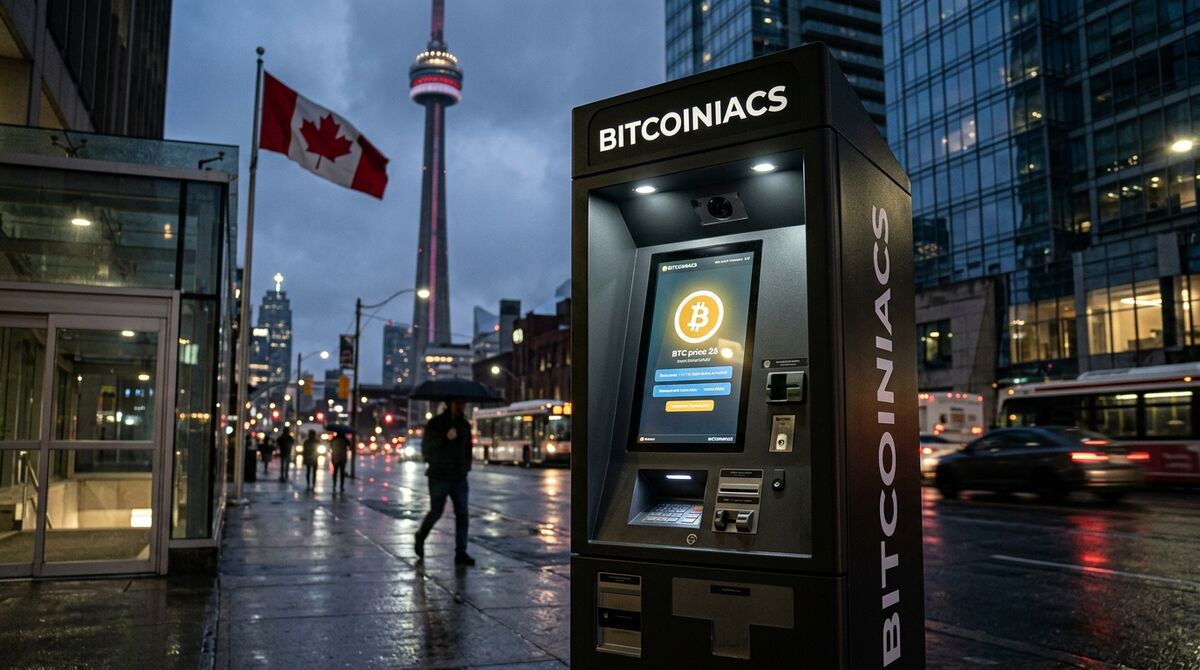
On April 28, 2026, the Canadian government dropped a bombshell into the Spring Economic Update: a proposed nationwide ban on all cryptocurrency ATMs. For an industry that started right here in Canada, Vancouver hosted the world’s first Bitcoin ATM in 2013, the announcement landed hard. With nearly 4,000 crypto ATMs operating across the country, the Canada Bitcoin ATM ban 2026 proposal has left many Canadians asking the same question: what actually happens now?
This isn’t speculation. The Department of Finance has tabled legislation. FINTRAC has already revoked 142 money services business registrations since the start of 2026. The message from Ottawa is clear, but the details matter. In this post, we break down exactly what the ban means, why it’s happening, and how Canadians can continue buying and selling Bitcoin legally through regulated channels.
Table of Contents
- Why Canada Proposed the 2026 Bitcoin ATM Ban
- How Bitcoin ATMs Became a Fraud Target
- What the Ban Means for Canadian Bitcoin Users
- How to Legally Buy Bitcoin in Canada After the Ban
- The Global Crackdown on Crypto ATMs
- Frequently Asked Questions
Why Canada Proposed the 2026 Bitcoin ATM Ban
The government’s reasoning is straightforward: crypto ATMs have become what FINTRAC calls a “primary method” for scammers to collect and launder money from victims. In the official language of the Spring Economic Update, the ban is designed “to protect Canadians by shutting down a primary method for scammers to defraud victims, and for criminals to place their cash proceeds of crime.”
The numbers are sobering. According to the Department of Finance Canada, law enforcement estimates that 85 to 98 percent of crypto ATM transactions are linked to illicit activity. In 2024 alone, Canadians lost between $142 million and $284 million through crypto ATM fraud, and that figure only captures the estimated 5 to 10 percent of fraud that gets reported to the Canadian Anti-Fraud Centre.
Minister of Finance François-Philippe Champagne didn’t mince words when announcing the measures at the Payments Canada Summit in May 2026: “Too many Canadians, especially seniors and vulnerable people, are being targeted by scams and financial crime. The Spring Economic Update takes bold steps to protect people, crack down on criminals, and promote safer futures.”
The ban is part of a broader anti-financial-crime package that includes a new Financial Crimes Agency (FCA), $17.9 million in enhanced FINTRAC funding, and Canada’s first-ever National Anti-Fraud Strategy. The crypto ATM ban sits alongside these measures as the government’s most direct assault on what it sees as a crime-enabling infrastructure.
How Bitcoin ATMs Became a Fraud Target
To understand the ban, you need to understand how the machines became a fraud vector in the first place. Unlike a traditional bank ATM, which requires a linked account, identity verification, and leaves a traceable trail, a Bitcoin ATM lets someone walk up with cash, insert bills, scan a QR code, and send cryptocurrency to any wallet in the world within minutes. No bank account required. No waiting period. No human intermediary.
That speed and privacy is exactly what makes Bitcoin ATMs valuable, and exactly what makes them exploitable. A typical scam works like this: a fraudster calls a victim, impersonates a government agency or tech support, convinces them there’s an urgent problem, and directs them to a nearby crypto ATM to “resolve” it by depositing cash that gets converted to Bitcoin and sent to the scammer’s wallet. By the time the victim realizes what happened, the funds are gone, irreversible, untraceable, and offshore.
The scale is staggering. The Bitcoin Foundation reports that Americans lost $389 million through crypto ATM scams in 2025, a 58 percent increase from the previous year. Canadian data mirrors this trend, with seniors disproportionately targeted. The FBI and FINTRAC have both flagged crypto ATMs as the fastest-growing fraud channel in North America.
Critically, the government is not claiming that all Bitcoin ATMs are scams, or that all operators are complicit. The problem is structural: the combination of cash, anonymity, and instant irreversible settlement creates a vehicle that bad actors exploit at industrial scale. Regulators have concluded that the only effective fix is to remove the vehicle entirely.
What the Ban Means for Canadian Bitcoin Users
If you’re one of the thousands of Canadians who use Bitcoin ATMs regularly, the immediate question is practical: can you still buy Bitcoin in Canada? The answer is yes, just not through an unsupervised cash kiosk.
The government has been explicit on this point. According to the Department of Finance, “Canadians can continue to use brick-and-mortar and online regulated platforms for cryptocurrency, which offer a safer and more transparent experience.” The ban targets the unstaffed, cash-in/crypto-out ATM model specifically, not the broader ability to buy or sell Bitcoin through regulated money services businesses.
Here’s a breakdown of what changes and what doesn’t:
What the ban stops: Unsupervised cash-to-crypto transactions through standalone ATM kiosks. The kind where you insert cash, scan a wallet QR code, and receive Bitcoin instantly, without meaningful identity verification or human oversight.
What stays legal: Buying and selling Bitcoin through registered money services businesses with proper KYC (know your customer) controls. This includes in-person transactions at physical locations, online platforms, and regulated cryptocurrency exchanges. The government’s own words: “Cryptocurrency use remains permitted through regulated platforms with know-your-client controls.”
If you want to sell Bitcoin for cash, that also remains available through regulated channels, the ban is on the machine, not the asset.
How to Legally Buy Bitcoin in Canada After the Ban
With the ATM option heading toward elimination, here’s what the landscape looks like for Canadians who want to buy or sell cryptocurrency legally and safely:
Regulated In-Person Services
Money services businesses that operate physical locations with staff, proper KYC procedures, and FINTRAC registration remain fully operational. These are not the same as standalone kiosks, they’re businesses where a real person verifies your identity and processes the transaction in compliance with Canadian anti-money-laundering regulations. The experience is faster than an online exchange but with the accountability and consumer protection that standalone ATMs lack.
Online Cryptocurrency Exchanges
Canadian-regulated cryptocurrency exchanges are not affected by the ban. Platforms that require identity verification, maintain transaction records, and comply with FINTRAC reporting obligations will continue operating. If you’re comfortable with the online account setup process, exchanges remain a viable path for buying and selling Bitcoin. The trade-off is speed, online platforms typically involve bank transfer waiting periods that cash transactions avoid.
What to Look for in a Regulated Provider
Whether you choose an in-person service or an online platform, verify these fundamentals:
- FINTRAC registration, the provider should be a registered money services business in Canada
- Identity verification, legitimate operations require government-issued ID
- Transparent fees, rates and service charges should be disclosed before you commit
- Physical presence or established reputation, a real address, a track record, and verifiable customer history
The Global Crackdown on Crypto ATMs
Canada isn’t alone. The crypto ATM crackdown is a global trend that’s been building for years, and accelerating fast.
The United Kingdom was first, ordering all crypto ATMs to shut down in 2022 after determining that none had registered to operate legally. Australia followed in 2025 with expanded anti-money-laundering powers for its financial intelligence agency. New Zealand is currently planning its own ban. In the United States, Indiana and Tennessee have already imposed complete bans on crypto ATMs, with more states expected to follow. Major operator Bitcoin Depot filed for bankruptcy in 2026, and the industry as a whole is contracting under regulatory pressure.
According to CoinDesk, Canada’s ban carries particular symbolic weight because the country invented the Bitcoin ATM. The first machine was installed in a Vancouver coffee shop in 2013, a point of pride that now reads as historical irony in light of the proposed prohibition.
The BeInCrypto report via Yahoo Finance notes that Canada has the highest concentration of crypto ATMs per capita in the world, roughly 4,000 machines serving a population of 40 million. That density, combined with the fraud statistics, made Canada a natural flashpoint for regulatory action.
Frequently Asked Questions
Is Canada actually banning all Bitcoin ATMs?
Yes. The proposal in the Spring Economic Update 2026 calls for a complete, nationwide ban on cryptocurrency ATMs. The government has committed to tabling detailed legislation shortly. While the ban hasn’t taken effect yet, it requires parliamentary passage, the direction is unambiguous. FINTRAC’s ongoing revocation of MSB registrations (142 since January 2026) signals that enforcement is already underway, not waiting for the final bill.
Can I still buy Bitcoin in Canada if ATMs are banned?
Absolutely. The government has explicitly stated that cryptocurrency remains legal and accessible through regulated platforms, both online exchanges and brick-and-mortar money services businesses with proper KYC controls. The ban targets the unsupervised cash-kiosk model specifically, not Bitcoin itself or regulated trading. If you currently use a Bitcoin ATM, you’ll need to shift to an in-person regulated service or an online exchange, but you won’t lose the ability to buy and sell cryptocurrency.
Why is Canada banning crypto ATMs instead of just regulating them?
This is a common question, and a fair one. The government’s position, backed by FINTRAC’s internal analysis, is that the machines are structurally impossible to regulate effectively. The core problem is the combination of cash, anonymity, and instant settlement, features that are inherent to the ATM model, not bugs that regulation can fix. When 85 to 98 percent of transactions are linked to crime, regulators concluded that no amount of compliance tweaking would solve the problem. A full ban, in their view, is the only intervention that actually works.
Are all Bitcoin ATMs scams?
No. Many Bitcoin ATM operators, including Canada’s pioneering companies, run legitimate, compliant businesses. The government’s own language distinguishes between the machines as a fraud vector and the operators themselves. The problem is that the anonymity and speed built into crypto ATMs makes them easily exploitable by third-party scammers, regardless of the operator’s intentions. FINTRAC’s conclusion that ATMs are the “primary method” for crypto fraud doesn’t mean every ATM is fraudulent, it means the technology itself is disproportionately used for fraud compared to other channels.
What happens to existing Bitcoin ATMs in Canada?
If the legislation passes as proposed, all Bitcoin ATMs in Canada would need to be removed from operation. The Spring Economic Update includes making it a criminal offence to operate a crypto ATM. With FINTRAC already revoking MSB registrations linked to crypto ATM operations, many machines may be taken offline before the final legislation even passes. The government estimates roughly 4,000 machines would be affected nationwide.
Will this ban affect Bitcoin’s price or accessibility in Canada?
The ban is unlikely to have a significant impact on Bitcoin’s price, Canada represents a fraction of global Bitcoin trading volume, and the ATM channel specifically is a small slice of that. In terms of accessibility, Canadians will need to shift from ATM-based buying to regulated services, but the fundamental ability to own, trade, and use Bitcoin remains intact. The adjustment is about how you access the market, not whether you can.
—
The Canada Bitcoin ATM ban 2026 marks a turning point for cryptocurrency in this country, the end of an era that Canada itself started. But it’s not the end of Bitcoin access. Regulated services, both online and in-person, remain available and fully legal. The message from Ottawa is about how Canadians interact with cryptocurrency, not if they can. For those who’ve relied on ATMs, the transition to regulated channels is the path forward, and the infrastructure to support it is already in place.